Details
Ultrasonic Metal Welding Machine for Copper-Aluminum Transition Pieces | High-Precision Low-Resistance Copper-Aluminum Welding Equipment
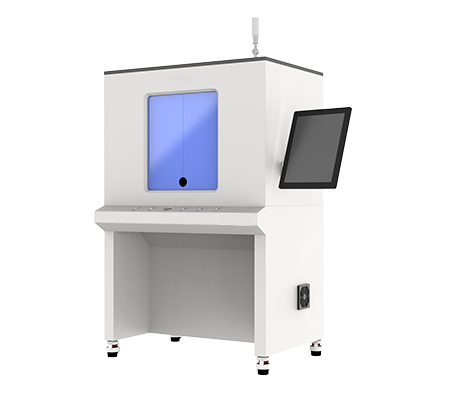
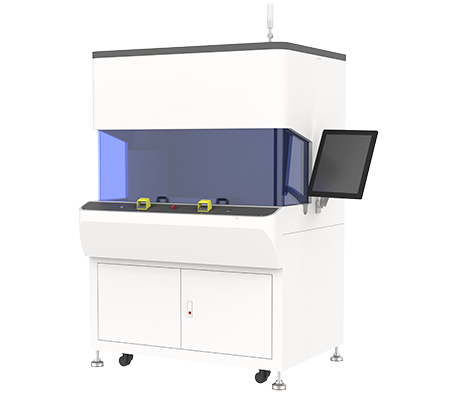
The ultrasonic metal welding machine is a high-precision device used for welding copper-aluminum transition pieces, power battery wire harnesses, and energy storage copper-aluminum busbars. It employs high-frequency vibration solid-state joining technology without requiring solder. Taking the YN-D2012-G as an example, it achieves a welding area of 35-120mm² with 12000W power, meeting the demand for efficient and reliable welding of large cross-section copper-aluminum joints.
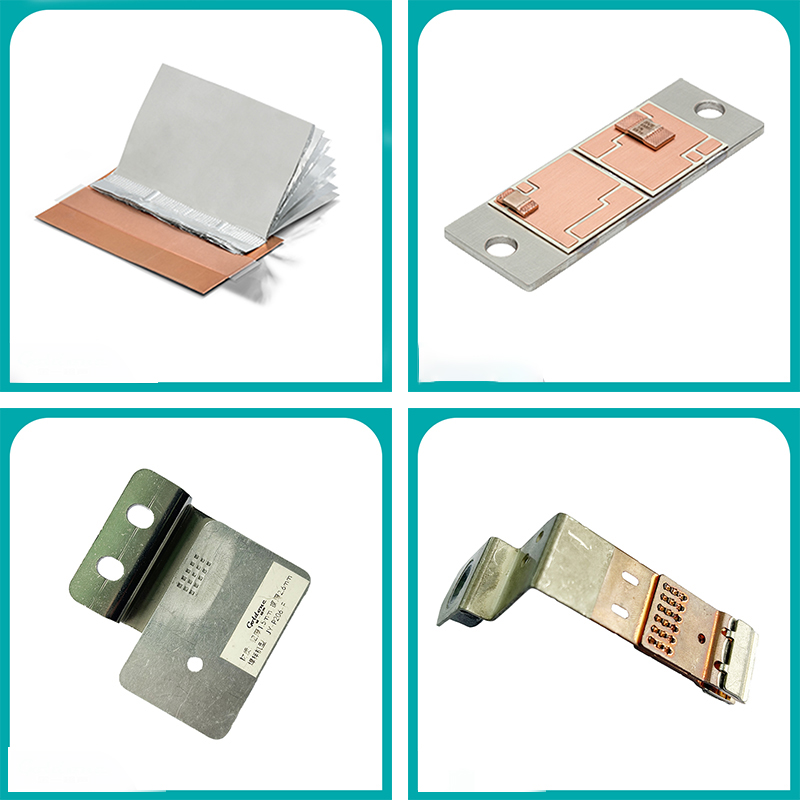
The ultrasonic metal welding technology for copper-aluminum transition pieces utilizes high-frequency mechanical vibration to achieve solid-state metallurgical bonding between dissimilar copper and aluminum metals, effectively resolving issues of cracking and increased electrical resistivity caused by brittle intermetallic compound phases in traditional fusion welding. This process is widely applied in power battery, energy storage system, and high-voltage wire harness manufacturing, providing high-reliability connection solutions for new energy vehicles and power grid infrastructure.
Technical Positioning and Industry Value of Ultrasonic Metal Welding for Copper-Aluminum Transition Pieces
The core advantage of ultrasonic metal welding for copper-aluminum transition pieces lies in its low-temperature solid-state welding characteristics. During the welding process, the interface temperature between copper and aluminum does not exceed 50% of the base material melting point, fundamentally suppressing excessive growth of brittle intermetallic compounds such as CuAl₂ and Cu₉Al₄. For B2B procurement decision-makers, this technology directly determines the long-term service stability and current-carrying capacity of battery module connections, serving as a key indicator for evaluating production line process capability.
Against the backdrop of rapid expansion in the new energy vehicle and energy storage industries, copper-aluminum transition pieces serve as critical connection media between battery terminals and aluminum busbars, and their welding quality directly impacts system safety. The ultrasonic metal welding process ensures the formation of a dense atomic diffusion layer between the transition piece and copper/aluminum busbars, with contact resistance stably lower than fusion welding solutions, while eliminating corrosion risks from flux residue. The supplier's process database and amplitude control precision are important criteria for assessing their ability to meet stringent automotive-grade standards.
Full Power Range Technical Specification Comparison: From Precision Electronics to Energy Storage Copper-Aluminum Busbars
To address varying welding area and production line takt time requirements, we offer a series of models covering a power range from 3000W to 12000W. The following are laboratory-verified core technical parameters for process selection reference:
| Model | Rated Power | Welding Area Range | Machine Weight | Dimensions (mm) | Typical Applications |
|---|
| YN-X203-Y | 3000W | 0.35-20mm² | 88KG | 670×520×410 | Precision sensors, micro wire harnesses |
| YN-X204-Z | 4000W | 1-30mm² | 132KG | 1020×610×1200 | Lithium battery module terminal welding |
| YN-P203-F | 3000W | 1-100mm² | 73KG | 565×269×442 | Precision electronics and sensors |
| YN-X206-Z | 6000W | 10-50mm² | 118KG | 1020×610×1200 | Power battery high-voltage wire harnesses |
| YN-D206-G | 6000W | 15-50mm² | 192KG | 1400×760×2000 | High-voltage wire harness copper-aluminum terminals |
| YN-D208-G | 8000W | 20-70mm² | 957KG | 1750×1050×2150 | Large wire harness copper-aluminum busbars |
| YN-D2012-G | 12000W | 35-120mm² | 988KG | 1750×1050×2150 | Energy storage system copper-aluminum busbar welding |
The data above is sourced from our factory inspection reports. As the flagship model of the D series, the YN-D2012-G's 988KG total machine weight ensures rigid support during welding, and combined with 12000W ultrasonic output, it can stably complete welding of copper-aluminum transition pieces with cross-sections up to 120mm². For custom requirements involving larger welding areas, we recommend directly contacting our technical department for feasibility verification.
Core Process Features and Quality Control System
Metallurgical Bonding Mechanism and Interface Reliability
When the ultrasonic metal welding machine welds copper-aluminum transition pieces, the welding horn generates micro-zone plastic deformation and frictional heat at the copper-aluminum interface at 20kHz high-frequency vibration, breaking surface oxide films to achieve atomic-level contact between clean metal surfaces. Our equipment is equipped with a real-time amplitude monitoring system, ensuring welding energy input fluctuation is controlled within ±3%, thereby guaranteeing shear force consistency of every weld point in mass production.
Modular Power Configuration and Production Line Flexibility
Both the D series and X series support power upgrade modules. For example, the YN-D206-G can switch between 4000W, 6000W, 8000W, and 12000W power levels, accommodating process switching requirements for different batch products. The split-structure design (e.g., YN-D206-G) allows separate installation of the generator and welding head, facilitating integration into automated production lines or confined workstations.
Welding Quality Traceability and Data Interface
All models come standard with welding parameter recording functionality, enabling export of key data such as welding energy, peak power, and welding time for each product, meeting full-process traceability requirements under the IATF 16949 system. The equipment supports the Modbus TCP communication protocol and can seamlessly integrate with MES systems for remote parameter distribution and real-time monitoring.
Typical Application Scenarios: Power Batteries, Energy Storage Systems, and High-Voltage Wire Harnesses
The ultrasonic metal welding machine for copper-aluminum transition pieces has established mature application solutions in the following fields:
- Power Battery Modules:Used for welding transition pieces between battery terminals and aluminum busbars, with welding areas concentrated in the 10-50mm² range. The YN-X206-Z or YN-X204-Z models are recommended, whose compact structures facilitate multi-station layout in module production lines.
- Energy Storage System Copper-Aluminum Busbars:For large cross-section copper-aluminum composite busbar connections in containerized energy storage systems, the YN-D2012-G, with its 12000W output and 35-120mm² welding range, can complete secure welding of large transition pieces in a single operation, meeting low-resistance requirements under high-rate charge/discharge conditions.
- New Energy Vehicle High-Voltage Wire Harnesses:For welding high-voltage connector terminals between motor controllers and battery packs, the YN-D206-G split-structure model is recommended. Its split design facilitates symmetrical arrangement on both sides of the assembly line, improving operational efficiency.
- Precision Electronics and Sensors:For micro copper-aluminum transition pieces with welding areas below 20mm², the YN-P203-F and YN-X203-Y provide fine energy control, preventing heat-affected zone diffusion into sensitive electronic component areas.
Equipment Selection Guide: Matching Optimal Solutions Based on Welding Area and Production Line Layout
Selection requires comprehensive consideration of three dimensions: total welding area, production line takt time, and equipment integration method. First, calculate the effective welding area of the copper-aluminum transition piece based on product drawings, reserving a 20% margin to accommodate incoming material tolerance fluctuations. Second, evaluate single-piece welding takt requirements—our equipment's single welding cycle is typically 0.3-1.5 seconds; if production line takt is below 2 seconds per piece, a dual-station turntable structure is recommended. Finally, choose between integrated or split structures based on workshop clearance height and logistics aisle width. For example, the YN-D2012-G's 1750×1050×2150mm dimensions require ensuring sufficient maintenance access space at the installation location.
Frequently Asked Questions (FAQ)
How do I determine whether the welding quality is acceptable when welding copper-aluminum transition pieces with the ultrasonic metal welding machine?
Conventional inspection methods include visual inspection (uniform weld surface indentations without cracks), tensile testing (peel force not less than 80% of base material strength), and contact resistance testing (welded area resistance not exceeding 1.2 times that of the same cross-section base material). We offer an optional ultrasonic welding quality online monitoring system that detects cold welds by monitoring welding energy curves in real time.
Will intermetallic compounds form at the interface after welding copper-aluminum transition pieces?
Ultrasonic welding is a solid-state welding process. The interface temperature is typically below 300°C, and the intermetallic compound layer thickness between copper and aluminum can be controlled within 1-2μm, far below the 10μm+ brittle layer produced by fusion welding. Therefore, joint mechanical properties and electrical conductivity are superior to traditional processes.
How long does it take to change the welding horn and anvil when switching models?
With the standard quick-change structure, a skilled operator can complete horn and anvil replacement and alignment adjustment within 15 minutes. We offer a quick-change kit including pre-tuned horn assemblies that can reduce changeover time to under 5 minutes.
Do I need to adjust welding parameters when welding copper-aluminum transition pieces of different thicknesses?
Yes. Welding parameters (amplitude, pressure, welding time) must be matched to transition piece thickness and area. Our equipment features built-in storage for 8 parameter recipes, allowing pre-setting of process parameters for different products and one-touch recall during changeover, preventing human error.
What are the surface cleanliness requirements for copper-aluminum transition pieces in ultrasonic metal welding?
Ultrasonic welding has relatively low sensitivity to surface oil contamination, but requires surfaces free of severe oxide scale and burrs. Incoming materials should undergo degreasing treatment, with storage periods not exceeding 30 days; otherwise, an online grinding process must be added to ensure welding consistency.
What is the noise level during equipment operation? Is additional soundproofing required?
Our equipment operates below 75dB(A) under full load, complying with occupational health standards. If the production line has stricter noise requirements, a soundproof enclosure can be added to reduce noise to below 65dB(A).
What is the structural difference between the YN-D2012-G and YN-D208-G?
Both models share the same external dimensions (1750×1050×2150mm), but the YN-D2012-G features higher-density frame reinforcement ribs to withstand the greater reaction forces from 12000W ultrasonic vibration. The YN-D208-G weighs 957KG while the YN-D2012-G weighs 988KG, with the difference primarily in frame reinforcement components.
Does the equipment support automated production line integration?
Yes. All models come standard with I/O interfaces and RS485 communication ports, with optional Profibus or EtherCAT bus modules available. We provide integration installation guidance services, including robot flange adapter solutions and safety light curtain interlock designs.
What is the typical lifespan of the welding horn when welding copper-aluminum transition pieces?
Under normal use and regular dressing conditions, the welding horn lifespan is approximately 50,000-100,000 welds. The horn is made of imported powder metallurgy steel and can be restored to over 90% of its service life through precision grinding after wear.
Does the equipment require a cooling system?
Models with 6000W and above power are recommended to be equipped with a water cooling circulation system to maintain transducer operating temperature below 40°C. We offer an integrated water chiller as an option, with flow rate and temperature control precision meeting continuous production requirements.
How is welding quality stability ensured in mass production?
Our equipment features two welding control modes: energy mode and height mode. Energy mode ensures consistent energy absorption at each weld point, while height mode ensures consistent weld thickness. Energy mode with upper and lower alarm thresholds is recommended, with automatic rejection and alarming when out of range.
Is post-treatment required after welding copper-aluminum transition pieces?
Ultrasonic welding requires no post-treatment. Weld surfaces are free of spatter and oxidation and can proceed directly to subsequent assembly. If appearance requirements exist, slight indentation marks can be removed by wiping with alcohol.
What are the equipment power supply requirements?
Standard models use three-phase 380V/50Hz power supply, with total power ranging from 6-18kVA depending on the model. We can customize 220V/60Hz versions for production lines exported to North American or Japanese markets.
What training do operators require?
We provide 2 days of on-site training covering equipment operation, parameter adjustment, routine maintenance, and basic troubleshooting. After training, operators can independently perform horn replacement, parameter recall, and quality sampling inspections.
What is the equipment warranty period and after-sales service policy?
The complete machine carries a 12-month warranty, with key components (transducer, booster) warranted for 24 months. We have service outlets in major industrial cities nationwide, committing to 24-hour response to repair requests, and offer backup machine rental services to ensure continuous production line operation.
Can sample welding testing services be provided?
Yes. Our laboratory is equipped with the full series of models and can provide free welding tests for up to 20 customer samples, issuing complete test reports including shear force, contact resistance, and metallographic analysis to help customers verify process feasibility before purchase.
Certifications and Customized Delivery Capabilities
Our full series of ultrasonic metal welding machines has passed CE, FCC, and ISO 9001 quality management system certifications. Core control boards and power modules use automotive-grade components, ensuring long-term stable operation in industrial environments. For large copper-aluminum busbar welding projects, we provide turnkey engineering services from process validation and fixture design to production line integration. For extreme applications with welding areas exceeding 120mm², we recommend providing specific workpiece drawings and material grades for dedicated feasibility assessment by our application engineers. Regarding delivery lead times, standard models are available from stock, while customized models have a 30-45 day delivery period, with remote commissioning support and lifetime technical consulting services provided.
Ultrasonic Metal Welding Machines and Custom Systems
Winna Technology builds ultrasonic metal welding machines for aluminum, copper, busbars and foils. Standard machines and custom systems include generator, converter, sonotrode, anvil and control, optionally integrated into automated production lines.
Machines and solutions
- Ultrasonic welders for cables, busbars and battery tabs
- Custom systems matched to your part and cycle time
- Automation with PLC, rotary indexing or robot integration
- Sonotrodes, anvils and wear parts to drawing
Technical data
| Frequency | 20 to 40 kHz, depending on part and application |
| Materials | Aluminum, copper, busbar, foil |
| Control | Standalone or PLC and robot interface |
Custom system process
- Send part, sample or drawing
- Feasibility and welding test
- Sonotrode, anvil and parameter design
- Sample build and approval
- Series production and commissioning
FAQ
Do you build custom systems?
Yes. Tooling and parameters are designed around your part.
Which materials can be welded?
Typically aluminum, copper, busbars and foils. Suitability is confirmed by a welding test.
Can the machine be automated?
Yes, with PLC, rotary indexing or robot integration.
Contact: sale@winna-group.com or WhatsApp +86 134 1065 0093.