Details
Ultrasonic Metal Welding Machine Transparent Price Quote | Factory-Direct Cost-Effective Solutions
Ultrasonic metal welding machines cover a power range from 3000W to 12000W, with welding areas from 0.35 to 120mm², suitable for copper-aluminum busbars, power battery wire harnesses, and precision electronics welding. Equipment is CE/FCC/ISO certified, balancing high precision with high-volume production. Pricing varies by configuration.
Ultrasonic Metal Welding Machine Price: Five Core Factors Influencing Procurement Decisions
Ultrasonic metal welding machine price is a key variable in B2B procurement decisions, but by no means the only consideration. In high-end manufacturing sectors such as new energy storage, automotive wire harnesses, and precision electronics, technical matching of equipment, welding quality stability, delivery lead times, and after-sales support often carry greater strategic significance than the price figure alone. This article systematically breaks down the cost structure of ultrasonic metal welding machine pricing from the dimensions of technical specifications, power segment configurations, and application scenarios, providing verifiable selection references.
Product Overview: Technical Positioning and Core Value of Ultrasonic Metal Welding Machines
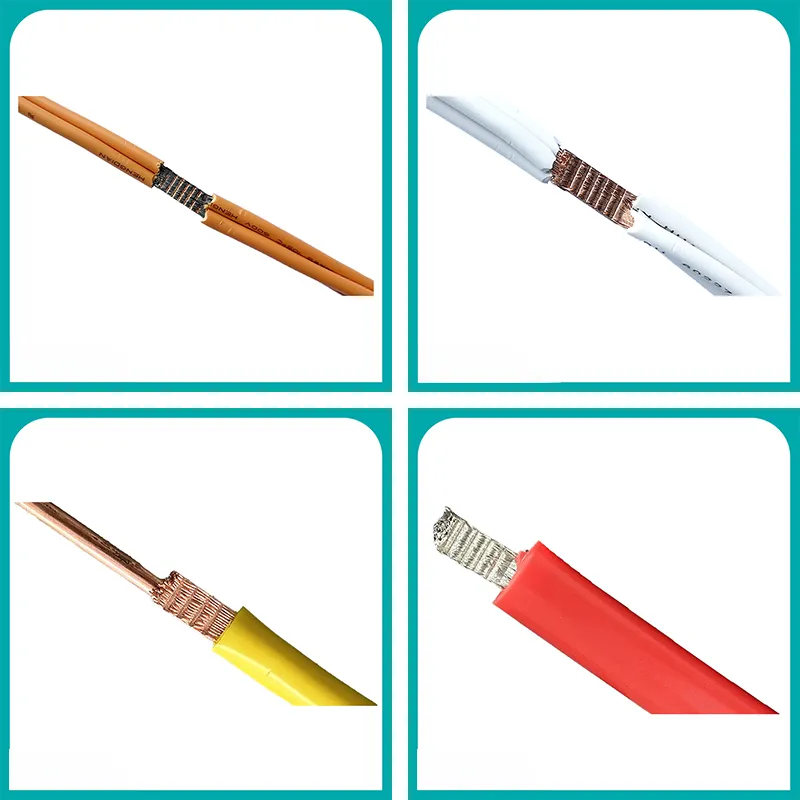
Ultrasonic metal welding machines utilize high-frequency mechanical vibration (typically 20KHz) to achieve metallurgical bonding between metals in a solid state, requiring no solder, flux, or external heating, and are particularly suitable for lap welding of conductive materials such as copper and aluminum. Compared to traditional resistance welding or laser welding, ultrasonic welding offers significant advantages including no spatter, low heat-affected zone, and low weld resistance. It has become an irreplaceable process technology in scenarios such as new energy vehicle high-voltage wire harnesses, power battery modules, and energy storage copper-aluminum busbar connections.
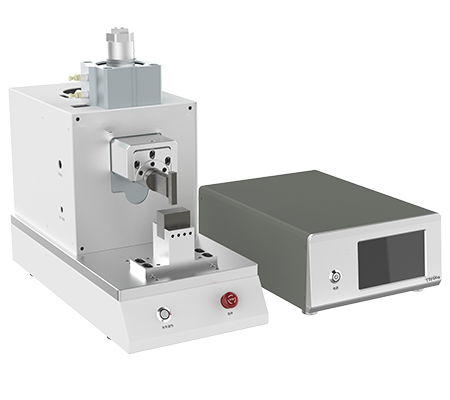
Taking our company's YN series product line as an example, the equipment covers the full power range from 3000W precision welding to 12000W ultra-high-power welding, meeting welding tasks for different cross-sectional areas and material combinations. Among these, the YN-D2012-G, as the flagship model of the D series, is specifically designed for energy storage copper-aluminum busbar welding, covering a welding area of 35-120mm², with a total machine weight of 988KG and dimensions of 1750×1050×2150mm, representing the current mass-production level of high-power ultrasonic metal welding technology. The YN-X203-Y, with 3000W power and a welding area coverage of 0.35-20mm², provides a cost-effective choice for precision electronics and sensor welding.
Technical Specifications: Key Parameter Comparison of Core Models
| Model | Power | Welding Area | Machine Weight | Dimensions | Typical Applications |
|---|
| YN-D2012-G | 12000W | 35-120mm² | 988KG | 1750×1050×2150mm | Energy storage copper-aluminum busbar welding |
| YN-D208-G | 8000W | 20-70mm² | 957KG | 1750×1050×2150mm | Large wire harness copper-aluminum busbar welding |
| YN-D206-G | 6000W | 15-50mm² | 192KG | 1400×760×2000mm | High-voltage wire harness copper-aluminum terminal welding |
| YN-X206-Z | 6000W | 10-50mm² | 118KG | 1020×610×1200mm | Power battery wire harness welding |
| YN-X204-Z | 4000W | 1-30mm² | 132KG | 1020×610×1200mm | Lithium battery wire harness terminal welding |
| YN-X203-Y | 3000W | 0.35-20mm² | 88KG | 670×520×410mm | Precision electronics and sensor welding |
| YN-P203-F | 3000W | 1-100mm² | 73KG | 565×269×442mm | Precision electronics and sensor welding |
| JY-D204-F | 4000W/6000W/8000W | 1-35mm² | 82KG | 660×350×680mm | General metal welding |
The above parameters are derived from actual factory inspection data. It should be noted that ultrasonic metal welding machine price and power segment are not linearly related—the price difference between the 12000W flagship model and the 3000W entry-level model is reflected not only in power output, but also in overall machine structural rigidity, acoustic system design, control system precision, and welding quality consistency assurance capability.
Price Comparison and Selection Recommendations for Ultrasonic Metal Welding Machines Across Power Segments
From market procurement practice, ultrasonic metal welding machine prices typically show a clear gradient distribution. Equipment in the 3000W-4000W power segment (such as YN-X203-Y, YN-X204-Z) is suitable for thinner-gauge copper-aluminum terminal welding or precision electronics connections, with welding areas typically between 0.35-30mm² and machine weights controlled at 90-135KG, suitable for flexible production line layouts. The 6000W segment (such as YN-D206-G, YN-X206-Z) is the mainstream choice for new energy vehicle wire harness welding, covering welding areas of 10-50mm², balancing welding capability with equipment footprint. The 8000W-12000W segment (such as YN-D208-G, YN-D2012-G) targets heavy-duty welding scenarios such as large copper-aluminum busbars and energy storage busbars, with equipment weight approaching 1 ton, requiring clear specifications for factory flooring and power supply capacity.
Regarding selection recommendations, buyers should first clarify the maximum welding cross-sectional area and material combination of their workpieces, then determine the power level based on production line takt time requirements. For example, copper-aluminum busbar welding in the energy storage industry typically requires 12000W-class equipment to ensure weld strength and electrical conductivity, while consumer electronics internal connector welding can be satisfied with 3000W-class equipment. It is worth noting that the YN-D206-G, as a split-design model, features a welding head unit and control system that can be arranged separately, providing a flexible solution for space-constrained production lines—a differentiated advantage within the same power segment.
Technical Specifications and Manufacturing Standards Behind Ultrasonic Metal Welding Machine Pricing
The price differences in ultrasonic metal welding machines are essentially differences in technical specifications and manufacturing standards. Taking our company's D series and X series as examples, the two have a clear division of labor in core components: the D series adopts an integrated heavy-duty frame design, paired with high-power transducers and amplitude transformers, ensuring amplitude stability under continuous heavy-load conditions; the X series focuses more on compactness and response speed, suitable for multi-station automated integration. The YN-P203-F precision series adopts a benchtop structure, with compact dimensions of 565×269×442mm and a total weight of 73KG, offering outstanding layout flexibility in precision electronics welding.
At the manufacturing standards level, all models pass CE, FCC, ISO and other international certifications. The welding control system employs closed-loop amplitude control technology, capable of real-time monitoring and compensation of energy output fluctuations during the welding process. For buyers, this means that the ultrasonic metal welding machine price includes reliability verification costs, consistency control costs, and long-term warranty service costs. It is recommended that when comparing prices, buyers require suppliers to provide complete welding process test reports and equipment factory inspection records, rather than focusing solely on bare-machine quotes.
Matching Strategy Between Ultrasonic Metal Welding Machine Price and Application Scenarios
Different industry scenarios have significantly different requirements for ultrasonic metal welding machines, and price matching strategies should be adjusted accordingly. In the new energy vehicle high-voltage wire harness field, welding quality directly affects vehicle safety, so buyers should prioritize models with comprehensive welding monitoring functions (such as YN-D206-G), whose 15-50mm² welding area covers the welding needs of mainstream high-voltage wire harness terminals, with the split design facilitating integration into automated production lines. In the energy storage industry, copper-aluminum busbar welding areas typically reach 35-120mm², requiring the selection of YN-D2012-G-class ultra-high-power equipment to ensure uniform distribution of intermetallic compounds at the weld interface and reduce contact resistance.
For precision electronics manufacturing, such as sensor and relay internal contact welding, the 0.35-20mm² welding area range of YN-P203-F or YN-X203-Y is more suitable, with their fine energy control capabilities preventing thermal damage to thin-walled components. It should be noted that some application scenarios may require non-standard custom welding fixtures or special horn structures, and these costs are typically not included in standard equipment quotes. Buyers should clearly communicate workpiece shapes and welding requirements during the inquiry stage so that suppliers can provide complete process solution quotes.
Ultrasonic Metal Welding Machine Price Frequently Asked Questions (FAQ)
Q1: Does the ultrasonic metal welding machine price include the horn and fixture tooling?
Standard quotes typically include one set of universal horns matched to the equipment, but custom horns and fixture tooling for specific workpieces are priced separately. It is recommended to provide workpiece drawings or samples before purchase, allowing engineers to evaluate the custom solution and provide a clear quote.
Q2: How large is the price gap between equipment of different power segments?
Taking our company's product line as an example, the price gap between 3000W-class equipment and 12000W-class equipment typically ranges from 3-5 times, depending on configuration options (such as automation interfaces, data acquisition modules, etc.). The higher the power, the greater the acoustic system and frame rigidity costs.
Q3: Is the price difference between imported brands and domestic brands reasonable?
Imported brands have advantages in brand premium and historical case accumulation, but domestic brands are more competitive in response speed, customization services, and spare parts supply. It is recommended that buyers use weld sample test results as the primary evaluation criterion, rather than brand labels.
Q4: Does the ultrasonic metal welding machine price include installation, commissioning, and operator training?
Our company's standard scope of supply includes equipment installation and commissioning, operator training, and first-article welding process parameter setup. If on-site training or process development support is required, please clearly specify the service content and duration in the contract.
Q5: What is the typical warranty period for the equipment? Which components are replaced free of charge during the warranty period?
The standard warranty period is 12 months. During the warranty period, failures of core components such as transducers, amplitude transformers, and horns caused by non-human factors can be replaced free of charge. Specific terms are subject to the contract agreement. Buyers are advised to pay attention to the supply lead time of wear parts.
Q6: Are there price discounts for multi-unit purchases?
Batch purchases typically qualify for tiered pricing discounts, with specific discount rates related to purchase quantity and delivery lead time. It is recommended to clarify annual procurement plans during inquiry so suppliers can offer more favorable commercial terms.
Q7: How is equipment operating energy consumption calculated?
Taking the YN-D2012-G as an example, its rated power is 12000W. The actual welding process operates under intermittent loading, with average energy consumption at approximately 30%-50% of rated power. Specific energy consumption is related to welding takt time and material thickness; it is recommended to estimate based on production line cycle times.
Q8: What are the equipment power supply voltage requirements?
High-power models (8000W and above) typically require three-phase 380V power supply, and a voltage stabilizer is recommended. Specific power supply requirements are subject to the equipment nameplate parameters. Buyers should confirm workshop power supply conditions before installation.
Q9: Does the equipment support automated production line integration?
All models in our full series come standard with I/O interfaces, supporting PLC and robot linked control. For more advanced MES data traceability functions, a welding data acquisition module can be optionally configured, which will affect the final price.
Q10: How is welding quality monitored online?
The equipment is equipped with a welding energy monitoring system that displays welding power, time, and energy curves in real time, and alarms on abnormal welds. This system is standard configuration and does not incur additional cost.
Q11: Is equipment relocation or production line reconfiguration convenient?
X series and P series models have total weights between 73-132KG and are equipped with forklift pockets or casters, facilitating production line adjustments. D series large equipment (such as YN-D2012-G) weighs close to 1 ton, and a fixed installation position is recommended.
Q12: Does the equipment noise level meet workshop standards?
The noise during ultrasonic welding primarily comes from transducer and horn vibration, typically ranging between 70-85 decibels. For lower noise environments, a soundproof enclosure can be added as an optional accessory.
Q13: What are the equipment maintenance cycles and costs?
It is recommended to perform horn and amplitude transformer inspections quarterly, and replace transducer connection components annually. Routine maintenance costs are approximately 2%-3% of equipment purchase price per year, depending on usage intensity.
Q14: Does the equipment support copper-aluminum dissimilar metal welding?
Ultrasonic welding is naturally suited for copper-aluminum dissimilar metal connections, achieving reliable bonding without flux. All models in our full series support copper-aluminum welding, but the appropriate power segment should be selected based on material thickness and area.
Q15: What is the typical equipment delivery lead time?
Standard model delivery lead time is 15-30 working days. Customized configurations (such as special horns, automation interfaces) require an additional 7-15 working days. Rush orders can be negotiated for shortened delivery, but expedite fees may apply.
Q16: Does the equipment provide remote diagnostics and technical support?
Our company provides 7×24-hour remote technical support, enabling fault diagnosis and parameter adjustment via network connection. This service is free during the warranty period. After the warranty period, an annual technical service agreement can be signed.
Ultrasonic Metal Welding Machine Price Negotiation and Procurement Delivery Guide
In the ultrasonic metal welding machine price negotiation phase, buyers are advised to focus on the following key elements: first, clarify the scope of the quote to avoid subsequent additional costs; second, require suppliers to provide customer application cases and acceptance reports for the same model; third, make welding process validation a precondition of the contract to ensure the equipment can be put into production upon arrival. In the delivery phase, confirm the equipment packaging and transportation method, arrival acceptance standards, and installation and commissioning schedule. All models from our company undergo 48-hour continuous load testing before leaving the factory, and are accompanied by complete test data reports, ensuring delivered equipment meets stated technical specifications.
For buyers with special welding requirements, you are welcome to provide workpiece samples for free welding process testing. Our application engineers will recommend the most suitable model and configuration solution based on test results, and provide a complete solution quote including equipment, tooling, and process parameters. Please contact your regional sales manager via our website or phone to obtain an ultrasonic metal welding machine price proposal and technical recommendations tailored to your specific application scenario.