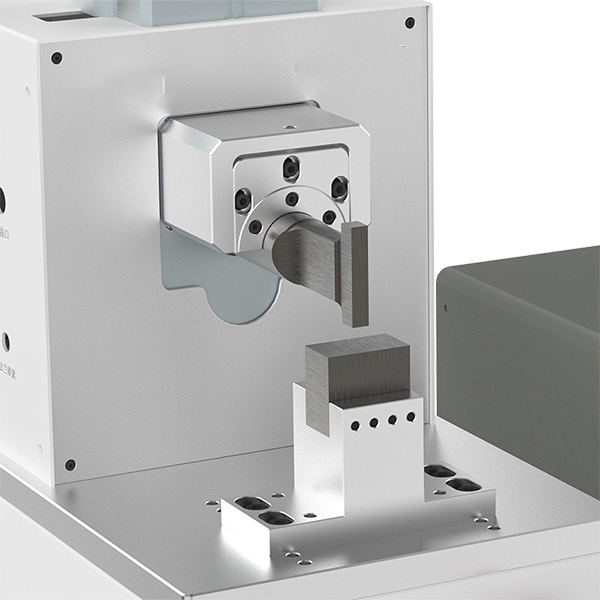
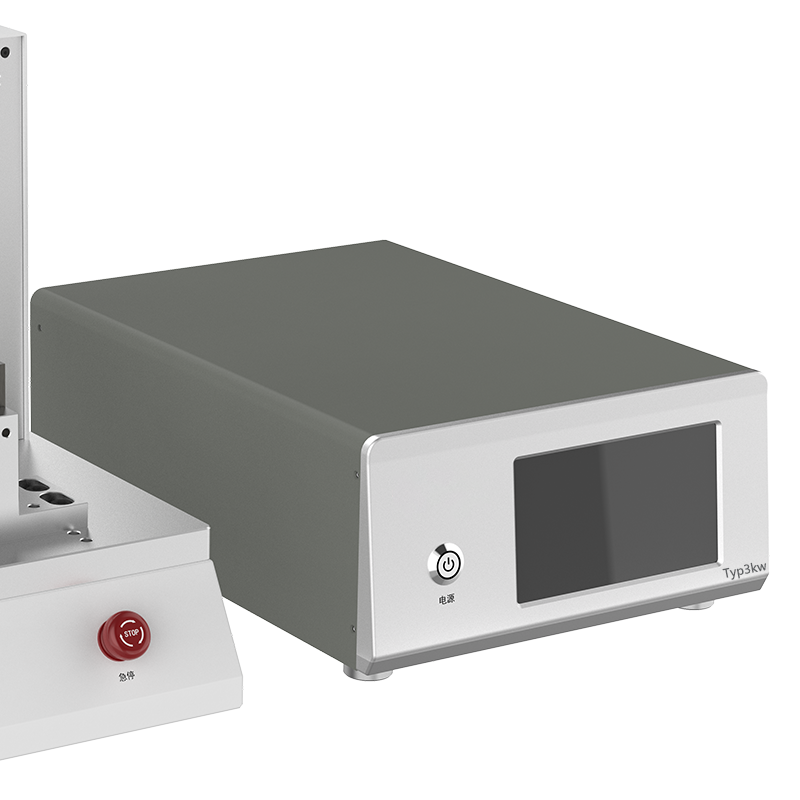
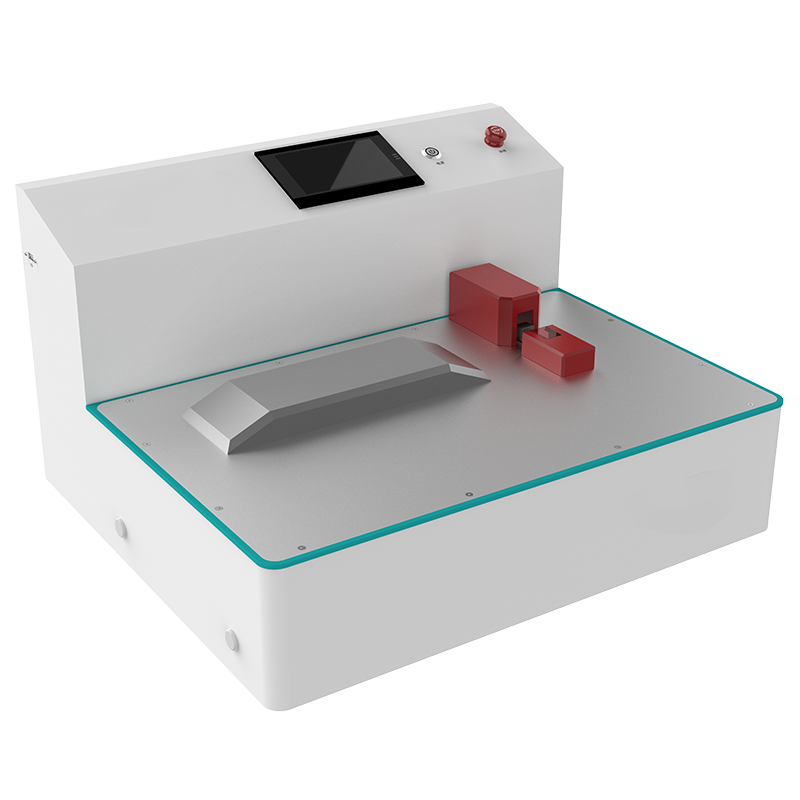
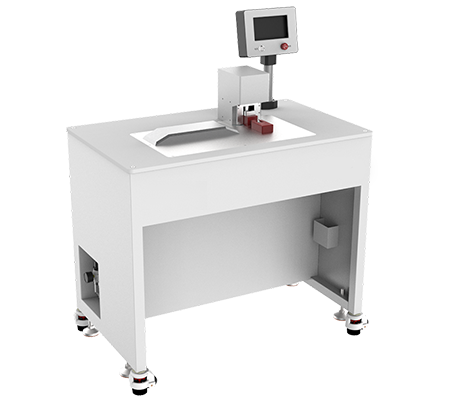
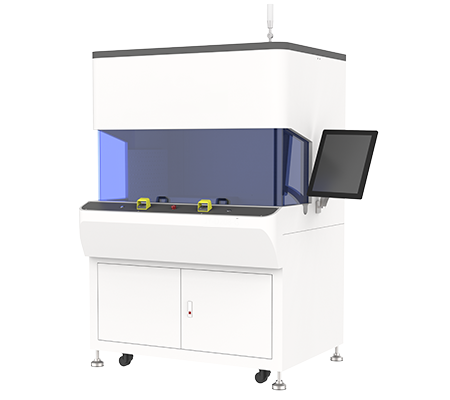
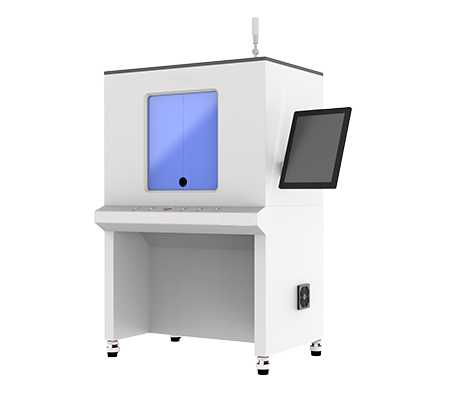
3000W Precision Ultrasonic Welder YN-P203-F adopts 20KHz high-frequency technology, with a welding area covering 1-100mm². Its core value lies in providing stable and precise welding for precision electronic sensors, ensuring secure connections of micro components.
Technical Specifications
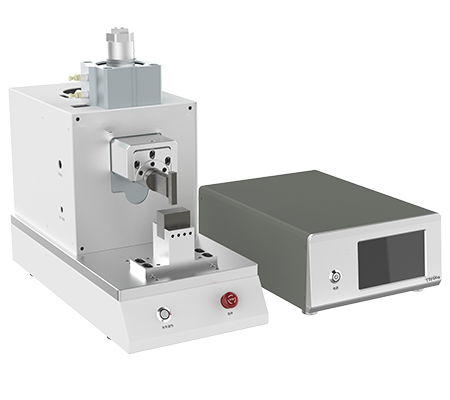
Product Appearance
| Parameter Name | Parameter Value |
| Input Voltage | 220V |
| Operating Frequency | 20KHz |
| Rated Power | 3000W (Optional 2000W/4000W) |
| Welding Area | 1-100mm² |
| Device Dimensions | 565×269×442mm |
| Device Weight | 73KG |
Product Features
- High-Precision Welding: Utilizes 20KHz high-frequency output with stable and controllable welding energy, ideal for secure connections of micro terminals, sensors, and other precision electronic components.
- Scalable Power: Standard configuration of 3000W, with optional 2000W/4000W solutions, flexibly meeting different workpiece welding needs with high cost performance.
- Robust and Durable: The whole machine weighs 73KG, with a stable structure, low failure rate during long-term operation, ensuring production continuity.
- Easy Operation: Equipped with a touch interface and intelligent parameter storage function, allowing quick switching of welding programs to improve work efficiency.
Application Scenarios
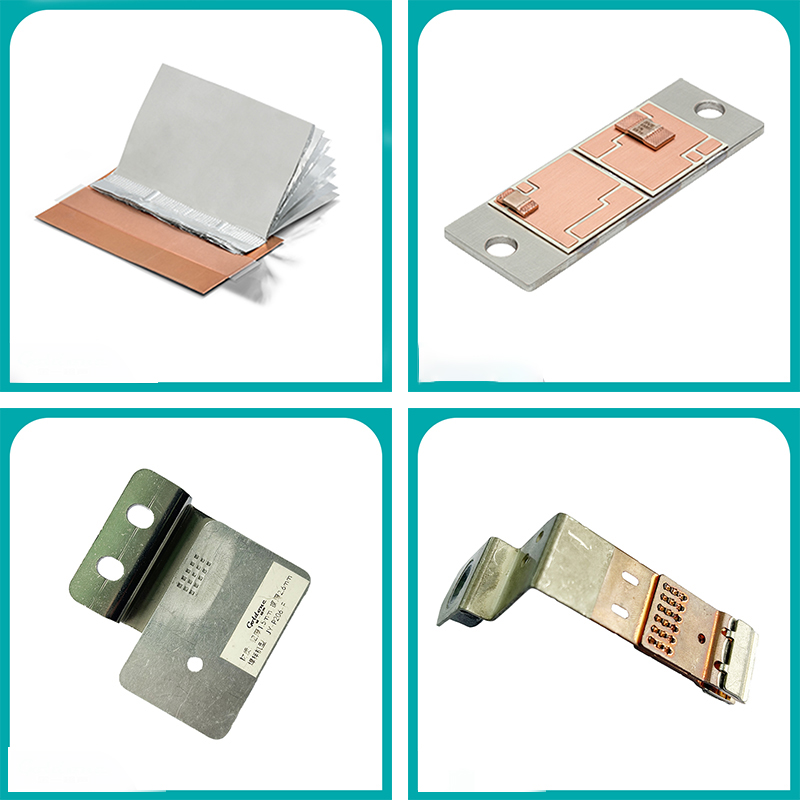
- New Energy Lithium Battery Production Line
Power battery tab welding, module busbar welding, energy storage battery pack assembly, weld resistance ≤100μΩ, with extensive experience in daily production line integration. - Automotive Wiring Harnesses and Connectors
High-voltage harness terminals, motor lead wires, IGBT module welding, replacing traditional crimping, reducing contact resistance by over 60%. - Copper-Aluminum Transition Welding
Direct solid-state connection of copper-aluminum dissimilar metals without transition pieces, widely used in charging piles and power electrical industries. - Precision Electronic Components
Micro terminal and sensor pin welding, with minimal heat-affected zone, suitable for medical electronics and instrumentation.
Frequently Asked Questions
What materials can the YN-P203-F ultrasonic welder weld?
This machine is suitable for welding metal materials such as copper, aluminum, nickel, etc., commonly used in precision electronics, sensors, and small terminal welding.
How to choose between 2000W, 3000W, or 4000W power versions?
Power selection depends on the welding workpiece area and material thickness. Generally, 2000W is recommended for 1-50mm², 3000W for 50-100mm², and 4000W for larger or thicker workpieces. Consult the technical team for specifics.
Does the device require professional training for operation?
The device is equipped with a touch interface and intelligent parameter storage function for intuitive operation. However, basic training before first use is recommended to ensure accurate parameter settings and optimal performance.
Does the welding area of 1-100mm² cover all common terminals?
Yes, this range covers the welding needs of most precision electronic terminals, sensor leads, and small wiring harnesses, from 0.5mm² micro terminals to 100mm² large terminals.
What advantages does the YN-P203-F have over other brands with the same power?
The YN brand is renowned in precision welding. This machine features 20KHz high-frequency output and stable energy control for high welding precision; offers scalable power options for excellent cost performance; and has a robust 73KG structure for low failure rates during long-term operation.
Does ultrasonic welding generate noise? Are protective measures required?
The ultrasonic welding machine generates high-frequency pulsed noise of approximately 75~85 decibels at the moment of welding (0.1~1.0 seconds), similar to a short pneumatic hammering sound. The single pulse duration is short, and cumulative noise is low. It is recommended that operators wear noise-proof earplugs (NRR≥25dB), especially in high-frequency applications where a single machine performs more than 5,000 welds per day. A soundproof enclosure can be installed around the equipment, reducing noise by 10~15 decibels and meeting the factory occupational health standard of ≤85dB.
Can ultrasonic welding replace resistance welding and screw connections?
Ultrasonic welding is an upgraded solution to resistance welding and screw connections: ① Replaces resistance welding: low welding temperature, does not damage the annealed state of copper wire, lower joint resistance (≤100μΩ vs resistance welding 200~500μΩ), more reliable in long-term operation; ② Replaces screw connections: no screws, nuts, washers or other accessories required, higher connection strength (tensile breaking force ≥80% of base material), no risk of screw loosening. Especially suitable for new energy batteries, high-voltage wire harnesses and other scenarios with extremely high requirements for connection reliability and conductivity. Replacement recommendation: for high-current connections, ultrasonic welding is preferred, with mechanical connections as auxiliary.
What is the service life of the welding horn (mold) of an ultrasonic welding machine? What to do after wear?
The welding horn (horn) is a consumable item, and its service life depends on the material and usage frequency: ① Alloy steel welding horn (T6): 50,000~100,000 welds; ② Titanium alloy welding horn (75E): 150,000~300,000 welds; ③ Wear is faster when processing aluminum (about 60% of the service life for copper). Welding horn wear affects welding quality and consistency; regular inspection of pattern clarity is recommended. After wear, replacing with a new welding horn restores welding capability; welding horn removal is simple, replacement can be completed within 10 minutes, and no return to factory is required. Yingna Technology provides custom welding horn services, customizing the optimal welding horn solution according to your wire specifications and terminal shape.
What are the main wearing parts of an ultrasonic welding machine? What is the replacement cycle?
Main wearing parts: ① Horn: replace after pattern wear; steel horn 50,000~100,000 times, titanium horn 150,000~300,000 times; ② Booster: natural wear part, normal use 2~3 years; ③ Transducer: normal use 5~8 years; ④ Ceramic ring/bolt: replace after loosening. It is recommended to regularly check bolt tightening torque (according to the specified value in the manual) to prevent thread stripping. Replacement of wearing parts is all done on site, no need to return to factory, and simple calibration after replacement restores use.
What are the warranty period and after-sales service for the ultrasonic welding machine?
Standard warranty 12 months (core components transducer and booster extended to 24 months). During the warranty period, non-human-caused damage is repaired or replaced free of charge; for main unit failures, Chinese customers receive a 48-hour response and repair within 7 working days, while overseas customers can send for repair via DHL/FedEx or have a local agent arranged. Out-of-warranty paid repair is available, costing about 30~50% of a new unit. Lifetime technical support is provided (welding process consultation, welding head design solutions). For bulk purchases (more than 3 units), extended warranty to 24 months can be requested.
What is the power consumption of the ultrasonic welding machine? Are operating costs high?
The ultrasonic welding machine consumes power only at the instant of welding (0.1~1.0 seconds), with standby power consumption of only 30~50W. For example, if a factory welds 5,000 times per day at 0.5 seconds per weld, the actual daily electricity consumption is about 3~5 kWh, and the monthly electricity cost is only 60~100 RMB. Compared with resistance welding (continuous heating, whole-machine power 5~15kW), ultrasonic welding reduces energy consumption by 70~80%, delivering significant energy savings in batch welding scenarios.
Does the ultrasonic welding machine support automation integration and PLC control?
Yes. Yingna Technology ultrasonic welding machines provide RS232/RS485 communication interfaces and support integration with PLCs, robots, and automated production lines. Integrable functions: start signal, alarm feedback, welding parameter feedback, and production counting. With automatic wire feeding machines, automatic cutting machines, and automatic inspection equipment, a fully automatic ultrasonic welding production line can be built, requiring manual labor only for loading and unloading. Yingna Technology provides technical support to assist with automation solution design and installation and commissioning.