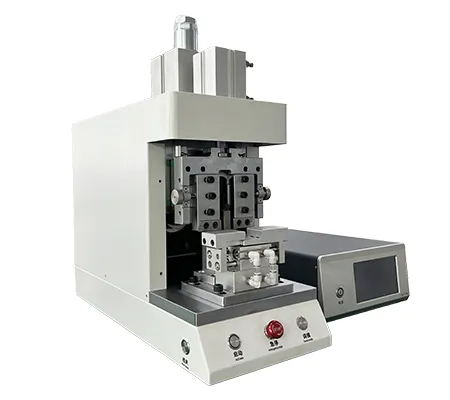
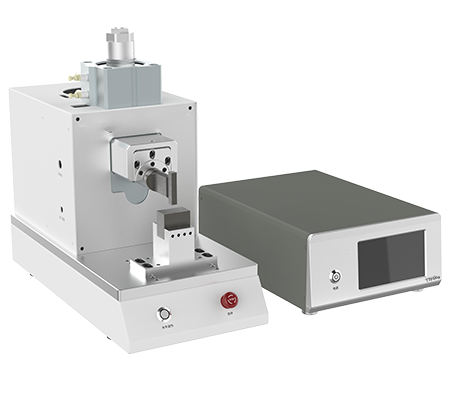
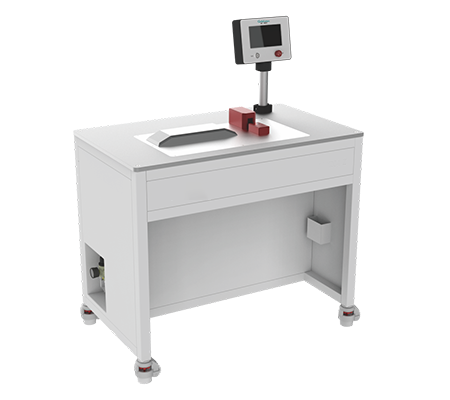
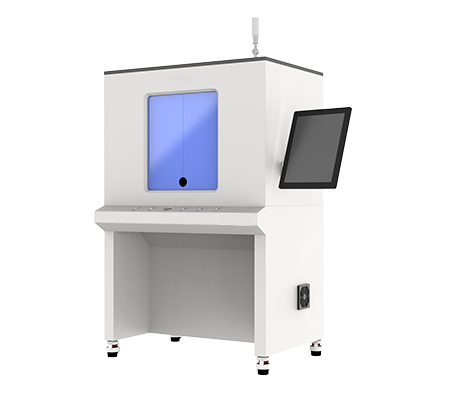
Ultrasonic metal welding machines are available in multiple power ranges from 3000W to 12000W, covering welding areas from 0.35 to 120mm², suitable for copper-aluminum busbar energy storage welding and power battery wire harness applications. Power selection is determined based on workpiece cross-sectional area and process requirements.
How to choose the power of an ultrasonic metal welding machine is the primary technical challenge faced by B2B procurement and engineering decision-makers when planning welding production lines. The power level directly determines the maximum weldable metal cross-sectional area, welding strength consistency, and overall production line takt time. Based on the technical parameters of the company's actual shipped models, this article systematically outlines the core selection logic, specification comparisons, and engineering verification methods across power ranges from 3000W to 12000W, providing quantifiable reference for procurement decisions.
How to Choose the Power of Ultrasonic Metal Welding Machine: Core Selection Logic and Industry Standards
How to choose the power of an ultrasonic metal welding machine essentially involves finding the optimal match between the physical properties of the welding material and the output energy of the equipment. The power level determines the mechanical vibration amplitude and pressure holding capability that the transducer can output, which in turn affects the completeness of atomic diffusion bonding between metals. In engineering practice, the primary basis for power selection is the total cross-sectional area of the weldment: the larger the cross-sectional area, the higher the vibration energy and static pressure required, and the higher the corresponding power level needed.
From the industry application gradient perspective, the 3000W level is suitable for precision electronics and sensor welding within a cross-sectional area of 1-100mm². Equipment at this power level is lightweight with high control precision, making it suitable for applications with stringent heat-affected zone requirements【(Fact 4)】【(Fact 13)】. The 4000W level covers lithium battery wire harness terminal welding of 1-30mm², balancing welding speed with terminal deformation control【(Fact 6)】【(Fact 15)】. The 6000W level targets high-voltage wire harnesses and power battery module connections of 10-50mm², offering a wider process window【(Fact 5)】【(Fact 8)】. The 8000W level addresses large wire harness copper-aluminum busbar welding of 20-70mm², with reinforced equipment structure for continuous heavy-duty operation【(Fact 2)】【(Fact 10)】. The 12000W level, as the flagship power, is specifically designed for ultra-large cross-section welding of energy storage copper-aluminum busbars of 35-120mm², meeting the dual stringent requirements of conductivity and mechanical strength in new energy storage systems【(Fact 1)】【(Fact 9)】.
How to Choose the Power of Ultrasonic Metal Welding Machine: Technical Specification Comparison by Power Range
To facilitate horizontal evaluation by procurement decision-makers, the table below summarizes the key parameters of representative models across five power levels. All data is sourced from the company's actual shipment specifications and can be directly used for production line planning and preliminary equipment selection screening.
| Power Level |
Model Number |
Welding Area Range |
Equipment Weight |
Dimensions (mm) |
Typical Application Positioning |
| 3000W |
YN-P203-F |
1-100mm² |
73KG |
565×269×442 |
Precision electronics, sensor welding【(Fact 4)】【(Fact 13)】 |
| 4000W |
YN-X204-Z |
1-30mm² |
132KG |
1020×610×1200 |
Lithium battery wire harness terminal welding【(Fact 6)】【(Fact 15)】 |
| 6000W |
YN-X206-Z |
10-50mm² |
118KG |
1020×610×1200 |
Power battery modules, high-voltage wire harnesses【(Fact 5)】【(Fact 8)】 |
| 6000W Split-Type |
YN-D206-G |
15-50mm² |
192KG |
1400×760×2000 |
High-voltage wire harness copper-aluminum terminal welding【(Fact 3)】【(Fact 11)】 |
| 8000W |
YN-D208-G |
20-70mm² |
957KG |
1750×1050×2150 |
Large wire harness copper-aluminum busbar welding【(Fact 2)】【(Fact 10)】 |
| 12000W |
YN-D2012-G |
35-120mm² |
988KG |
1750×1050×2150 |
Energy storage copper-aluminum busbar ultra-large cross-section welding【(Fact 1)】【(Fact 9)】 |
From the table above, it is clear that as the power level increases, equipment weight and dimensions show a significant gradient increase. The 3000W-level YN-P203-F weighs only 73KG and can be flexibly integrated into precision assembly lines; while the 12000W-level YN-D2012-G weighs 988KG, requiring dedicated equipment foundations and load-bearing planning【(Fact 1)】【(Fact 9)】. When evaluating power requirements, procurement teams must simultaneously consider workshop floor load-bearing capacity, equipment transport channels, and automation integration space.
Analysis of Core Functions and Process Capabilities Across Different Power Levels
3000W Level: The Process Benchmark for Precision Welding
The YN-P203-F, as the representative model of the 3000W level, adopts a 20KHz operating frequency with a welding area covering 1-100mm²【(Fact 4)】【(Fact 13)】. The core advantage of this power level lies in its fine amplitude adjustment capability, enabling precise energy control for micro weldments to avoid over-welding or cold welding. For process scenarios extremely sensitive to heat-affected zones, such as internal lead welding of sensors and precision electronic component connections, the 3000W-level equipment can control welding deformation within the micron range.
4000W-6000W Level: The Backbone of Power Batteries and High-Voltage Wire Harnesses
The YN-X204-Z (4000W) and YN-X206-Z (6000W) form the main lineup for new energy vehicle wire harness welding【(Fact 6)】【(Fact 15)】【(Fact 5)】【(Fact 8)】. The 4000W level targets lithium battery pack wire harness terminal welding, achieving stable copper-aluminum dissimilar metal connections within a 1-30mm² cross-sectional area while effectively suppressing brittle growth of intermetallic compounds. The 6000W level further extends to power battery module connection bar welding of 10-50mm², equipped with a pressure closed-loop control system to ensure welding consistency in mass production. The split-type YN-D206-G (6000W) separates the generator from the welding head, allowing flexible layout in automated production lines, particularly suitable for online welding of high-voltage wire harness copper-aluminum terminals【(Fact 3)】【(Fact 11)】.
8000W-12000W Level: The Flagship Choice for Large Copper-Aluminum Busbars and Energy Storage Welding
The YN-D208-G (8000W) and YN-D2012-G (12000W) are designed for heavy-duty industrial scenarios【(Fact 2)】【(Fact 10)】【(Fact 1)】【(Fact 9)】. The 8000W level covers large wire harness copper-aluminum busbar welding of 20-70mm², with a reinforced frame structure to withstand continuous high-load operation. The 12000W level, as the D-series flagship, reaches a maximum welding area of 120mm², specifically designed for energy storage system copper-aluminum busbar connections. This power level is equipped with large-amplitude transducers and a high-rigidity welding frame, maintaining stable energy output in ultra-large cross-section welding to ensure that the conductivity and tensile strength of welded joints meet the long-term reliability requirements of energy storage systems.
Engineering Calculation and Verification Methods for Power Selection
The engineering approach to selecting ultrasonic metal welding machine power should follow three steps: First, calculate the minimum required welding energy based on the total cross-sectional area of the weldment and material yield strength, using the formula: Required Energy Coefficient = Total Cross-Sectional Area (mm²) × Material Yield Strength (MPa) × Process Safety Factor (typically 1.2-1.5). Second, determine the power level based on the target welding takt time—the higher the takt requirement, the greater the power margin needed to keep welding time within a controllable range. Finally, sample welding verification is mandatory.
It must be emphasized that no theoretical calculation can replace actual destructive welding tests. It is recommended that the procurement party provide representative samples (including complete information on incoming material condition, coating type, hardness range, etc.), and have the manufacturer's engineering team conduct welding tests on the target model, issuing a complete report including tensile strength, peel strength, conductivity, and metallographic cross-section analysis. Only after measured data meets product technical specifications can the power level and machine configuration be finally confirmed. For unverified welding combinations, never estimate power based on experience alone, as this may cause batch welding quality incidents.
Typical Application Scenarios and Power Matching Recommendations
-
New Energy Vehicle Power Battery Wire Harness Welding:Recommended 4000W-6000W models. Power battery module connection bars and wire harness terminal welding require high conductivity and low contact resistance. The YN-X204-Z (4000W) and YN-X206-Z (6000W) can provide stable welding quality within a 1-50mm² cross-sectional area【(Fact 6)】【(Fact 15)】【(Fact 5)】【(Fact 8)】. The pressure monitoring system equipped on these machines provides real-time welding quality feedback, meeting the IATF 16949 quality traceability requirements of the new energy vehicle industry.
-
Energy Storage System Copper-Aluminum Busbar Connections:Recommended 12000W flagship model YN-D2012-G. Energy storage systems typically require copper-aluminum busbar welding cross-sectional areas of 35-120mm², with extremely high requirements for long-term stability of welded joints【(Fact 1)】【(Fact 9)】. The ultra-high power output of 12000W ensures uniform energy distribution during large cross-section welding, effectively avoiding cold welding and localized over-welding.
-
Precision Sensor and Consumer Electronics Welding:Recommended 3000W model YN-P203-F. This model covers a welding area of 1-100mm² and weighs only 73KG, suitable for flexible deployment in precision assembly lines【(Fact 4)】【(Fact 13)】. The 20KHz operating frequency and fine amplitude adjustment capability ensure welding precision for micro weldments.
-
Large Commercial Vehicle Wire Harness Welding:Recommended 8000W model YN-D208-G. Commercial vehicle wire harnesses typically contain multiple strands of thick copper conductors and copper-aluminum terminals, with welding cross-sectional areas in the 20-70mm² range【(Fact 2)】【(Fact 10)】. The 8000W power ensures that multi-strand wires are fully compacted and fused during welding, forming reliable conductive connections.
Procurement Decision Guide: Balancing Power, Cost, and Production Line Planning
The final decision on ultrasonic metal welding machine power selection requires balancing technical suitability against total cost of ownership. From an equipment procurement cost perspective, each step up in power level typically shows non-linear price increases—the 12000W-level YN-D2012-G may cost several times more than the 3000W-level YN-P203-F【(Fact 1)】【(Fact 9)】【(Fact 4)】【(Fact 13)】. From an energy consumption standpoint, high-power equipment consumes significantly more electricity in both standby and welding states compared to lower-power equipment, and long-term electricity expenses cannot be ignored.
In the production line planning dimension, equipment structure directly affects workshop layout. The split-type YN-D206-G (weight 192KG) separates the generator from the welding head—the head can be integrated into the automated production line while the generator can be placed beside the control cabinet, saving floor space【(Fact 3)】【(Fact 11)】. In contrast, the integrated YN-D208-G (weight 957KG) and YN-D2012-G (weight 988KG) require dedicated equipment installation areas, with consideration for foundation load-bearing and maintenance access【(Fact 2)】【(Fact 10)】【(Fact 1)】【(Fact 9)】. It is recommended that procurement teams conduct detailed production line layout simulations during the early selection phase, incorporating equipment dimensions, weight, and maintenance space into the overall plan.
Ultrasonic Metal Welding Machine Power Selection FAQ
Does higher power always mean better welding quality?
Not necessarily. The power level must match the weldment cross-sectional area. Excessive power may cause over-welding deformation of thin-walled weldments, while insufficient power can result in cold welding. The 3000W-level YN-P203-F achieves precision welding within 1-100mm², while the 12000W-level YN-D2012-G excels in the 35-120mm² range【(Fact 4)】【(Fact 13)】【(Fact 1)】【(Fact 9)】. The key to selection is matching, not simply pursuing higher power.
How to quickly estimate required power based on wire diameter?
For copper conductors, calculate the total cross-sectional area based on individual strand diameters, then refer to the following correspondence: total cross-sectional area below 10mm²—recommend 3000W; 10-30mm²—recommend 4000W; 30-50mm²—recommend 6000W; 50-70mm²—recommend 8000W; above 70mm²—recommend 12000W. This estimation method is based on the welding area ranges of the company's shipped models; specific applications still require sample verification.
How should power differences between multi-strand wire and copper busbar welding be considered?
Multi-strand wire requires greater compaction energy during welding due to inter-strand gaps. At the same cross-sectional area, it is recommended to select one power level higher. For example, for multi-strand copper wire welding with a cross-sectional area of 40mm², it is recommended to choose a 6000W rather than a 4000W model to ensure full fusion of the strands.
What special power requirements does aluminum welding have?
Aluminum has a lower yield strength than copper, but its surface oxide layer requires higher vibration energy to break through. For copper-aluminum dissimilar metal welding, it is recommended that the power level be no lower than 4000W, and the equipment should have automatic amplitude compensation to adapt to process variations caused by aluminum hardness fluctuations.
What is the relationship between equipment power and welding production capacity?
The power level determines the minimum time required for a single weld. At the same welding area, higher power means shorter welding time and higher output per unit time. However, production capacity is also affected by loading/unloading time and automation level. It is recommended to calculate the required power margin based on target takt time rather than simply selecting based on maximum capacity.
What considerations apply to power selection when upgrading an old production line?
When upgrading an old production line, key evaluations include compatibility of existing tooling and fixtures, equipment installation space, and electrical system capacity. For example, upgrading from 4000W to 6000W requires confirming whether the production line power supply capacity meets the new power demand and whether existing automation interfaces are compatible with the new model.
What are the main differences between same-power equipment from different brands?
The core differences among equipment of the same power level lie in transducer efficiency, amplitude control precision, pressure closed-loop response speed, and welding data traceability capability. It is recommended that procurement teams require suppliers to provide welding sample test reports, comparing welding strength consistency and long-term operational stability.
What should the acceptance criteria include after power selection?
Acceptance criteria should include: tensile strength and peel strength testing of welded samples, conductivity testing, metallographic cross-section analysis, continuous welding consistency (e.g., standard deviation of strength over 1000 consecutive welds), and stability verification during extended operation (e.g., 8-hour continuous operation). All acceptance items should be clearly specified in the procurement contract.
What advantages does the YN-D206-G split-type structure have over integrated types?
The YN-D206-G split-type structure (weight 192KG) separates the generator from the welding head—the head can be positioned deep inside the automated production line while the generator is placed independently【(Fact 3)】【(Fact 11)】. Compared to integrated structures (such as the YN-D208-G, weight 957KG), the split-type offers significant advantages in space utilization and production line integration flexibility【(Fact 2)】【(Fact 10)】.
Why does energy storage copper-aluminum busbar welding require the 12000W level?
The welding cross-sectional area of energy storage system copper-aluminum busbars typically reaches 35-120mm²【(Fact 1)】【(Fact 9)】. Such large cross-sections require sufficient vibration energy and static pressure to achieve full atomic diffusion bonding between metals. The 12000W-level equipment provides sustained stable energy output, ensuring that the conductivity and mechanical strength of welded joints meet the long-term operational requirements of energy storage systems.
Can the 3000W-level equipment weld copper-aluminum transition pieces?
The YN-P203-F (3000W) covers a welding area of 1-100mm²【(Fact 4)】【(Fact 13)】. For copper-aluminum transition pieces with cross-sectional areas within 100mm², this model theoretically has welding capability, but sample verification is required based on the thickness and material condition of the transition piece. It is recommended to provide actual samples for welding test confirmation.
What are the specific installation requirements for equipment weight?
Taking the YN-D2012-G (988KG) and YN-D208-G (957KG) as examples【(Fact 1)】【(Fact 9)】【(Fact 2)】【(Fact 10)】, such heavy equipment requires installation floor flatness deviation not exceeding 5mm/m, and vibration transmission during operation must be considered. It is recommended to set up independent foundations or vibration isolation pads in the equipment installation area to avoid vibration interference with surrounding precision equipment.
What is the process window of the 6000W-level equipment in high-voltage wire harness welding?
The YN-X206-Z (6000W) covers a welding area of 10-50mm²【(Fact 5)】【(Fact 8)】, suitable for welding copper-aluminum terminals of high-voltage wire harnesses. This power level is equipped with pressure closed-loop control and automatic amplitude adjustment, effectively suppressing the formation of brittle intermetallic compounds in copper-aluminum dissimilar metal welding, ensuring long-term reliability of welded joints.
Why is the 20KHz operating frequency recommended for precision electronics welding?
The YN-P203-F adopts a 20KHz operating frequency【(Fact 4)】【(Fact 13)】. The 20KHz frequency provides finer vibration patterns in precision welding, facilitating precise energy control for micro weldments while reducing impact on heat-sensitive components surrounding the weldment. Compared to lower-frequency equipment, 20KHz offers better process adaptability in precision applications.
How should power level be selected when welding area ranges overlap?
When the weldment cross-sectional area falls within the overlapping range of two power levels (e.g., 30mm² falls within both the 4000W and 6000W coverage), it is recommended to comprehensively consider factors such as material type, welding takt time, and automation integration method. If takt time requirements are high or the material is aluminum, selecting the higher power level is recommended to obtain a more sufficient process margin.
Qualifications and Contact
All machine parameters above are sourced from the company's actual shipment specifications, covering five power levels from 3000W to 12000W【(Fact 1)】through【(Fact 16)】. All models have passed CE, FCC, ISO and other international certification systems, meeting market access requirements of major global markets. Before shipment, every machine undergoes 72-hour continuous full-load aging testing and welding quality sampling inspection to ensure the reliability of delivered equipment.
For detailed welding sample test reports, equipment technical specifications, or sample welding verification, please feel free to contact our engineering team. We will provide professional power selection recommendations and process solution design based on your specific welding requirements.