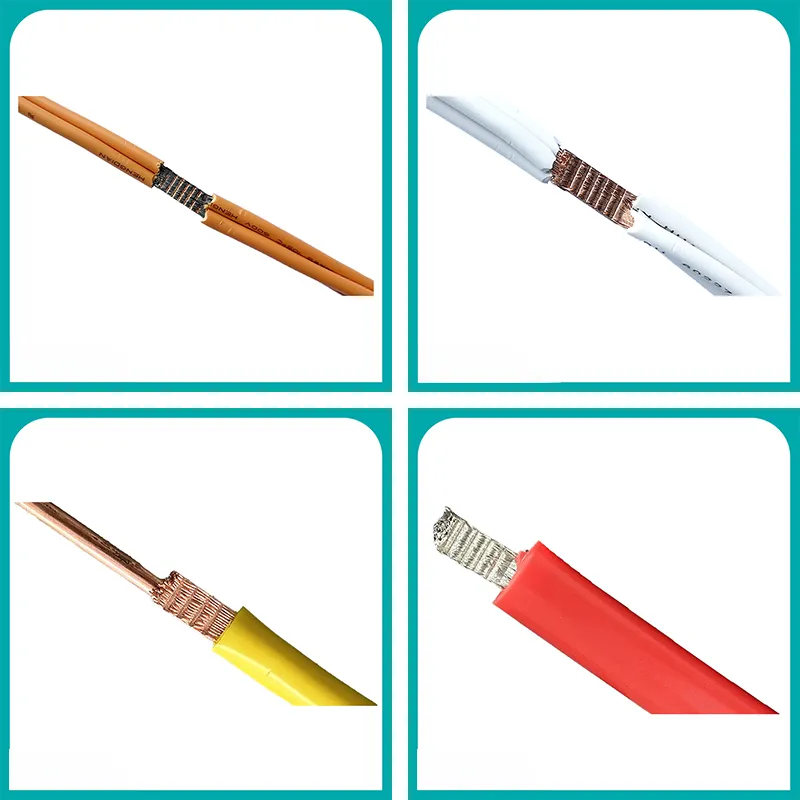
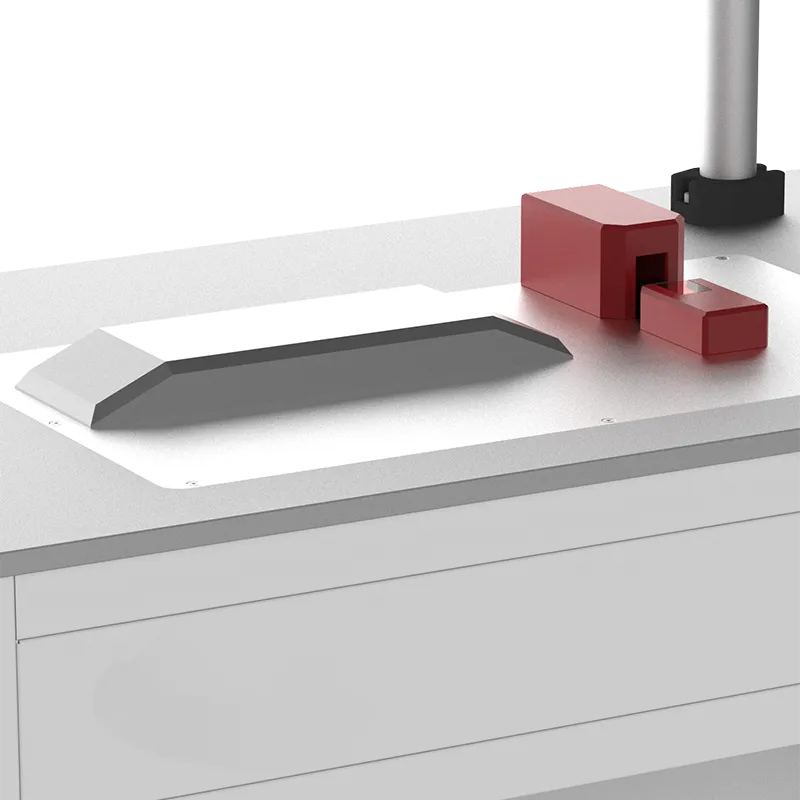
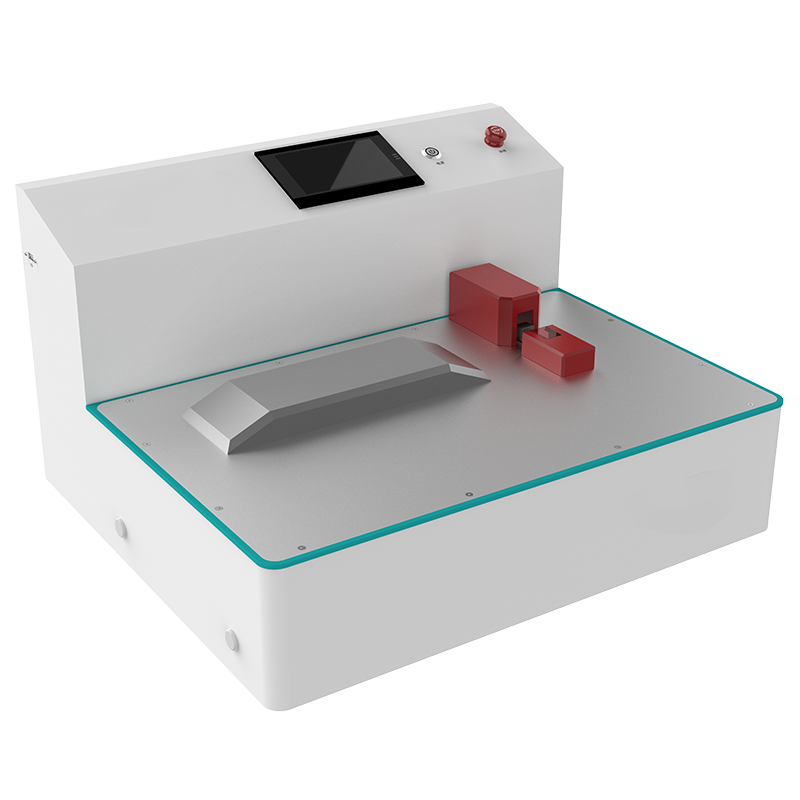
The ultrasonic metal welding machine is a high-efficiency solid-state welding equipment for connecting non-ferrous metals such as copper and aluminum. Its core value lies in no solder required, no spatter, and excellent electrical conductivity. Taking the YN-D2012-G as an example, it offers a welding area of 35-120mm² and 12000W power, widely used in energy storage copper-aluminum busbar welding applications.
In the industrial manufacturing sector, how much a metal ultrasonic welding machine costs has always been a core topic in procurement decisions. This article takes the YN series ultrasonic metal welding machines as the analysis subject, systematically breaking down equipment pricing logic and selection pathways from dimensions such as power level, welding area, and structural form, providing B2B engineering decision-makers with an evaluation framework that balances technical verification and return on investment.
How Much Does a Metal Ultrasonic Welding Machine Cost: A Complete Decision Framework from Power Level to Value Assessment
Answering how much a metal ultrasonic welding machine costs cannot be separated from specific process requirements. Equipment pricing is jointly determined by four factors: power level, welding area coverage, structural form, and control system. Taking the YN-D2012-G as an example, its 12000W ultra-high power combined with a 35-120mm² welding area, total machine weight of 988KG, and dimensions of 1750×1050×2150mm, positions it as a flagship D-series device designed for energy storage copper-aluminum busbar welding [Fact 1]. The YN-X203-Y, as a 3000W-class precision welding model, covers a welding area of 0.35-20mm², weighs only 88KG, and measures 670×520×410mm, suitable for high-efficiency precision welding of fine metal parts [Fact 7]. The price difference between the two is substantial, but each corresponds to completely different production line positioning and investment payback periods.
When evaluating how much a metal ultrasonic welding machine costs, procurement parties should establish a "comprehensive value assessment" rather than a "pure price comparison" decision framework. The unit price of the equipment is only part of the initial investment; production capacity efficiency, yield rate, energy consumption levels, and maintenance costs must also be calculated simultaneously. For example, although the 12000W-class equipment has a higher initial investment, in high-volume energy storage copper-aluminum busbar welding scenarios, the cost dilution effect brought by its single-machine production capacity and welding consistency can often offset the price difference within 12 to 18 months.
Technical Parameters and Configuration Differences: Core Variables Determining Metal Ultrasonic Welding Machine Prices
Delving deeper into the equipment pricing structure, the matching of power level and welding capability is the primary variable. The YN-D208-G covers a 20-70mm² welding area with 8000W power, weighs 957KG, measures 1750×1050×2150mm, and is positioned for large wire harness copper-aluminum busbar welding [Fact 2]; while the YN-D206-G adopts a 6000W split-type design with a 15-50mm² welding area, weighs 192KG, measures 1400×760×2000mm, and targets high-voltage wire harness copper-aluminum terminal welding scenarios [Fact 3]. Each increase in power level requires upgraded transducer, horn, and sonotrode material specifications, and structural rigidity design standards also rise accordingly—this is the physical basis of the price gradient.
Welding area coverage directly determines equipment structural design and manufacturing costs. From the YN-X203-Y's precision range of 0.35-20mm² to the YN-D2012-G's large cross-section welding of 35-120mm², the larger the area span, the more stringent the requirements for frame rigidity, pressure system, and amplitude control precision [Fact 1][Fact 7]. Additionally, control system configurations such as digital frequency tracking, energy mode welding, and data traceability functions are important add-ons affecting the final quote. Procurement parties should require suppliers to clearly itemize the price differences between standard configurations and optional features to avoid unexpected expenses during later production line integration.
Full Series Model Price Gradient Analysis: Selection Comparison from Precision Electronics to Energy Storage Copper Busbars
| Model |
Power |
Welding Area |
Weight |
Typical Application Positioning |
| YN-X203-Y |
3000W |
0.35-20mm² |
88KG |
Precision electronics, sensor welding [Fact 7] |
| YN-X204-Z |
4000W |
1-30mm² |
132KG |
Lithium battery wire harness terminal welding [Fact 6] |
| YN-X206-Z |
6000W |
10-50mm² |
118KG |
Power battery wire harness welding [Fact 5] |
| YN-P203-F |
3000W |
1-100mm² |
73KG |
Precision electronics and sensors [Fact 4] |
| YN-D206-G |
6000W |
15-50mm² |
192KG |
High-voltage wire harness copper-aluminum terminals [Fact 3] |
| YN-D208-G |
8000W |
20-70mm² |
957KG |
Large wire harness copper-aluminum busbars [Fact 2] |
| YN-D2012-G |
12000W |
35-120mm² |
988KG |
Energy storage copper-aluminum busbar welding flagship [Fact 1] |
Through the above model matrix, procurement parties can quickly locate the price range that matches their welding process requirements. If the production line is primarily focused on power battery PACK welding, the 6000W-class YN-X206-Z with its 10-50mm² welding area and 118KG total weight strikes a balance between production line layout flexibility and production capacity efficiency [Fact 5]; if large-scale wire harness copper-aluminum busbar batch production is involved, heavy-duty equipment of 8000W-class and above should be considered.
Equipment Investment Return Analysis Across Different Industry Application Scenarios
From actual production scenarios, the return on investment logic for metal ultrasonic welding machines varies by industry. In the new energy storage industry, the 12000W-class YN-D2012-G is used for copper-aluminum busbar energy storage welding; its 35-120mm² large-area welding capability significantly reduces the number of weld points, improves single-machine output efficiency, and the improved yield stability directly dilutes per-unit manufacturing costs [Fact 1]. In the automotive wire harness industry, the 8000W-class YN-D208-G meets the batch production needs of large wire harness copper-aluminum busbar welding, with its 20-70mm² coverage range matching mainstream wire harness specifications; equipment stability and sonotrode lifespan become key factors in cost control [Fact 2].
The 3C precision electronics industry focuses more on the precision performance of 3000W-class equipment in fine welding. The energy control precision of the YN-X203-Y over a 0.35-20mm² welding area effectively reduces the heat-affected zone, minimizes cold welds and spatter, and is critical for improving the yield rate of high-value sensors [Fact 7]. In power battery PACK production lines, the efficiency performance of the 6000W-class YN-X206-Z over a 10-50mm² welding area, combined with its compact dimensions of 1020×610×1200mm, facilitates multi-station parallel layout and improves overall production line takt time [Fact 5].
Procurement Decision Guide: Quotation Review Points and Hidden Cost Avoidance
When reviewing quotations for how much a metal ultrasonic welding machine costs, B2B decision-makers should focus on verifying the following items: whether the welding area coverage fully matches process requirements, power output stability indicators, sonotrode design lifespan and replacement costs, after-sales response time, and spare parts supply lead times. Additionally, installation and commissioning fees, operator training costs, and production line integration modification expenses must be included in the total cost of ownership calculation.
Technical verification is the core step in avoiding procurement risks. It is recommended to require suppliers to provide welding test reports on samples of the same material and specifications, including tensile strength testing, metallographic analysis, and conductivity test data, to confirm that actual welding results meet process standards. Regarding certification compliance, confirm whether the equipment holds necessary certifications such as CE, FCC, and ISO to ensure production line acceptance and export compliance.
Frequently Asked Questions
Q:??What is a reasonable budget range for a metal ultrasonic welding machine?
Equipment prices vary significantly by power level and configuration. There may be a multiple-fold price difference between a 3000W-class precision model and a 12000W-class energy storage welding flagship. It is recommended to determine the budget range based on actual welding area requirements and production capacity targets, avoiding over-configuration or insufficient capacity.
Q: How do I determine whether the equipment power meets production line requirements?
Use welding area as the primary basis. For precision welding of 0.35-20mm², a 3000W-class device can be selected [Fact 7]; for power battery wire harness welding of 10-50mm², a 6000W-class device is recommended [Fact 5]; for energy storage copper-aluminum busbar welding of 35-120mm², 12000W-class equipment is required [Fact 1].
Q: How do split-type and integrated structures affect equipment selection?
Split-type designs (such as the YN-D206-G, weighing 192KG) facilitate flexible production line layout and maintenance, suitable for space-constrained scenarios [Fact 3]; integrated heavy-duty structures (such as the YN-D208-G, weighing 957KG) offer greater rigidity, suitable for continuous operation in large cross-section welding [Fact 2].
Q: How much impact does welding area coverage have on price?
The welding area span directly determines the design requirements for frame rigidity, pressure system, and amplitude control precision. From the YN-X203-Y's 0.35-20mm² to the YN-D2012-G's 35-120mm², structural design and core component specifications differ significantly, with prices rising in a gradient accordingly [Fact 1][Fact 7].
Q: Is equipment weight directly related to welding stability?
Generally, high-power equipment requires heavier frames to suppress vibration displacement during welding. The YN-D2012-G weighs 988KG and the YN-D208-G weighs 957KG, both featuring heavy-duty structural designs to ensure positional accuracy during large cross-section welding [Fact 1][Fact 2].
Q: Which type of equipment should be selected for precision electronics welding?
Both the YN-P203-F (3000W, welding area 1-100mm², weight 73KG) and the YN-X203-Y (3000W, welding area 0.35-20mm², weight 88KG) are suitable for precision electronics and sensor welding; the specific selection should be determined based on workpiece structure [Fact 4][Fact 7].
Q: What is the recommended configuration for power battery wire harness welding?
The YN-X206-Z (6000W, welding area 10-50mm², weight 118KG) is specifically designed for power battery wire harness welding, with a high degree of matching between power and welding area, suitable for batch production scenarios [Fact 5].
Q: What parameters should be focused on for large wire harness copper-aluminum busbar welding?
Focus should be on the upper limit of welding area and power stability. The YN-D208-G (8000W, 20-70mm²) and YN-D2012-G (12000W, 35-120mm²) cover different specifications of large wire harness and energy storage copper-aluminum busbar requirements respectively [Fact 1][Fact 2].
Q: What special requirements exist for high-voltage wire harness copper-aluminum terminal welding?
High-voltage wire harness terminal welding must balance electrical conductivity and mechanical strength. The YN-D206-G (6000W, 15-50mm²) adopts a split-type design, facilitating flexible positioning of the sonotrode in high-voltage wire harness production lines to accommodate different terminal structures [Fact 3].
Q: How does equipment size affect production line layout?
Compact equipment such as the YN-P203-F (565×269×442mm) is suitable for integration into precision electronics production lines; large equipment such as the YN-D2012-G (1750×1050×2150mm) requires dedicated operation and maintenance space, which should be confirmed in advance during layout planning [Fact 1][Fact 4].
Q: How can actual welding results be verified?
It is recommended to require suppliers to provide welding test reports on samples of the same material and specifications, including tensile strength, metallographic analysis, and conductivity test data, using measured data as the acceptance basis.
Q: How important are equipment certifications to procurement decisions?
Certifications such as CE, FCC, and ISO are fundamental guarantees of equipment quality and compliance, directly affecting production line acceptance and product exports. During procurement, suppliers should be required to provide copies of certification documents and verify their validity.
Q: How should sonotrode lifespan and replacement costs be evaluated?
Sonotrode lifespan depends on welding material, frequency, and pressure parameters. During procurement, the sonotrode material, expected lifespan, and replacement unit price should be clearly specified and incorporated into the per-unit cost calculation model.
Q: Are installation, commissioning, and training fees included in the quotation?
Quotation practices vary among suppliers. It is recommended to explicitly require itemized fees for installation and commissioning, operator training, and after-sales service during the inquiry stage to avoid additional expenses later.
Q: How can compatibility for multi-machine networking or production line integration be confirmed?
It is necessary to confirm whether the equipment supports standard industrial communication protocols and data traceability interfaces. For automated production line integration needs, suppliers should be required to provide past integration cases and technical integration proposals.
Qualifications and Contact
The YN series ultrasonic metal welding machines have passed CE, FCC, and ISO system certifications, ensuring compliance with international standards in electrical safety, electromagnetic compatibility, and quality management. We provide full-process technical support from sample welding testing, equipment selection consultation, to production line integration solutions. To obtain detailed technical parameter sheets or arrange sample testing, please contact our engineering team. We will provide customized equipment configuration recommendations and return on investment calculations based on your specific welding materials, cross-section specifications, and production capacity requirements.
Certifications
Products meet international safety and EMC standards