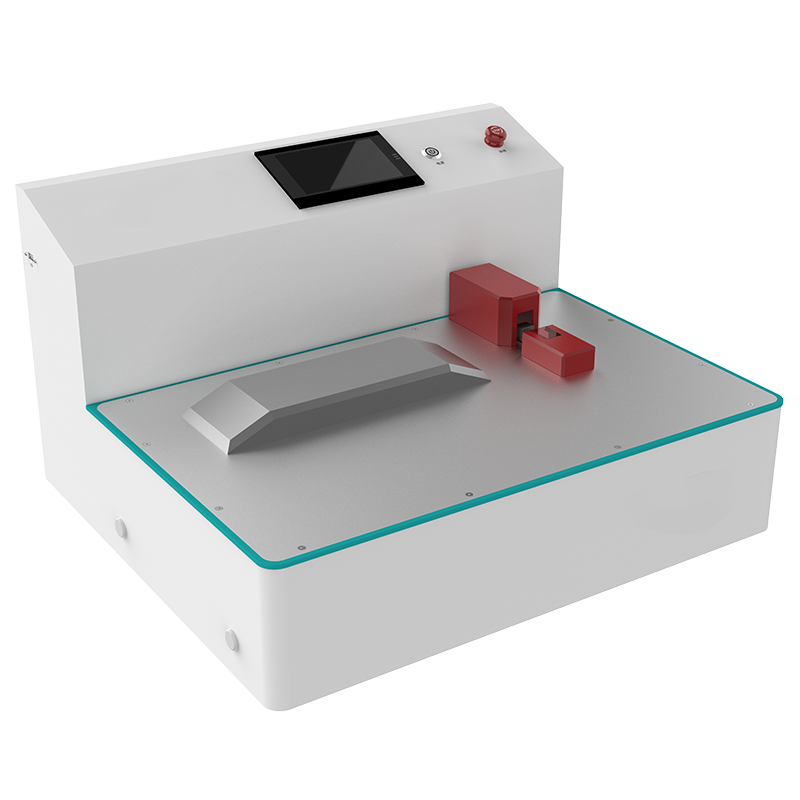
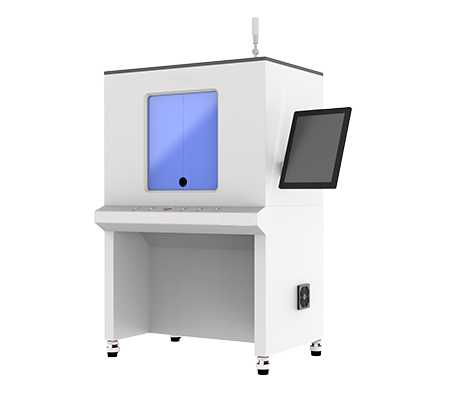
This product is an industrial-grade ultrasonic metal welding machine, whose core value lies in achieving efficient solid-state joining of dissimilar metals such as copper and aluminum. Taking the 12000W flagship model YN-D2012-G as an example, its welding area reaches 35-120mm², specifically designed for energy storage copper-aluminum busbar welding, ensuring electrical conductivity and joint strength.
In B2B industrial procurement, the question of "which brand of ultrasonic metal welding machine offers the best quality" essentially reflects a comprehensive evaluation of welding consistency, power authenticity, and long-term operational stability. A qualified ultrasonic metal welding machine must convert high-frequency mechanical vibration into solid-state bonding between metal atoms, replacing traditional resistance welding and crimping processes. It is particularly suitable for demanding scenarios such as copper-aluminum dissimilar metal joining, large-cross-section wire harness terminals, and energy storage copper-aluminum busbar welding. Based on verifiable technical specifications, this article provides a complete evaluation framework from selection to acceptance for procurement and engineering decision-makers.
Which brand of ultrasonic metal welding machine offers the best quality: industry evaluation standards and procurement pitfalls
Answering "which brand of ultrasonic metal welding machine offers the best quality" cannot stop at brand awareness ranking; instead, a quantifiable technical evaluation model should be established. The evaluation criteria include at least five dimensions: whether welding area coverage matches your own wire harness cross-section specifications, whether power output is authentic and sustainable, whether frame rigidity and amplitude control precision are sufficient to suppress resonance drift, whether production yield data is traceable, and whether international certifications such as CE/FCC/ISO are complete. A common procurement pitfall is making decisions based solely on equipment appearance or price while ignoring the match between core parameters and your own product processes—for example, energy storage copper-aluminum busbar welding requires 35-120mm² welding area coverage, while precision sensor welding may only require a flexible adjustment range of 1-100mm². The requirements for frame rigidity, transducer power, and control system precision differ significantly between these two applications.
Brand technical capability breakdown: quality tiers of ultrasonic metal welding machines based on core parameters
Equipment in different power ranges exhibits significant tiering in structural design, welding capability, and application scenarios. The following compares quality differences across models based on verifiable technical specifications, helping procurement teams establish a "parameter-quality" correspondence.
- Ultra-high-power flagship models (energy storage copper-aluminum busbar welding): YN-D2012-G, power 12000W, welding area 35-120mm², total machine weight 988KG, dimensions 1750×1050×2150mm. This class of equipment requires ultra-high-rigidity frames and heavy-duty transducer systems, suitable for copper-aluminum busbar connections in energy storage battery packs [Fact 1].
- High-power standard models (large wire harness welding): YN-D208-G, power 8000W, welding area 20-70mm², weight 957KG, dimensions 1750×1050×2150mm, designed for large wire harness and copper-aluminum busbar welding scenarios [Fact 2].
- Split-type high-power models (high-voltage wire harness terminal welding): YN-D206-G, power 6000W, welding area 15-50mm², weight 192KG, dimensions 1400×760×2000mm, split-type structure facilitates integration into automated production lines [Fact 3].
- Precision electronics and sensor welding models: YN-P203-F, power 3000W, frequency 20KHz, welding area 1-100mm², weight 73KG, dimensions 565×269×442mm, suitable for precision electronics and sensor welding [Fact 4].
- Power battery wire harness welding specialist models: YN-X206-Z, power 6000W, welding area 10-50mm², weight 118KG, dimensions 1020×610×1200mm [Fact 5]; and YN-X204-Z, power 4000W, welding area 1-30mm², weight 132KG, same dimensions [Fact 6].
Core functions of a quality ultrasonic metal welding machine: from weld quality to production line efficiency
The functional manifestation of "which brand of ultrasonic metal welding machine offers the best quality" is reflected in micron-level amplitude closed-loop control (ensuring welding consistency), real-time automatic frequency tracking (responding to acoustic impedance changes of different metal combinations), three welding modes (energy/time/depth) switching, and weld result data traceability. Taking YN-D2012-G as an example, its 12000W ultra-high-frequency output capability combined with 988KG total machine weight effectively suppresses amplitude attenuation during large-cross-section copper-aluminum welding, ensuring weld point strength consistency [Fact 1]. Additionally, the split-type model YN-D206-G (192KG, 1400×760×2000mm) supports seamless integration with automated loading/unloading mechanisms, reducing quality fluctuations caused by manual intervention [Fact 3].
Micron-level amplitude closed-loop control
This system monitors transducer amplitude in real time and feeds it back to the control unit, ensuring that the amplitude output of each weld remains within the set window. For copper-aluminum dissimilar metal welding, amplitude consistency directly determines the thickness of intermetallic compounds formed, which in turn affects weld point electrical conductivity and mechanical strength.
Real-time automatic frequency tracking
When welding different metal combinations or when horn wear causes acoustic impedance changes, the equipment automatically adjusts the operating frequency to the resonance point. This function effectively prevents energy reflection and transducer overheating, extends tool head life, and ensures welding quality consistency in batch production.
In-depth technical specification comparison: model selection matching for ultrasonic metal welding machines across power ranges
The following table provides a quantifiable specification comparison framework to guide procurement teams in selecting models based on their product cross-section area, production takt time, and workshop space. Please note that if your welding area requirement exceeds any of the following specification ranges, please contact us to confirm a customized solution.
| Model | Power | Welding Area | Machine Weight | Dimensions (mm) | Typical Applications |
|---|
| YN-D2012-G | 12000W | 35-120mm² | 988KG | 1750×1050×2150 | Energy storage copper-aluminum busbar welding [Fact 1] |
| YN-D208-G | 8000W | 20-70mm² | 957KG | 1750×1050×2150 | Large wire harness copper-aluminum busbar welding [Fact 2] |
| YN-D206-G | 6000W | 15-50mm² | 192KG | 1400×760×2000 | High-voltage wire harness copper-aluminum terminal welding [Fact 3] |
| YN-X206-Z | 6000W | 10-50mm² | 118KG | 1020×610×1200 | Power battery wire harness welding [Fact 5] |
| YN-X204-Z | 4000W | 1-30mm² | 132KG | 1020×610×1200 | Lithium battery wire harness terminal welding [Fact 6] |
| YN-X203-Y | 3000W | 0.35-20mm² | 88KG | 670×520×410 | High-efficiency precision metal welding [Fact 7] |
| YN-P203-F | 3000W | 1-100mm² | 73KG | 565×269×442 | Precision electronics and sensor welding [Fact 4] |
Application Scenarios: from energy storage connections to precision electronics assembly
Ultrasonic metal welding machines have deep applications across multiple industrial fields. The following are typical scenario descriptions:
- Energy storage battery pack copper-aluminum busbar welding: Using YN-D2012-G (12000W, 35-120mm²), it meets the reliable connection requirements for large-cross-section copper and aluminum busbars, with low weld resistance and high mechanical strength, adapting to the stringent requirements of energy storage systems for current-carrying capacity and long-term reliability.
- New energy vehicle high-voltage wire harness terminal welding: YN-D206-G (6000W, 15-50mm²) split-type design can be flexibly integrated into automated production lines for welding copper terminals to aluminum conductors in high-voltage wire harnesses, ensuring connection reliability under vibration environments.
- Power battery module wire harness welding: YN-X206-Z (6000W, 10-50mm²) and YN-X204-Z (4000W, 1-30mm²) target internal battery pack wire harness connections, providing efficient and consistent weld quality to meet batch production takt times.
- Precision electronics and sensor welding: YN-P203-F (3000W, 20KHz, 1-100mm²) is suitable for precision welding of micro terminals, internal sensor leads, and similar components. Its lightweight design (73KG) facilitates laboratory or small-batch production line layouts.
FA
Q:??Common questions in ultrasonic metal welding machine procurement
Which brand of ultrasonic metal welding machine offers the best quality? How to evaluate equipment quality?
Equipment quality should be evaluated comprehensively across six dimensions: welding area coverage capability, power output authenticity, frame rigidity, amplitude control precision, yield data, and international certifications. For example, if your product is an energy storage copper-aluminum busbar, you need to confirm whether the equipment's welding area covers 35-120mm² and whether the total machine weight is sufficient to suppress vibration attenuation during large-cross-section welding (such as the 988KG total weight of YN-D2012-G).
What advantages does ultrasonic metal welding have over resistance welding?
Ultrasonic metal welding is a solid-state joining process that requires no external heating, avoiding common resistance welding issues such as spatter, large heat-affected zones, and electrode wear. It is especially suitable for copper-aluminum dissimilar metal connections, effectively suppressing excessive growth of intermetallic compounds and reducing contact resistance.
What is the matching principle between welding area and equipment power?
The larger the welding area, the higher the required power and frame rigidity. For example, 35-120mm² copper-aluminum busbar welding requires 12000W power and 988KG total machine weight (YN-D2012-G) [Fact 1]; while 1-30mm² lithium battery terminal welding can be satisfied with 4000W power (YN-X204-Z) [Fact 6]. When selecting, reserve a 20% power margin to accommodate material batch variations.
Which production lines are split-type ultrasonic welding machines suitable for?
Split-type models (such as YN-D206-G, 192KG, 1400×760×2000mm [Fact 3]) separate the generator from the welding head, facilitating integration into automated assembly lines or robotic workstations, reducing equipment footprint. They are suitable for high-volume, fast-takt production scenarios such as high-voltage wire harnesses.
How to verify welding consistency of an ultrasonic welding machine?
Process monitoring can be performed through the equipment's built-in energy/time/depth three welding modes, and the equipment should provide weld result data traceability. It is recommended to conduct sample trial welding before purchase and test the peel strength, contact resistance, and cross-sectional metallographic structure of weld points.
Does the equipment support copper-aluminum dissimilar metal welding?
Yes. The solid-state joining characteristics of ultrasonic welding are naturally suitable for copper-aluminum dissimilar metal connections. However, appropriate power and amplitude parameters must be selected based on the copper-aluminum thickness combination. For example, 20-70mm² copper-aluminum busbar welding can use YN-D208-G (8000W) [Fact 2].
What routine maintenance does the equipment require?
Routine maintenance mainly includes horn (tool head) wear inspection, transducer cooling system cleaning, and amplitude sensor calibration. It is recommended to check the horn surface condition every shift and replace the horn and recalibrate the frequency tracking system after every 5 million welds.
Does the equipment have CE/FCC/ISO certifications?
Taking YN-X203-Y as an example, this model has passed CE/FCC/ISO certifications [Fact 7]. For certification status of other models, please confirm with our sales engineers before ordering to ensure the equipment meets the market access requirements of your target market.
Can the equipment be integrated into MES systems for data traceability?
High-end models support real-time recording and export of welding parameters (energy, time, depth, amplitude) and can be integrated into MES systems via standard communication protocols (such as TCP/IP or RS485). For specific interface methods, please provide your production line network architecture, and we can provide a customized integration solution.
What applications are suitable for equipment with a welding area of 1-100mm²?
YN-P203-F (3000W, 20KHz, 1-100mm², 73KG [Fact 4]) has a wide welding area range, making it suitable for precision electronics, sensors, relays, and small wire harness terminal welding. One machine can cover multiple product specifications, making it ideal for multi-variety, small-batch production.
What are the equipment warranty period and after-sales response time?
The standard warranty period is 12 months (excluding consumable parts such as horns). After-sales response time is based on the customer's location and contract terms, typically with remote response within 24 hours and on-site service within 48 hours. Specific terms should be clearly stated in the procurement contract.
How to select equipment dimensions based on existing production line space?
Both equipment dimensions and operation/maintenance space must be considered. For example, YN-D2012-G has dimensions of 1750×1050×2150mm [Fact 1], requiring at least 1 meter of operating aisle; while YN-P203-F (565×269×442mm [Fact 4]) is suitable for compact workbenches or laboratory benches.
Does equipment power affect welding speed?
The higher the power, the greater the energy input per unit time, and welding speed increases accordingly. However, welding speed is also affected by material thickness, horn design, and welding area. For example, the 12000W YN-D2012-G can control single-point welding time within 0.5-2 seconds when welding 35-120mm² copper-aluminum busbars.
Does the equipment support automated loading/unloading?
Split-type models (such as YN-D206-G) and some integrated machines support linkage with automation mechanisms, receiving start signals and feeding back weld completion signals via I/O interfaces or field buses. Specific automation integration solutions need to be customized based on your production line layout.
How to obtain equipment technical parameter sheets and operation manuals?
Please contact our sales engineers through the contact information at the end of this article. We will provide detailed technical specification sheets, operation manuals, and CE certification document copies for the corresponding models. Sample trial welding can also be arranged to verify equipment performance.
Qualifications and contact: ensuring equipment quality and long-term service
We understand that the ultimate answer to "which brand of ultrasonic metal welding machine offers the best quality" should be built on long-term stable equipment operation and timely after-sales support. All products are designed and manufactured in accordance with the ISO9001 quality management system, and key models have passed international certifications such as CE/FCC/ISO [Fact 7]. We provide full-process services from selection consultation, sample trial welding, equipment installation and commissioning, to operator training. If you have any questions regarding certification status, delivery times, or customization requirements for specific models, please feel free to contact us directly for confirmation, and we will provide clear written responses.
Certifications
Products meet international safety and EMC standards