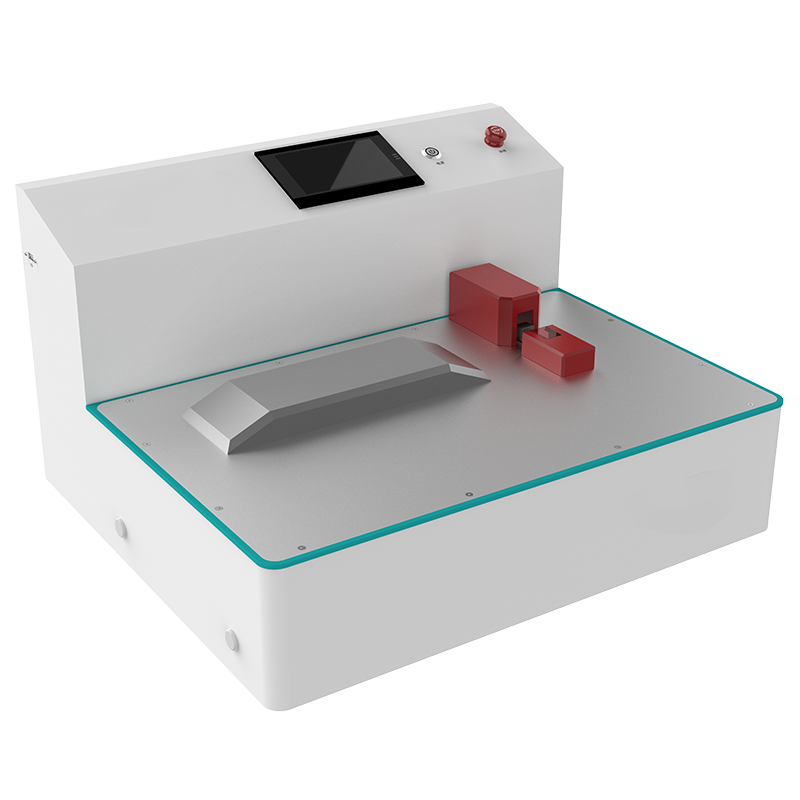
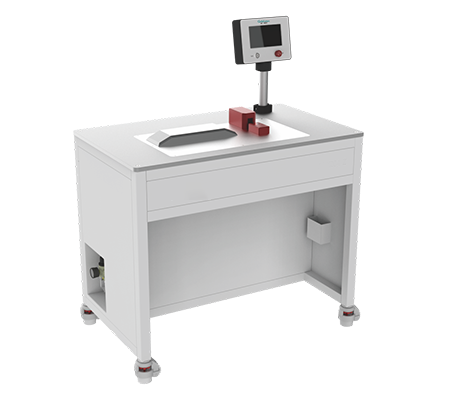
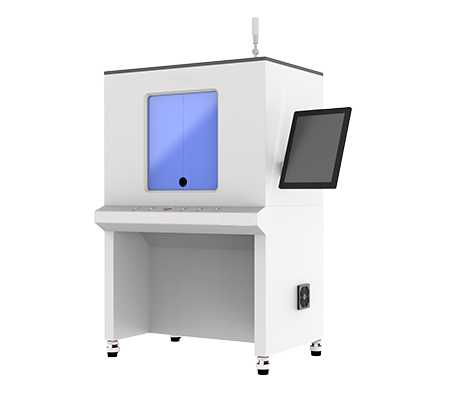
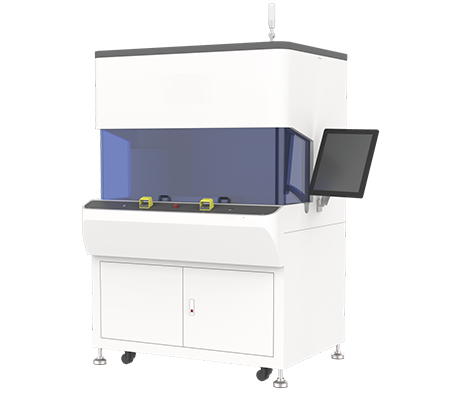
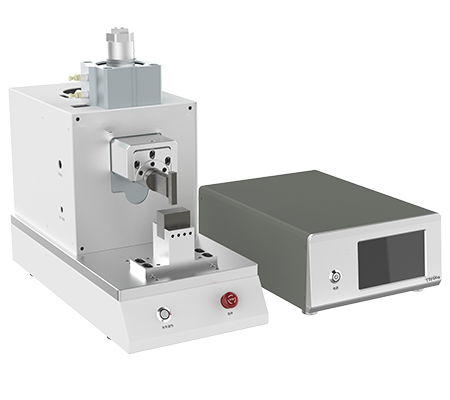
YN-X203-YThe YN-X203-Y is a 3000W-class industrial precision ultrasonic metal welding machine from Winna Technology's ultrasonic brand. It adopts 20KHz high-frequency output and a full-steel heavy-duty body design, purpose-built for high-conductivity metal connection scenarios such as new energy lithium battery tabs, automotive wire harness terminals, and Busbar. The equipment supports power upgrades up to 6000W, with a welding area covering 0.35–20mm², meeting the full-chain welding needs from precision electronics to power batteries.
The product is certified to CE, FCC, and ISO9001, with a 12-month warranty for the whole machine and an extended warranty up to 24 months for core components, and is widely used in new energy, automotive electronics, wire harness processing, and other industries.
Technical Specifications
| Model | YN-X203-Y |
| Operating Voltage | 220V / 50Hz |
| Frequency | 20KHz |
| Power | 3000W (optional upgrade to 4000W / 6000W) |
| Welding Area | 0.35 – 20mm² |
| Welding Materials | Copper, aluminum, nickel, brass, and copper-aluminum dissimilar metals |
| Wire Diameter Range | 0.5mm² – 35mm² (multi-strand copper wire) |
| Control Method | Intelligent digital control, one-key parameter setting |
| Cooling Method | Air cooling |
| Dimensions | 670 × 520 × 410mm |
| Net Weight | 88KG |
| Warranty Period | 12 months for the whole machine / 24 months for core components (transducer + horn) |
| Certification Standards | CE / FCC / ISO9001 |
Product Features
High power and high precision: 3000W rated power, 20KHz high-frequency output, welding time of only 0.1-0.5 seconds per weld, with efficiency more than 3 times that of traditional resistance welding.
Wide welding compatibility: Welding area 0.35-20mm², supporting direct welding of copper-copper and copper-aluminum dissimilar metals without solder or flux.
Upgradable power: Standard 3000W configuration, with optional upgrade to 4000W/6000W, adapting to different material thicknesses and welding requirements, one-time investment for long-term use.
Heavy-duty full-steel body: 88KG full-steel structure, excellent overall stability, no deformation during long-term operation, with a designed service life of more than 10 years.
Intelligent digital control: Equipped with a microcomputer control system that can store multiple sets of welding parameters and switch between different process recipes with one key, reducing personnel training costs.
Quality inspection compatibility: Can be combined with peel strength testing, conduction resistance testing (micro-ohmmeter), metallographic cross-section analysis, and other quality inspection methods, implementing UL 486A and QC/T 29106 standards.
Application Scenarios
New energy lithium batteries
Power battery tab welding, module Busbar and busbar welding, energy storage battery Pack assembly, with extensive experience supporting daily battery production lines, weld resistance ≤100μΩ.
Automotive wire harnesses and connectors
High-voltage wire harness terminal welding, motor lead wire welding, IGBT module connection, replacing traditional crimping processes, with contact resistance reduced by more than 60%.
Consumer electronics
Mobile phone battery tabs, laptop battery packs, drone lithium battery welding, welding dimensional accuracy ±0.05mm, meeting miniaturization requirements.
Copper-aluminum transition welding
Direct welding of copper-aluminum dissimilar metals without additional transition pieces, widely used in new energy charging piles and the power and electrical industry.
Precision sensors and electronic components
Micro terminal and pin welding, with an extremely small heat-affected zone that does not damage the component body, suitable for medical electronics and instrumentation.
Frequently Asked Questions
What is the difference between YN-X203-Y and the YN-D series?
YN-X203-Y belongs to the X series (3000W), focusing on precision welding and medium wire diameter applications; the YN-D series (such as D208G 8000W) consists of ultra-high-power models used for large cross-section wire harnesses and thick copper bar welding. Model selection is determined by wire diameter and total material area.
Does this equipment support copper-aluminum dissimilar metal welding?
Yes. One of the core advantages of ultrasonic welding is achieving a solid-state connection between copper and aluminum without transition pieces, with extremely low interface resistance. It is widely used for copper-aluminum tab transition welding in lithium batteries and copper-aluminum bar connections in new energy charging piles.
How can welding quality consistency be ensured?
The equipment is equipped with an intelligent control system that can preset welding energy, time, and pressure parameters to ensure consistency in mass production. It is recommended to combine peel strength testing (tensile testing machine) and conduction resistance testing (≤100μΩ) for production quality monitoring.
Can free sample welding tests be provided?
Yes. Winna Technology provides free sample welding test services. You can mail the samples to be welded to our laboratory, and typically within 1-3 working days the welding test is completed and a test report including pull force data and cross-section photos is issued.
Is technical support provided if the equipment is exported overseas?
Yes. Winna ultrasonic welding equipment is exported to 40+ countries and regions worldwide, with English interfaces and operation manuals, and supports overseas remote debugging and technical support.
What size workpiece area can a 3000W ultrasonic welding machine weld?
YN-X203-Y (3000W) covers a welding area of 0.35-20mm². The weldable copper/aluminum conductor cross-section range is from 0.35mm² (fine wire harness terminals) to 20mm² (power battery tabs). If upgrading to 4000W output, the welding area can be expanded to 30mm². It is recommended to select power based on actual welding area requirements: ≤15mm² choose 3000W, 15-30mm² choose 4000W, >30mm² choose 6000W and above models.
Does ultrasonic welding require special skills from operators?
The operation threshold is very low. The equipment is preset with multiple groups of standard welding parameters (common combinations such as copper-copper, copper-aluminum, and aluminum-aluminum). Operators only need to select the corresponding parameter template, place the workpiece, and trigger welding. The equipment is equipped with a 15.6-inch touch screen, and the operation interface is intuitive. New employee training time is usually no more than 2 hours to operate independently. For more in-depth process parameter optimization, it is recommended that the equipment supplier provide technical support.
Does ultrasonic welding require solder or flux?
No. Ultrasonic metal welding is a solid-state welding process and does not use any solder (tin solder), flux, or filler metal. This feature brings multiple advantages: no solder cost, no harmful gas emissions, no subsequent cleaning required (no flux residue), extremely low welding resistance (≤100μΩ, reduced by more than 50% compared with traditional welding), high welding strength and good stability. It is especially suitable for new energy battery and automotive electronics fields with extremely high requirements for conductivity and reliability.
What is the working principle of an ultrasonic metal welding machine?
Ultrasonic metal welding uses 20KHz high-frequency mechanical vibration to generate frictional heat and plastic deformation at the metal contact surface, causing metal atoms to diffuse into each other and form a solid-state bond. The welding process requires no solder, flux, or external heating; the temperature does not exceed 50% of the metal's melting point, and brittle intermetallic compounds are not produced. Core components include: ultrasonic generator (electrical energy → high-frequency electrical signal), transducer (electrical signal → mechanical vibration), amplitude transformer (amplifies amplitude), and welding horn (transfers energy to the workpiece).
What are the daily maintenance and care requirements for the equipment?
Daily maintenance is simple: 1) Check the wear condition of the welding horn surface every shift, and repair or replace it in time; 2) Clean the transducer cooling fan filter every week; 3) Check the tightening status of all connecting bolts every month to prevent loosening that may cause welding quality fluctuations; 4) Check the heat dissipation of the ultrasonic generator every quarter and clean internal dust accumulation; 5) Replace the air filter once every six months (if equipped with a pneumatic system). The equipment's mean time between failures (MTBF) exceeds 5000 hours.
Can the welding machine be integrated into an automated production line?
Yes. YN-X203-Y is equipped with a standard RS485 communication interface and I/O control ports, supporting seamless integration with PLC, robot systems, and MES systems. Optional automation configurations include: automatic feeding mechanism, online welding quality inspection system, automatic removal of NG products, and real-time upload of welding data. The equipment supports Modbus RTU and TCP/IP communication protocols and can be easily connected to automated production line control systems.
What is the service life of the welding die (welding horn/ Horn)?
The normal service life of a titanium alloy welding horn is 100,000-500,000 welds (depending on the welding material and pressure). The typical life when welding copper-aluminum terminals is 200,000-300,000 welds. When the working surface of the welding horn shows obvious wear or the welding effect declines, it can be restored by regrinding (can be reground 3-5 times). It is recommended to stock 1-2 spare welding horns to meet high-volume production needs. Our company also provides welding horn customization services—customized dedicated welding horns according to the shape of the weldment.
What are the equipment's energy consumption and operating costs?
The YN-X203-Y has a maximum power of 3KW. During actual welding, average energy consumption is only 500-1500W (depending on welding area and pressure settings). Single weld time is 0.1-0.5 seconds, and energy consumption per weld is approximately 0.5-2Wh. Based on 8 hours of operation per day and annual output of 500,000 welds, annual electricity cost is less than 500 RMB. Compared with traditional resistance welding (annual electricity cost of approximately 5000-8000 RMB for the same capacity), energy consumption is reduced by more than 80%.
What safety protection functions does the equipment support?
The equipment is equipped with multiple safety protections: 1) Anti-jamming protection for the welding head — automatically stops when welding times out; 2) Overload protection — automatically reduces frequency when power exceeds the limit; 3) Temperature protection — automatically shuts down when the transducer overheats; 4) Emergency stop button; 5) Safety light curtain (optional) — immediately stops action when the operator's hand enters the welding area. It has CE safety certification and complies with EU Machinery Directive 2006/42/EC.
How can welding quality be judged as meeting standards?
Welding quality inspection is divided into three levels: 1) Online inspection — the equipment monitors the welding power-displacement curve in real time and automatically alarms and records when abnormalities occur; 2) Sampling inspection — each batch is sampled according to AQL for peel strength testing (tensile testing machine) and conduction resistance testing (requirement ≤100μΩ); 3) Periodic verification — metallographic cross-section analysis is performed quarterly (to observe interface bonding rate, requirement ≥80%). Quality standards refer to UL 486A (wire connector safety standard) and customer technical agreements.