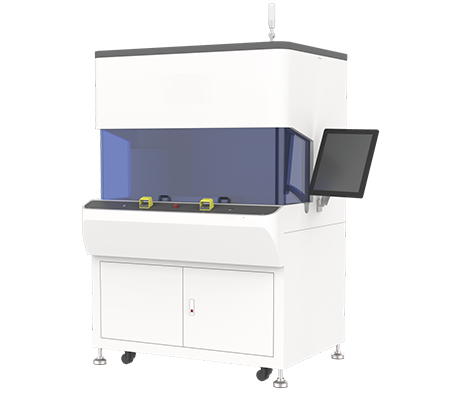
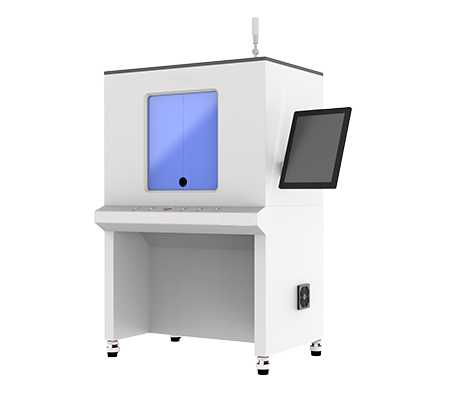
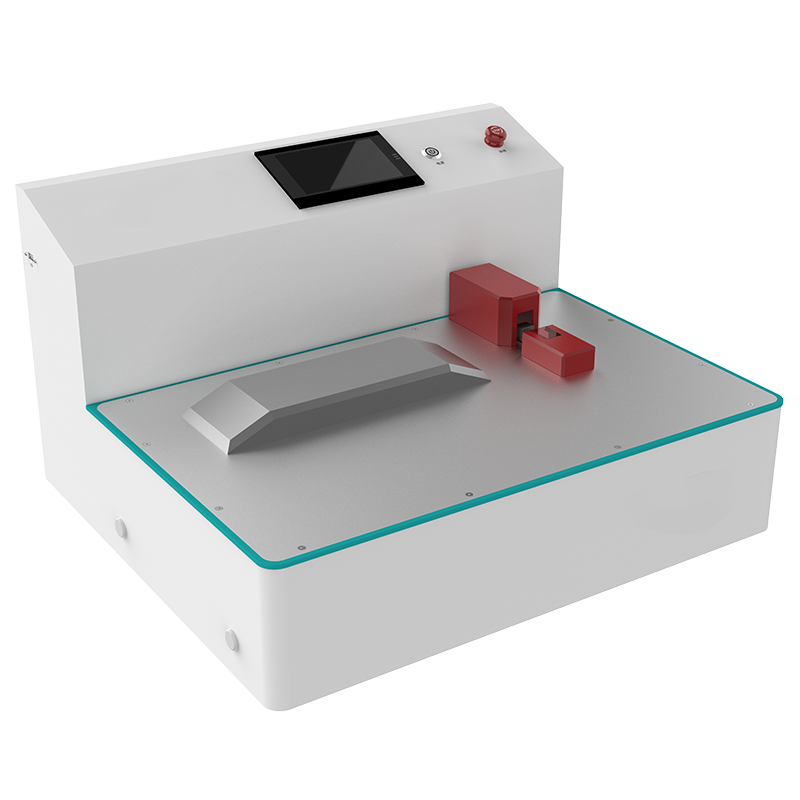
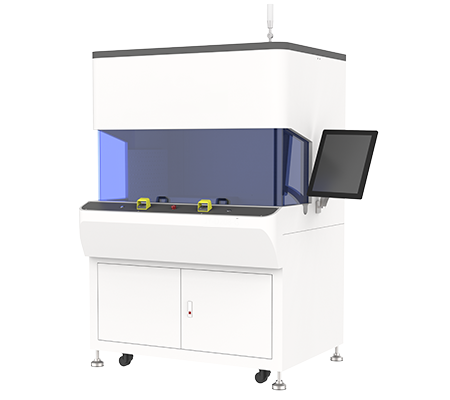
The ultrasonic metal welding machine is a high-efficiency solid-state welding equipment for copper/aluminum busbars, power batteries, and high-voltage wire harnesses, with power coverage from 3000W to 12000W and welding area from 0.35 to 120mm², suitable for energy storage and precision electronics applications. The equipment is CE/FCC/ISO certified, achieving high-reliability connections with low energy consumption and no solder.
In the fields of new energy storage, automotive wire harnesses, and power battery manufacturing, how much an ultrasonic metal welding machine costs has always been the core concern for procurement decision-makers. As a representative equipment of solid-state welding technology, the ultrasonic metal welding machine achieves molecular-level fusion of non-ferrous metals such as copper and aluminum through high-frequency mechanical vibration, requiring no solder, no preheating, and ensuring welding quality and electrical conductivity with an extremely low heat-affected zone. This article will provide a complete procurement decision guide from the dimensions of price composition, model comparison, technical specifications, and application scenarios.
How much does an ultrasonic metal welding machine cost: price composition and market trend analysis
To answer how much an ultrasonic metal welding machine costs, one must first understand the core variables behind price differences: power level, welding area, machine structure (integrated or split-type), and automation level. The power level directly determines the equipment's welding capability boundary, from 3000W to 12000W, with different power segments corresponding to distinctly different application scenarios and manufacturing costs.
Taking actual models as examples, the YN-X203-Y is a precision-type equipment in the 3000W power segment, with a welding area of 0.35-20mm², weight of 88KG, and dimensions of only 670×520×410mm [Fact 7], positioned toward precision electronics and small wire harness welding, with a relatively affordable price. The YN-D2012-G, as the 12000W flagship model, has a welding area of 35-120mm², weight of 988KG, and dimensions of 1750×1050×2150mm [Fact 1], specifically designed for copper/aluminum busbar energy storage welding, with a price naturally several magnitudes higher. The price difference logic between the two essentially reflects a comprehensive upgrade in power output capability, structural strength, control system complexity, and applicable scenarios.
Beyond hardware configuration, hidden factors affecting quotes also include brand certifications (CE/FCC/ISO), after-sales service network, delivery lead time, and customization requirements. Procurement parties should be clear: how much an ultrasonic metal welding machine costs is not a fixed value but dynamically changes with configuration and market fluctuations. It is recommended to contact the sales team directly for real-time quotes to ensure accurate pricing information matching current production capacity needs.
How much does an ultrasonic metal welding machine cost: model comparison across different power segments
To help procurement parties more accurately evaluate how much an ultrasonic metal welding machine costs, the following divides mainstream models by power segment and provides key parameter comparisons for preliminary screening based on actual welding needs.
| Power Segment | Model Number | Welding Area | Weight | Dimensions | Application Scenarios |
|---|
| 3000W | YN-X203-Y | 0.35-20mm² | 88KG | 670×520×410mm | Precision electronics, sensor welding [Fact 7] |
| 4000W | YN-X204-Z | 1-30mm² | 132KG | 1020×610×1200mm | Lithium battery wire harness terminal welding [Fact 6] |
| 6000W | YN-X206-Z | 10-50mm² | 118KG | 1020×610×1200mm | Power battery wire harness welding [Fact 5] |
| 6000W Split-type | YN-D206-G | 15-50mm² | 192KG | 1400×760×2000mm | High-voltage wire harness copper/aluminum terminal welding [Fact 3] |
| 8000W | YN-D208-G | 20-70mm² | 957KG | 1750×1050×2150mm | Large wire harness copper/aluminum busbar welding [Fact 2] |
| 12000W | YN-D2012-G | 35-120mm² | 988KG | 1750×1050×2150mm | Copper/aluminum busbar energy storage welding [Fact 1] |
From the selection decision matrix, the 3000W-4000W power segment suits precision components with small welding areas and thin material thickness; the 6000W segment is the mainstream configuration for power battery wire harnesses and high-voltage wire harnesses; the 8000W-12000W segment targets heavy industrial scenarios such as copper/aluminum busbar energy storage. Procurement parties should comprehensively evaluate the reasonable budget range for how much an ultrasonic metal welding machine costs based on the cross-sectional area of welding materials, production takt requirements, and production line layout conditions.
Core functions and technical advantages: key dimensions determining price reasonableness
Solid-state welding principle and low heat-affected zone advantage
The ultrasonic metal welding machine adopts solid-state welding technology, converting high-frequency electrical energy into mechanical vibration through a transducer, generating frictional heat and plastic deformation at the metal interface under pressure to achieve molecular-level fusion. This process requires no solder, no preheating, and has an extremely small heat-affected zone, making it particularly suitable for copper-aluminum dissimilar metal connections, effectively preventing the formation of brittle intermetallic compounds.
Power output stability and transducer efficiency
The stability of power output directly determines the consistency of welding quality. Taking the YN-D206-G as an example, its 6000W split-type design separates the welding head from the generator, not only adapting to complex production line layouts but also facilitating heat dissipation and maintenance [Fact 3]. High-precision transducers and resonance systems ensure efficient energy transfer, reducing energy consumption and improving welding yield.
Precision control system and quality traceability
Modern ultrasonic metal welding machines are equipped with programmable welding parameters (pressure, amplitude, time, energy) and support real-time monitoring and data recording, meeting the stringent quality traceability requirements of the automotive and energy storage industries. This capability is a value dimension that cannot be overlooked when evaluating how much an ultrasonic metal welding machine costs.
Multiple series covering different industrial scenarios
The product line covers the D series (copper/aluminum busbar energy storage), X series (power battery wire harnesses), and P series (precision electronics). Among them, the YN-P203-F, as a 3000W, 20KHz precision-type equipment with a welding area of 1-100mm², is suitable for precision electronics and sensor welding [Fact 4], reflecting the brand's professional depth across different niche segments.
Technical specifications in-depth interpretation: understanding true equipment performance from parameters
The technical specifications of an ultrasonic metal welding machine are the direct basis for determining whether it meets production requirements. In terms of power parameters, 3000W suits a 0.35-20mm² welding area, 4000W extends to 1-30mm², 6000W covers 10-50mm², 8000W increases to 20-70mm², and the 12000W flagship model YN-D2012-G can handle 35-120mm² copper/aluminum busbar welding [Fact 1]. The correspondence between welding area range and applicable wire diameter is the core matching logic in model selection.
Equipment weight and dimensions impose clear requirements on factory space and installation conditions. Large equipment such as the YN-D2012-G and YN-D208-G both require 1750×1050×2150mm of installation space and weigh nearly 1 ton [Fact 1][Fact 2], requiring assurance of floor load-bearing capacity and transport access. Medium-sized equipment YN-D206-G has dimensions of 1400×760×2000mm and weighs 192KG [Fact 3], suitable for space-constrained production lines. Small equipment YN-X203-Y is only 670×520×410mm and weighs 88KG [Fact 7], allowing flexible deployment in precision electronics production lines. Regarding frequency parameters, the 20KHz standard frequency has a mature process window in metal welding, balancing welding efficiency and quality stability.
Certification qualifications are an important indicator for evaluating equipment quality and export compliance. The YN-X203-Y has passed CE/FCC/ISO certification [Fact 7], indicating that its electromagnetic compatibility, safety, and quality management system all meet international standards, providing reliable assurance for global procurement.
Typical application scenarios: how different industries choose the right model
- New energy storage industry:Copper/aluminum busbar welding, energy storage battery connections. Recommended: YN-D2012-G (12000W flagship model, welding area 35-120mm²) [Fact 1], whose ultra-high power output can handle reliable connections of large cross-sectional copper/aluminum busbars, meeting the dual requirements of low resistance and high mechanical strength in energy storage systems.
- Automotive wire harness industry:High-voltage wire harness terminal welding, large wire harness copper/aluminum busbar connections. Recommended: YN-D208-G (8000W, welding area 20-70mm²) [Fact 2] and YN-D206-G (6000W split-type) [Fact 3], with the former suitable for large wire harnesses and the latter's split-type structure facilitating integration into automated production lines.
- Power battery industry:Battery module connection plate welding, lithium battery wire harness terminal welding. Recommended: YN-X206-Z (6000W, welding area 10-50mm²) [Fact 5] and YN-X204-Z (4000W, welding area 1-30mm²) [Fact 6], balancing welding quality and production efficiency.
- Precision electronics industry:Sensor, relay, and precision terminal welding. Recommended: YN-P203-F (3000W, 20KHz, welding area 1-100mm²) [Fact 4], whose fine control capability meets the welding consistency requirements of miniature components.
How much does an ultrasonic metal welding machine cost: common procurement questions answered
How much does an ultrasonic metal welding machine cost? What is the approximate price range?
The price of an ultrasonic metal welding machine varies significantly due to power level, welding area, machine structure, and automation configuration, ranging from tens of thousands to hundreds of thousands of RMB. The specific quote depends on your welding materials, cross-sectional area, takt requirements, and customization needs, with an accurate quote provided by the sales team. It is recommended to provide detailed process parameters to obtain an accurate price.
How large is the price gap between 3000W and 12000W welding machines?
Taking the YN-X203-Y (3000W) and YN-D2012-G (12000W) as examples, there are order-of-magnitude differences in power output, welding area (0.35-20mm² vs. 35-120mm²), equipment weight (88KG vs. 988KG), and structural complexity [Fact 7][Fact 1], with the price gap typically reaching several times. The specific difference needs to be confirmed based on configuration.
What advantages does a split-type welding machine (such as YN-D206-G) have compared to an integrated type?
The YN-D206-G adopts a split-type design with the welding head separated from the generator [Fact 3], allowing flexible layout in limited spaces, especially suitable for retrofitting existing automated production lines. Additionally, the split structure facilitates heat dissipation and independent maintenance, reducing the risk of downtime due to failures.
How should the welding area range be understood? Is bigger always better?
The welding area range refers to the cross-sectional area of metal that the equipment can effectively weld. It is not that bigger is always better; it should match your actual wire diameter or busbar cross-sectional area. Oversized equipment may cause over-welding when welding small components due to excess energy, while undersized equipment cannot meet large cross-section welding needs.
What specific requirements does equipment weight impose on installation?
Large equipment such as the YN-D2012-G (988KG) and YN-D208-G (957KG) [Fact 1][Fact 2] requires ensuring the factory floor's load-bearing capacity and reserving sufficient handling and operating space. Medium-sized equipment YN-D206-G (192KG) [Fact 3] and small equipment YN-X203-Y (88KG) [Fact 7] have relatively relaxed installation requirements.
What advantages does the 20KHz frequency offer in ultrasonic metal welding?
20KHz is the industrial standard frequency for ultrasonic metal welding, striking a balance between welding efficiency, transducer lifespan, and process maturity. Both the YN-P203-F and YN-X203-Y adopt 20KHz [Fact 4][Fact 7], suitable for precision and conventional metal welding scenarios.
What do CE/FCC/ISO certifications mean for equipment procurement?
CE certification ensures the equipment meets EU safety and electromagnetic compatibility requirements, FCC certification ensures US market compliance, and ISO certification reflects the quality management system level. The YN-X203-Y has passed the above certifications [Fact 7], serving as an important endorsement of equipment quality and export compliance.
Is copper-aluminum dissimilar metal welding prone to brittle compound formation?
In traditional fusion welding, copper and aluminum easily form brittle intermetallic compounds, whereas ultrasonic metal welding is a solid-state welding process with an extremely small heat-affected zone, effectively suppressing brittle phase formation and ensuring the electrical conductivity and mechanical strength of the welded joint.
Does the equipment support automated production line integration?
Yes. Split-type models such as the YN-D206-G [Fact 3] are particularly suitable for integration into automated production lines, with the welding head flexibly mountable on robotic arms or tooling fixtures. The equipment also provides standard communication interfaces for interfacing with PLC or MES systems.
Can welding parameters be programmed?
Yes. The equipment supports multi-parameter programming of pressure, amplitude, welding time, energy, and more, and can store multiple recipes for rapid changeover and consistent welding quality control.
What are the key points for equipment maintenance?
Daily maintenance includes regularly checking the transducer cooling system, welding head wear, generator electrical connections, and pneumatic pressure stability. The independent structure of split-type equipment (such as YN-D206-G) makes maintenance more convenient [Fact 3].
What is the typical delivery lead time?
The delivery lead time for standard models is typically 2-4 weeks; customized configurations or bulk orders need to be confirmed based on production scheduling. It is recommended to clarify delivery requirements with the sales team before purchasing to reasonably plan production capacity ramp-up.
Is sample welding testing service provided?
We support customers in providing samples for welding testing to verify the equipment's suitability for specific materials and specifications. Test results will serve as an important basis for model selection and quotation, ensuring the effectiveness of the equipment investment.
How is equipment operation training arranged?
Equipment delivery includes on-site operation training covering equipment operation, parameter setting, daily maintenance, and troubleshooting. Chinese operation manuals and a technical support hotline are also provided to ensure rapid production line onboarding.
What is the after-sales service response time?
We provide a nationwide after-sales service network with a standard response time of within 24 hours. For emergency failures, remote diagnosis or on-site support can be arranged to minimize downtime losses.
Certifications and procurement contact
Our ultrasonic metal welding machine series products have passed international certifications such as CE/FCC/ISO [Fact 7], ensuring that the equipment meets international standards in safety, electromagnetic compatibility, and quality management. Whether for export compliance or domestic procurement, these certifications provide reliable assurance of equipment quality.
In summary, how much an ultrasonic metal welding machine costs depends on your specific process requirements and quality expectations. We recommend that procurement parties engage in in-depth communication with our technical team from the five dimensions of welding materials, cross-sectional area, production takt, production line layout, and quality traceability requirements, to obtain the most suitable model recommendation and accurate quotation. Feel free to contact our sales team for customized solutions tailored to your application scenario.