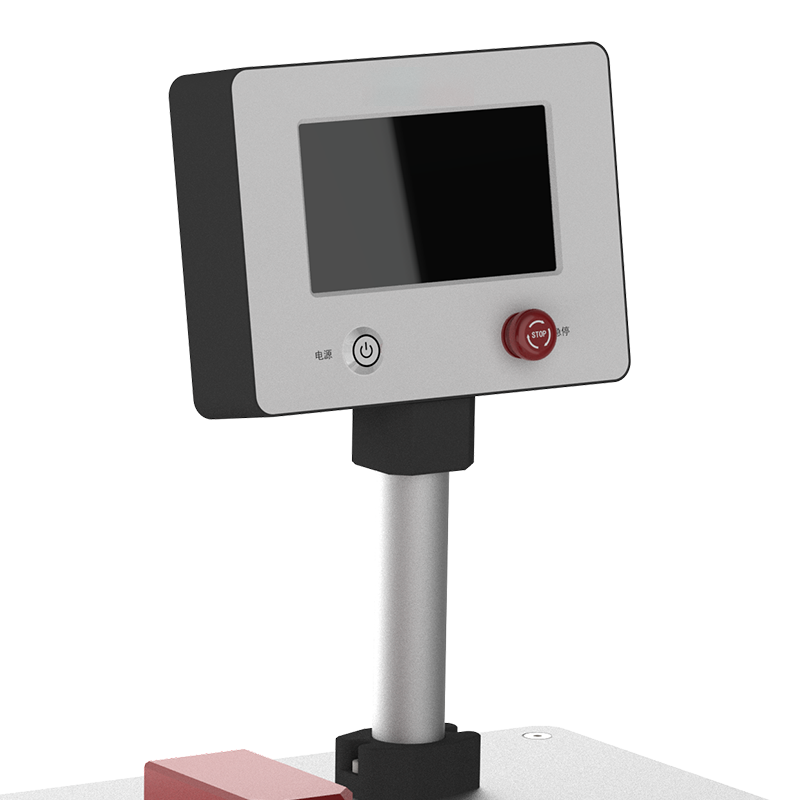
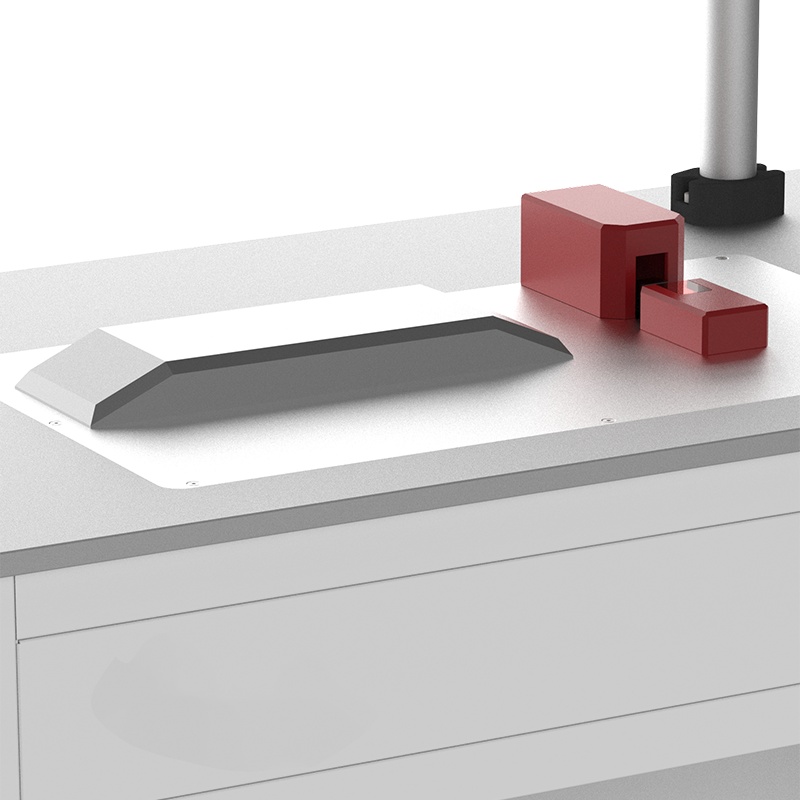
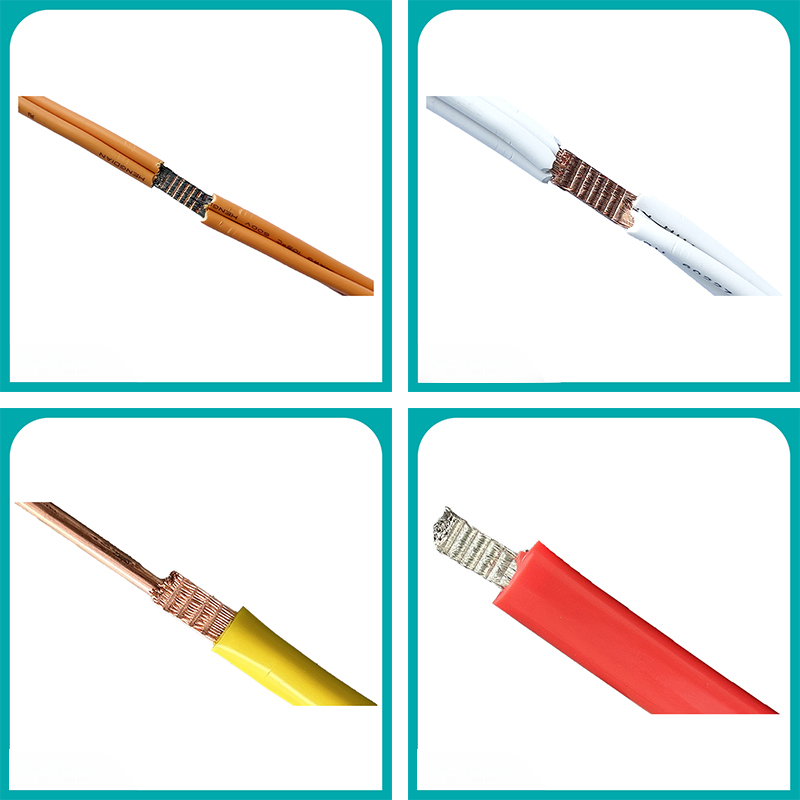
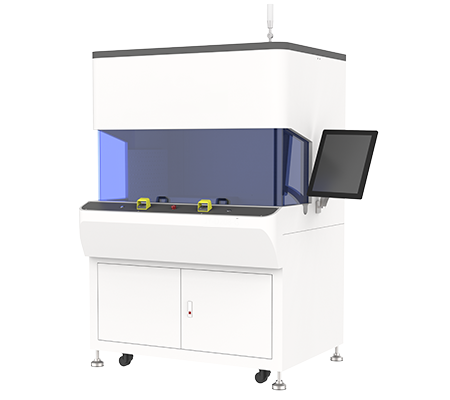
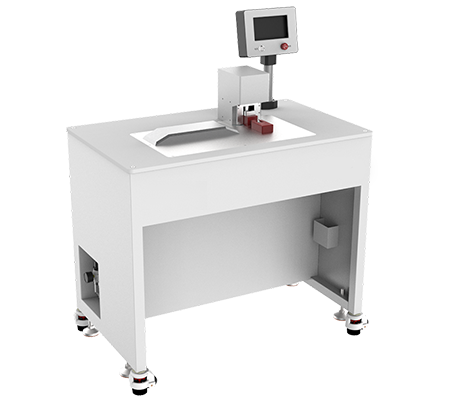
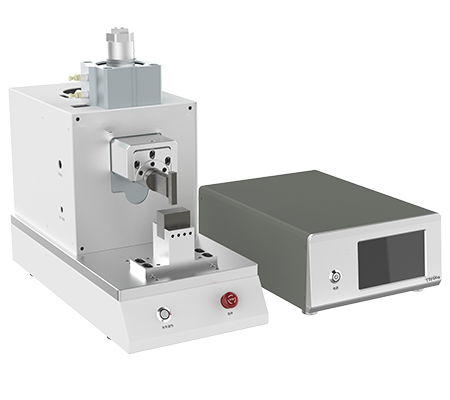
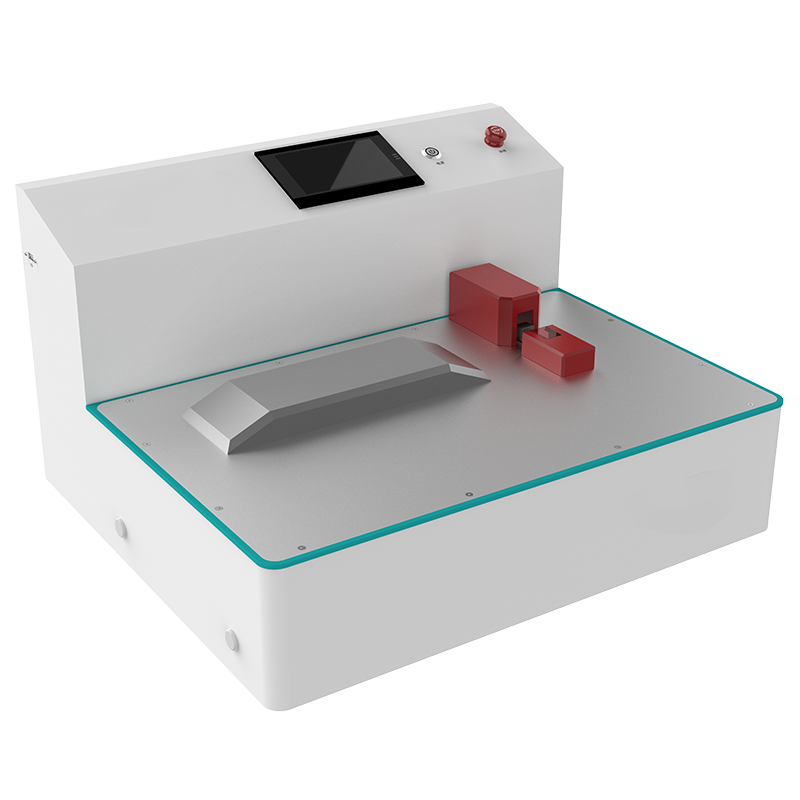
The 4000W high-power ultrasonic welding machine YN-X204-Z is a device specifically designed for lithium battery wire harness welding, achieving rapid solid-state bonding of metal parts through high-frequency vibration. Its core value lies in providing stable and efficient welding quality, and it has passed CE and ISO certifications to ensure industrial-grade reliability.
Technical Specifications
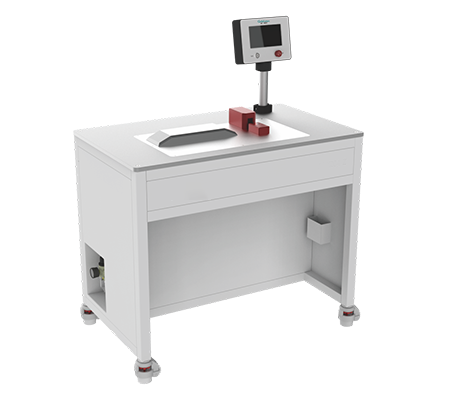
Product Appearance
| Parameter Name | Parameter Value |
| Input Voltage | 220V |
| Operating Frequency | 20KHz |
| Output Power | 4000W |
| Welding Area | 1-30mm² |
| Dimensions | 1020×610×1200mm |
| Net Weight | 132KG |
Product Features
- High Power Output: 4000W high-power design significantly improves welding efficiency, meeting medium power demand scenarios.
- Wide Welding Range: Welding area covers 1-30mm², suitable for various wire diameters and copper/aluminum terminals, flexibly adapting to different specifications.
- Digital Control: Welding parameters are precisely adjustable, ensuring stable and consistent welding quality and reducing operational errors.
- Robust and Durable Structure: Suitable for long-term continuous operation in industrial environments, reducing maintenance frequency and extending equipment lifespan.
- Simple Operation Interface: Easy to learn, reducing training costs and improving production line switching efficiency.
Application Scenarios
- New Energy Lithium Battery Production Lines
Power battery tab welding, module Busbar assembly, energy storage battery pack assembly, weld seam resistance ≤100μΩ, extensive experience in daily production line integration. - Automotive Wire Harnesses and Connectors
High-voltage wire harness terminals, motor lead wires, IGBT module welding, replacing traditional crimping, contact resistance reduced by over 60%. - Copper-Aluminum Transition Welding
Direct solid-state bonding of copper-aluminum dissimilar metals without transition pieces, widely used in charging piles and the power electrical industry. - Precision Electronic Components
Micro terminal and sensor pin welding, with a minimal heat-affected zone, suitable for medical electronics and instrumentation.
Frequently Asked Questions
What is the lifespan of the ultrasonic welding machine's horn (tool)? What to do after wear?
The horn is a consumable item, and its lifespan depends on the material and usage frequency: ① Alloy steel horn (T6): 50,000 to 100,000 welds;
② Titanium alloy horn (75E): 150,000 to 300,000 welds;
③ Wear is faster when processing aluminum (about 60% of the lifespan for copper). Horn wear affects welding quality and consistency; it is recommended to regularly check the clarity of the pattern. After wear, replacing the horn restores welding capability. The horn is easy to disassemble and can be replaced within 10 minutes without returning to the factory. Yingna Technology offers custom horn services, providing the best horn solution based on your wire specifications and terminal shape.
What materials can this ultrasonic welding machine weld?
This machine is suitable for welding copper, aluminum, nickel, brass, and copper-aluminum dissimilar metals. Specifics include: copper wire (single/multi-strand), aluminum foil, copper busbars, aluminum busbars, nickel sheets, and copper-aluminum transition terminals. It is particularly suitable for scenarios like new energy vehicle power battery tab welding (copper/aluminum) and Busbar assembly. Stainless steel and carbon steel can also be welded via ultrasonics but require higher power.
What are the advantages of ultrasonic welding compared to resistance welding and laser welding?
Advantages of ultrasonic welding: ① Welding time 0.1~1.0 seconds (resistance welding 2~5 seconds), efficiency improved by 3~5 times;
② Welding temperature is below the metal melting point (about 40~60% of melting point temperature), no thermal deformation, no annealing;
③ Can weld copper-aluminum dissimilar metals (difficult for resistance welding);
④ No solder/flux, clean and environmentally friendly;
⑤ Low welding resistance (≤100μΩ), excellent conductivity;
⑥ Low energy consumption, only 30~50% of resistance welding.
Does the ultrasonic welding machine need to preheat before startup? Are the welding parameters complex to set?
The ultrasonic welding machine is ready to weld upon startup, no preheating needed, and completes self-check within 10 seconds to enter working status. Welding parameter settings are simple: set three core parameters via the touch screen or buttons: welding power (10~100%), welding time (0.01~1.0s), and welding pressure (0.1~0.7MPa). Yingna Technology equipment supports parameter recipe storage (up to 100 recipes), allowing one-click recall when switching product models without repeated settings, especially suitable for multi-variety, small-batch production.
Does the ultrasonic welding machine support automation integration and PLC control?
Yes. Yingna Technology ultrasonic welding machines provide RS232/RS485 communication interfaces, supporting integration with PLCs, robots, and automated production lines. Integrable functions include: start signal, alarm feedback, welding parameter feedback, and production count. Combined with automatic wire feeders, automatic cutters, and automatic inspection equipment, a fully automated ultrasonic welding production line can be built, requiring only manual loading and unloading. Yingna Technology provides technical support to assist in completing automation scheme design, installation, and commissioning.
How to install and commission the ultrasonic welding machine after purchase? How long does it take?
Yingna Technology provides full installation and commissioning services: ① Complete equipment performance testing and welding parameter pre-commissioning before leaving the factory;
② Send a video of the equipment running before shipment to confirm status;
③ After the equipment arrives, engineers provide remote video guidance for installation (completed in 1~2 hours), including power connection, air connection, leveling, and trial run;
④ On-site acceptance standard: continuously weld 50 solder joints, all with acceptable appearance, resistance, and pull force. Overseas customers can opt for on-site engineer installation and commissioning (additional cost, approximately 2~3 days to complete).
What air and power supply conditions are required to use this ultrasonic welding machine?
Power supply: 220V/50Hz single-phase AC (Mainland China); Air supply: compressed air, pressure 0.5~0.7MPa, flow rate ≥200L/min (varies by model), air supply must be dry and oil-free (recommend using a refrigerated air dryer + three-stage filter). The recommended operating environment temperature is 5~40°C, relative humidity 30~80%, with no corrosive gases or dust.
Can ultrasonic welding replace resistance welding and screw connections?
Ultrasonic welding is an upgrade over resistance welding and screw connections: ① Replacing resistance welding: lower welding temperature, does not damage the annealed state of copper wire, lower joint resistance (≤100μΩ vs. 200~500μΩ for resistance welding), more reliable for long-term operation;
② Replacing screw connections: no need for screws, nuts, washers, or other accessories, higher connection strength (breaking force ≥80% of base material), no risk of screw loosening. It is particularly suitable for scenarios like new energy batteries and high-voltage wire harnesses that demand high connection reliability and conductivity. Recommendation: Ultrasonic welding is preferred for high-current connections, with mechanical connections as a supplement.
What is the power consumption of the ultrasonic welding machine? Is the operating cost high?
The ultrasonic welding machine only consumes power during the welding moment (0.1~1.0 seconds), with standby power consumption of only 30~50W. Taking a factory welding 5000 times per day at 0.5 seconds each, the daily actual electricity consumption is about 3~5 kWh, with a monthly electricity cost of only 60~100 RMB. Compared to resistance welding (continuous heating, total machine power 5~15kW), ultrasonic welding reduces energy consumption by 70~80%, achieving significant energy savings in batch welding scenarios.
Can the power of the ultrasonic welding machine be upgraded after purchase?
Yingna Technology ultrasonic welding machines support power upgrades: ① Within the same series, power can be upgraded by replacing the transducer and booster (e.g., from 3000W to 6000W);
② The upgrade cost is about 40~60% of the new equipment price, far lower than repurchasing;
③ After the upgrade, the welding area can be expanded by 50~100%, adapting to larger cross-section wire harness welding needs. It is recommended to initially choose a lower-power model to verify the welding process, then decide on an upgrade based on actual needs. Choosing a modular design model at purchase makes upgrades more convenient.
Is sample testing provided for first-time purchases? Is there a fee?
Winna Technology offers free sample welding testing services: ① Customers send in welding samples and materials;
② The Winna technical team selects appropriate equipment and welding heads based on material specifications;
③ Conducts trial welding and records welding parameters;
④ Returns the welded samples along with a welding parameter report. The sample testing cycle is typically 3-5 working days, with no charge. Once the sample passes, batch orders can use the same parameters to achieve consistent production quality. When requesting sample testing, please clearly specify: material grade (copper/aluminum), wire diameter (mm²), number of layers, and welding requirements (strength/resistance).
How to judge and test the quality of ultrasonic welding?
① Visual inspection: Qualified weld points have clear, symmetrical patterns with no cracks, pores, or signs of overburning;
② Peel test: Forcefully peel the welded area; a qualified weld should break at the base material rather than the weld interface;
③ Resistance test: The resistance of the welded joint should be ≤100μΩ (measured with a micro-ohmmeter) and not exceed 10% of an equivalent length of conductor;
④ Cross-section analysis: After metallographic cutting, the interface bonding rate should be ≥80%. Winna Technology equipment can be integrated with automatic inspection systems for online welding quality monitoring.