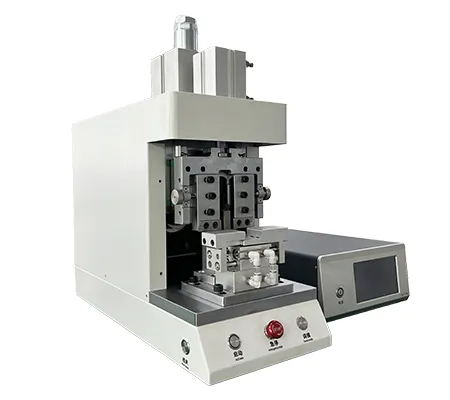
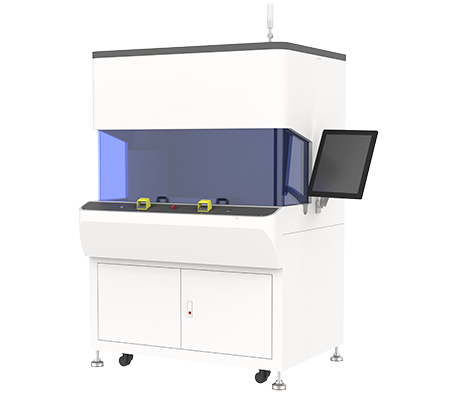
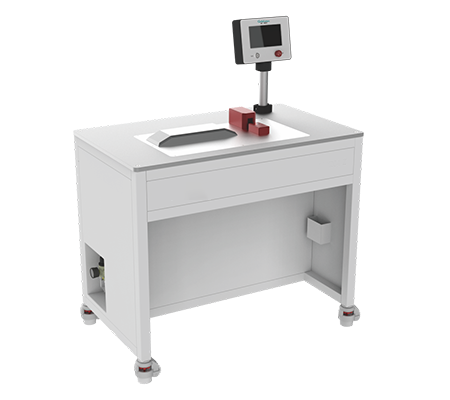
The ultrasonic metal welding machine achieves solid-state joining of metals such as copper and aluminum through high-frequency vibration, requiring no solder and delivering excellent electrical conductivity. It covers a welding area of 0.35 to 120mm², suitable for precision applications such as energy storage copper-aluminum busbars and power battery wiring harnesses, ensuring welding quality and delivery efficiency.
An ultrasonic metal welding machine is a high-end industrial device that utilizes high-frequency mechanical vibration to achieve metallurgical bonding between metal atoms under solid-state conditions, specifically solving the difficult problem of copper-aluminum dissimilar metal welding in new energy vehicle high-voltage wiring harnesses, power battery modules, and energy storage systems. A thorough understanding of the ultrasonic metal welding machine working principle helps engineering decision-makers accurately match power levels and welding areas during production line planning, thereby ensuring welding consistency and structural strength in mass production environments.
Overview of Ultrasonic Metal Welding Machine Working Principle — The Technical Essence of Solid-State Welding
The core of the ultrasonic metal welding machine working principle lies in the transducer converting high-frequency electrical energy into 20KHz mechanical vibration, which, combined with static pressure, generates high-frequency friction on the surface of the metals to be welded. This friction breaks down the oxide layer on the contact surfaces and promotes plastic flow and diffusion of metal atoms, ultimately achieving true metallurgical bonding under solid-state conditions below the melting point. Compared to traditional resistance welding or laser welding, this process involves no melting, no solder intervention, and produces no heat-affected zone, fundamentally avoiding the formation of intermetallic compounds (brittle phases) — this is the fundamental reason why copper-aluminum dissimilar metal welding must rely on ultrasonic technology.
Technical Specifications and Selection Guide — Full-Scene Coverage from Precision Electronics to Energy Storage Copper-Aluminum Busbars
Based on different power levels and welding area requirements, equipment selection must strictly correspond to actual engineering scenarios. The following technical parameter table integrates verification data from multiple core devices, providing quantitative basis for B2B procurement and engineering decision-making.
| Model | Power Level | Welding Area | Equipment Weight | Dimensions | Application Scenarios |
|---|
| YN-P203-F | 3000W/20KHz | 1-100mm² | 73KG | 565×269×442mm | Precision electronics and sensor packaging |
| YN-X203-Y | 3000W/20KHz | 0.35-20mm² | 88KG | 670×520×410mm | High-precision metal welding (CE/FCC/ISO certified) |
| YN-X204-Z | 4000W | 1-30mm² | 132KG | 1020×610×1200mm | Lithium battery copper-aluminum terminal welding |
| YN-X206-Z | 6000W | 10-50mm² | 118KG | 1020×610×1200mm | Power battery wiring harness welding |
| YN-D206-G | 6000W (split type) | 15-50mm² | 192KG | 1400×760×2000mm | High-voltage wiring harness copper-aluminum terminal welding |
| YN-D208-G | 8000W | 20-70mm² | 957KG | 1750×1050×2150mm | Large wiring harness copper-aluminum busbar welding |
| YN-D2012-G | 12000W | 35-120mm² | 988KG | 1750×1050×2150mm | Energy storage copper-aluminum busbar large cross-section welding |
Core Functional Module Breakdown — Collaborative Operation of Transducer, Amplitude Modulator, and Sonotrode
The ultrasonic metal welding machine consists of three core components forming a precision mechanical transmission chain, where the manufacturing precision of each link directly determines the final welding quality.
Transducer (Piezoelectric Ceramics)
As the core of energy conversion, the transducer utilizes the inverse piezoelectric effect of piezoelectric ceramics to precisely convert the high-frequency electrical signal output by the generator into 20KHz mechanical vibration. Taking YN-P203-F (3000W/20KHz, welding area 1-100mm², weight 73KG) as an example, it demonstrates extremely high frequency stability and power matching logic in precision welding scenarios.
Amplitude Modulator (Booster/Horn)
The amplitude modulator plays a mechanical amplification role in the ultrasonic metal welding machine working principle, changing the amplitude through different taper designs to amplify the transducer's micro-vibration to the displacement required by the engineering application, while isolating the reaction force between the generator and the welding area.
Sonotrode (Welding Tool)
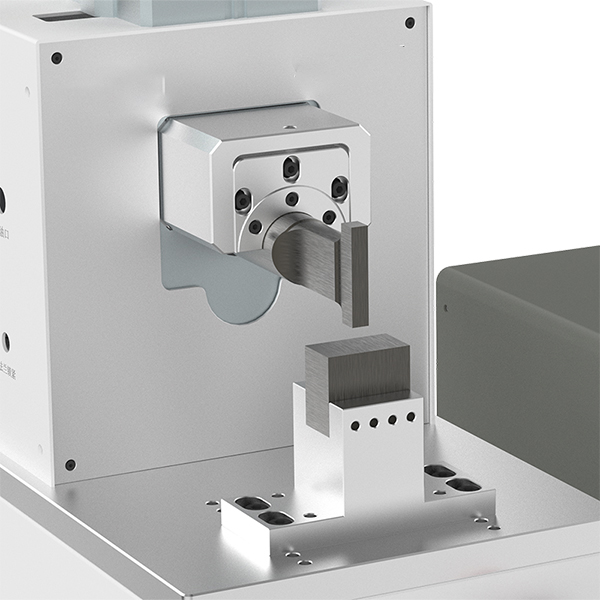
The sonotrode directly contacts the workpiece, and its surface texture design and body material hardness determine whether vibration energy can be uniformly and precisely injected into the welding area. For copper-aluminum busbars of different thicknesses, the sonotrode requires customized mold development and dynamic balance calibration.
Engineering Practice of Ultrasonic Metal Welding Machine Working Principle in Typical Application Scenarios
Translating theory into actual productivity, ultrasonic welding technology demonstrates irreplaceable engineering value in the following key industrial scenarios:
- New Energy Vehicle High-Voltage Wiring Harnesses:The dissimilar metal connection between copper terminals and aluminum conductors is an industry pain point. YN-D206-G (welding area 15-50mm², weight 192KG), as a split-type high-power device, provides a high-strength terminal welding solution in high-voltage wiring harness production lines.
- Power Battery Modules:Multi-layer stacking welding of copper foil and aluminum foil requires extremely high energy control. YN-X206-Z (6000W, welding area 10-50mm², weight 118KG) achieves batch application in this scenario, ensuring zero cold welds in tab welding.
- Energy Storage System Copper-Aluminum Busbar Connections:Large cross-section welding requires ultra-high power support. YN-D2012-G (12000W, welding area 35-120mm², weight 988KG) demonstrates extremely high efficiency advantages and quality consistency in energy storage copper-aluminum busbar welding.
- Precision Sensor Packaging:Micro weld points require precise energy control. YN-P203-F (3000W, welding area 1-100mm²) achieves non-destructive welding in the packaging of micro precision devices.
Quality Assurance System and Certification Standards — Engineering Means to Ensure Welding Consistency
For B2B procurement decision-makers, the long-term stability of the equipment and the ability to close the quality control loop are core evaluation indicators. The ultrasonic metal welding machine working principle determines that its quality assurance relies on the following systems:
- Online Welding Quality Monitoring:By collecting amplitude, frequency, energy, and time parameters in real time, a closed-loop feedback system is constructed. Once abnormal impedance appears in the welding area, the system immediately alarms and rejects defective products.
- Equipment Consistency Assurance:From the assembly of the piezoelectric ceramic stack in the transducer to the CNC precision machining and dynamic balance testing of the amplitude modulator, tolerance control in the manufacturing process ensures that the vibration energy output by each machine is completely consistent.
- International Certification Endorsement:Taking YN-X203-Y as an example, this equipment has passed CE, FCC, ISO and other authoritative certification systems. Its electrical safety and electromagnetic compatibility meet international industrial standards, providing a solid endorsement for equipment reliability.
FAQ — Common Technical Questions on Ultrasonic Metal Welding Machine Working Principle
Is the ultrasonic metal welding machine working principle applicable to aluminum-copper dissimilar metal welding? How is joint strength verified?
Fully applicable. Since ultrasonic welding is a solid-state welding process with no metal melting involved, it fundamentally avoids the formation of brittle intermetallic compounds between copper and aluminum in the liquid state. Joint strength is typically verified through tensile testing and peel testing, with joint strength reaching over 80% of the base material strength.
What determines the upper limit of welding area? How to select the power level based on wire diameter or busbar thickness?
The upper limit of welding area is determined by the equipment's maximum power, sonotrode size, and static pressure. For example, welding large cross-section copper-aluminum busbars of 35-120mm² requires the 12000W YN-D2012-G; while welding precision wiring harnesses of 0.35-20mm² is suitable for the 3000W YN-X203-Y. Selection must strictly reference the technical specification table; if beyond the specification range, please confirm the customization solution with the supplier.
Compared with laser welding, what are the advantages of ultrasonic welding in terms of energy consumption and total cost?
Ultrasonic welding requires no preheating, with a single welding cycle typically completed within 0.2 seconds, and energy consumption is only a fraction of laser welding. Additionally, it requires no filler materials or shielding gas, resulting in zero consumable costs; and solid-state welding has relatively lower requirements for fixtures, making the total equipment lifecycle cost significantly superior to laser welding.
What is the routine maintenance cycle for the equipment? What are the wear parts?
Routine maintenance mainly involves cleaning the sonotrode and checking air source pressure. The wear part is the sonotrode, whose lifespan depends on the hardness of the welding material, typically requiring surface dressing or replacement after several hundred thousand welding cycles. The transducer and amplitude modulator can last for several years under normal use.
Does the YN-D2012-G model support one-time welding of ultra-large cross-section copper-aluminum busbars in energy storage systems?
YN-D2012-G, as a 12000W ultra-high-power flagship device, is specifically designed for energy storage copper-aluminum busbar welding, with a maximum welding area of 35-120mm², fully meeting the high-strength one-time welding requirements for large cross-section copper-aluminum busbars.
How is the amplitude parameter precisely set in the ultrasonic metal welding machine working principle?
Amplitude setting depends on the workpiece material and thickness. The equipment generator has a built-in amplitude auto-compensation algorithm. Engineering personnel can set the amplitude percentage on the control panel based on the material combination, and the system will automatically adjust in a closed loop to maintain constant output.
What international certifications does the YN-X203-Y equipment have? Does it meet compliance requirements for export to Europe?
YN-X203-Y has obtained CE, FCC, and ISO certifications, fully meeting the compliance export requirements for electrical safety, electromagnetic compatibility, and quality systems in European and North American markets.
In power battery wiring harness welding, how does YN-X206-Z handle welding consistency of multi-layer foil materials?
YN-X206-Z (6000W) is equipped with a precision energy control mode. For multi-layer copper foil/aluminum foil stack welding, it can set energy lower and upper limit windows to ensure consistent energy input for each weld point, eliminating cold welds and over-welding.
What is the typical delivery lead time for equipment? Is production line integration technical support provided?
The delivery lead time for standard models is generally 15-30 working days. Customized models require confirmation based on solution complexity. We provide complete production line integration technical support, including equipment installation, commissioning, and process parameter sample verification.
What engineering advantages does the YN-D206-G split-type design offer in high-voltage wiring harness production lines?
The split-type design of YN-D206-G separates the generator from the welding actuator, enabling flexible layout in complex automated production lines, particularly suitable for space constraints at high-voltage wiring harness copper-aluminum terminal welding stations.
Does ultrasonic welding cause damage to internal electronic components of the workpiece?
No. The heat-affected zone of ultrasonic welding is extremely small, and vibration energy is concentrated on the surface layer of the contact area without conducting high temperatures internally. Therefore, in precision sensor packaging (such as with YN-P203-F), it provides extremely high protection for internal components.
How to verify whether the electrical conductivity of the welded joint meets requirements?
Joint conductivity is typically measured using a milliohm-level resistance tester. Since ultrasonic welding has no oxide layer or intermetallic compounds obstructing current flow, the joint resistance approaches the inherent resistance of the base material, with conductivity far exceeding traditional crimping processes.
Does the equipment support data traceability and MES system integration?
Yes. High-power series equipment (such as D-series and X-series) comes standard with industrial communication interfaces, capable of uploading each welding parameter (time, energy, power, amplitude) to the MES system, meeting the TS16949 quality traceability requirements of the automotive industry.
What is the difference between YN-D208-G (8000W) and YN-D2012-G (12000W) in application scenarios?
YN-D208-G is suitable for welding large wiring harness copper-aluminum busbars of 20-70mm², while YN-D2012-G targets larger cross-section energy storage copper-aluminum busbars of 35-120mm². The two are similar in weight and dimensions, with the main differences being power output and maximum weldable cross-sectional area.
Is custom sonotrode service available for non-standard copper-aluminum transition parts?
Yes. Sonotrode materials typically use high-quality alloy steel or titanium alloy. For special-shaped non-standard copper-aluminum transition parts, our engineering team can perform customized machining of sonotrode texture and dimensions based on the workpiece drawings.
Qualifications and Contact
In summary, a deep mastery of the ultrasonic metal welding machine working principle is the key prerequisite for evaluating whether equipment can achieve zero-defect, high-consistency production in solid-state welding scenarios. Relying on multiple international certification systems and rigorous manufacturing processes, we provide solid equipment assurance for global B2B industrial manufacturing. To obtain detailed process sample reports or confirm delivery capability for specific specifications, please contact our engineering technical team through the following channels.
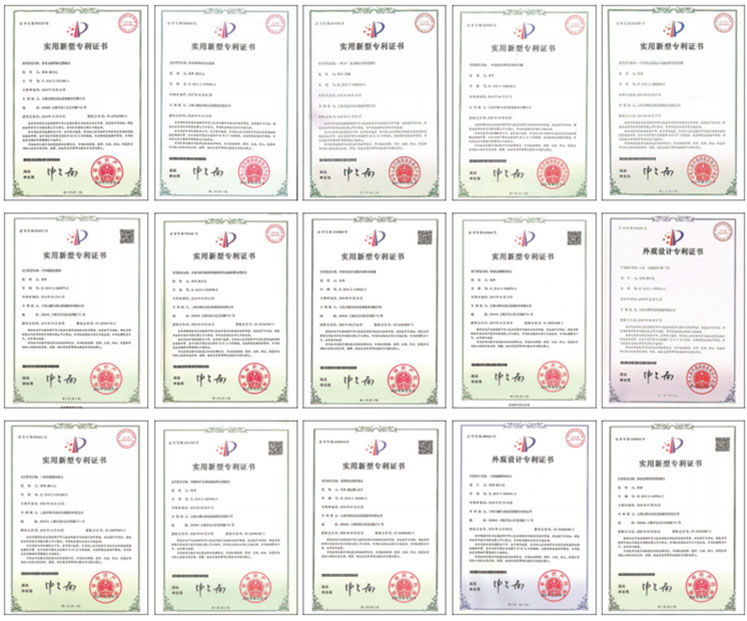
Certifications
Products meet international safety and EMC standards