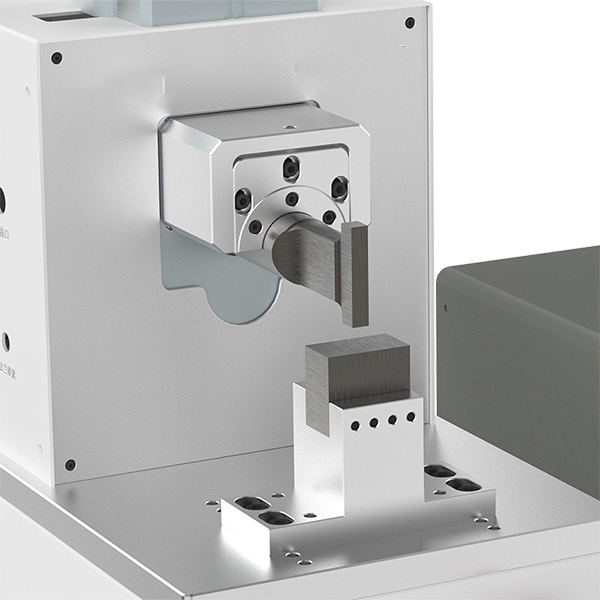
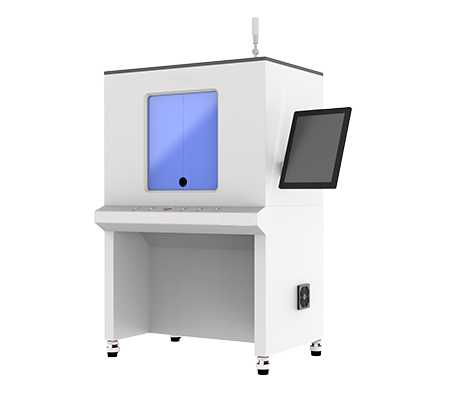
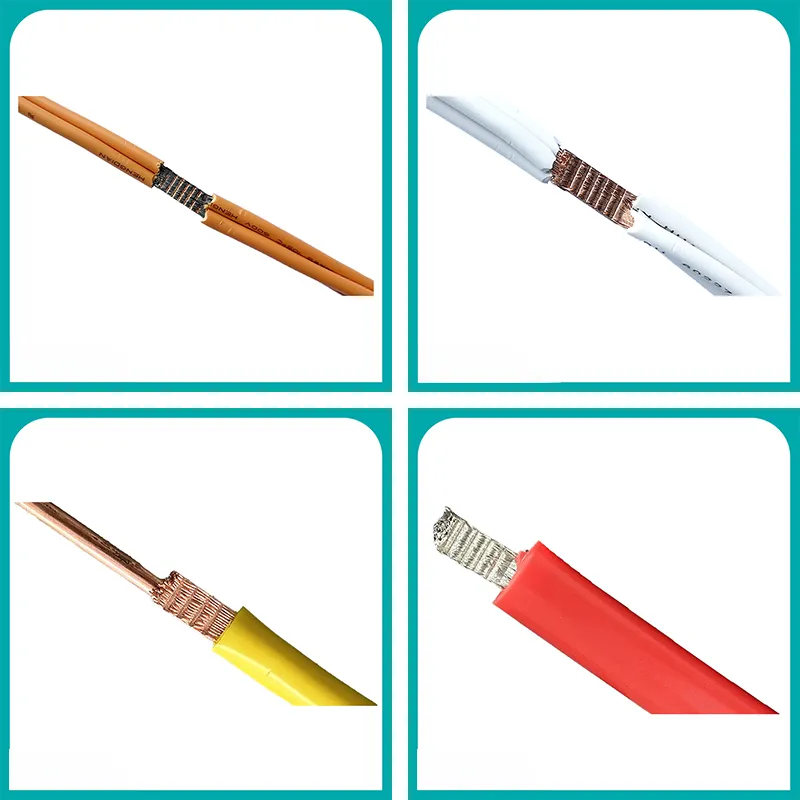
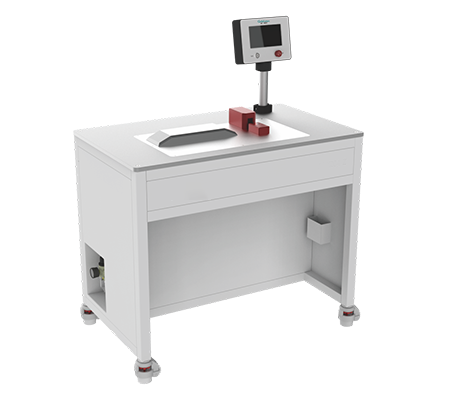
This product is an ultrasonic metal welding machine, whose core value lies in achieving efficient solid-state joining of metals such as copper and aluminum without solder or flux. Taking the YN-D2012-G as an example, its welding area reaches 35-120mm², and it is specifically designed for energy storage copper-aluminum busbar welding, ensuring connection strength and electrical conductivity that meet stringent industrial standards.
In the manufacturing of power batteries, energy storage systems, and high-voltage wiring harnesses, welding quality directly determines the electrical conductivity and long-term reliability of the product. Ultrasonic metal welding machines, with their process advantages of no arcing, no flux required, and extremely low welding resistance, have become the preferred equipment for joining dissimilar metals such as copper and aluminum. Faced with numerous brands on the market, the most concerning question for buyers is "which ultrasonic metal welding machine manufacturer is the best." This article will provide you with a quantifiable supplier evaluation method from four dimensions: technical specifications, product line coverage, application scenarios, and certification systems.
Which ultrasonic metal welding machine manufacturer is the best—three core evaluation dimensions that must be clarified before purchase
Evaluating "which ultrasonic metal welding machine manufacturer is the best" cannot rely solely on a single parameter; a systematic supplier evaluation framework should be established. The following three dimensions are the foundation of procurement decisions:
- Welding area coverage range:Different application scenarios have significantly different requirements for welding cross-sectional area. For example, the YN-D2012-G model covers a welding area of 35-120mm², specifically designed for large cross-section energy storage copper-aluminum busbar welding (Fact 1); the YN-P203-F model covers a welding area of 1-100mm², suitable for precision electronics and sensor welding (Fact 4); the YN-X203-Y model covers a welding area of 0.35-20mm², meeting the precision welding needs of micro and small metal components (Fact 7).
- Power level matching:Power determines the upper limit of welding capability. The power matrix from 3000W to 12000W corresponds to different welding tasks ranging from precision terminals to large copper-aluminum busbars. A quality supplier should be able to provide a complete power spectrum rather than a single model.
- Equipment weight and structural stability:Equipment weight directly reflects the frame material and rigidity design. Heavy-duty equipment such as the YN-D2012-G (988KG) and YN-D208-G (957KG) is suitable for fixed production line batch operations (Facts 1, 2); lightweight equipment such as the YN-P203-F (73KG) is more suitable for frequent movement or flexible production line layouts (Fact 4).
Buyers should establish a "selection based on demand" rather than "parameter-only" evaluation mindset, based on their actual cross-sectional requirements, production takt time, and production line layout.
Horizontal comparison of technical specifications across mainstream ultrasonic metal welding machine product lines
To help engineering decision-makers quickly locate the appropriate model, the following table summarizes the core technical parameters of the D series, X series, and P series product lines:
| Product Series |
Model Number |
Power Level |
Welding Area |
Equipment Weight |
Dimensions |
Typical Applications |
| D Series (Flagship) |
YN-D2012-G |
12000W |
35-120mm² |
988KG |
1750×1050×2150mm |
Energy storage copper-aluminum busbar welding (Fact 1) |
| D Series (High Power) |
YN-D208-G |
8000W |
20-70mm² |
957KG |
1750×1050×2150mm |
Large wiring harness copper-aluminum busbar welding (Fact 2) |
| D Series (Split Type) |
YN-D206-G |
6000W |
15-50mm² |
192KG |
1400×760×2000mm |
High-voltage wiring harness copper-aluminum terminal welding (Fact 3) |
| X Series (High Power) |
YN-X206-Z |
6000W |
10-50mm² |
118KG |
1020×610×1200mm |
Power battery wiring harness welding (Fact 5) |
| X Series (Medium) |
YN-X204-Z |
4000W |
1-30mm² |
132KG |
1020×610×1200mm |
Lithium battery terminal welding (Fact 6) |
| X Series (Precision) |
YN-X203-Y |
3000W |
0.35-20mm² |
88KG |
670×520×410mm |
High-efficiency precision metal welding (Fact 7) |
| P Series (Precision) |
YN-P203-F |
3000W |
1-100mm² |
73KG |
565×269×442mm |
Precision electronics and sensor welding (Fact 4) |
As seen in the table, the different series complement each other in terms of power, welding area, and structural design. The D series excels with ultra-high power and heavy-duty construction, the X series provides flexible production line integration solutions in the medium power range, and the P series is characterized by lightweight design and wide welding area coverage.
Which ultrasonic metal welding machine manufacturer is the best—key indicators for evaluating supplier technical strength
When judging "which ultrasonic metal welding machine manufacturer is the best," the following technical details should be thoroughly examined:
Transducer and amplitude transformer matching precision
The transducer converts electrical energy into high-frequency mechanical vibration, while the amplitude transformer adjusts the amplitude to the range required for welding. The matching precision of the two directly affects energy conversion efficiency and welding consistency. A quality supplier should be able to provide a complete power level matrix to meet different welding area requirements: from 3000W precision welding (YN-P203-F, welding area 1-100mm², Fact 4) to 4000W medium welding (YN-X204-Z, welding area 1-30mm², Fact 6), to 6000W high-power welding (YN-X206-Z, welding area 10-50mm², Fact 5), up to 12000W ultra-large welding (YN-D2012-G, welding area 35-120mm², Fact 1).
Welding pressure closed-loop control capability
Ultrasonic metal welding requires precise control of welding pressure to ensure weld density and interface bonding strength. Equipment with a closed-loop pressure control system can adjust pressure parameters in real time during the welding process, adapting to the hardness differences of copper and aluminum materials, reducing cold welds and spatter.
Frequency auto-tracking response speed
During the welding process, changes in the contact state between the sonotrode and the workpiece can cause resonant frequency drift. The response speed of the frequency auto-tracking system determines the stability of the welding process. The faster the response speed, the better the avoidance of energy loss and weld quality fluctuation.
Sonotrode material and heat treatment process
The sonotrode directly contacts the welding workpiece, and its material and heat treatment process determine wear resistance and service life. High-quality sonotrodes typically use special alloy steel and undergo multiple heat treatment processes to balance hardness and toughness, reducing wear and deformation during long-term use.
In addition, equipment weight and structural rigidity directly reflect frame material and long-term stability—heavy-duty equipment such as the YN-D2012-G (988KG) and YN-D208-G (957KG) is suitable for fixed production line batch operations (Facts 1, 2), while lightweight equipment such as the YN-P203-F (73KG) is more suitable for frequent movement or flexible production line layouts (Fact 4).
Industry application scenarios and model selection matching guide for ultrasonic metal welding machines
Welding tasks in different industries have differentiated requirements for equipment power, welding area, and structural form. The following classifies by application scenario and explains the corresponding model recommendation logic:
-
New energy storage field:Recommended YN-D2012-G (12000W, welding area 35-120mm², weight 988KG), suitable for large cross-section energy storage copper-aluminum busbar welding (Fact 1). This scenario requires weld joints with extremely low contact resistance and excellent mechanical strength to withstand high-current charge-discharge cycles.
-
Large wiring harness processing field:Recommended YN-D208-G (8000W, welding area 20-70mm², weight 957KG), meeting large wiring harness copper-aluminum busbar welding requirements (Fact 2). Such welding tasks typically involve the connection of multi-strand copper wires and aluminum busbars, requiring high power output to ensure dense welds.
-
High-voltage wiring harness terminal welding:Recommended YN-D206-G (6000W, welding area 15-50mm², weight 192KG), with a split-type structure for easy production line integration (Fact 3). This model is suitable for copper-aluminum terminal connections in new energy vehicle high-voltage wiring harnesses, and the split design allows flexible arrangement in automated production lines.
-
Power battery wiring harness welding:Recommended YN-X206-Z (6000W, welding area 10-50mm², weight 118KG) (Fact 5). This model is specifically designed for wiring harness connections within power battery modules, balancing weld quality and production line takt time.
-
Lithium battery terminal welding:Recommended YN-X204-Z (4000W, welding area 1-30mm², weight 132KG) (Fact 6). Suitable for welding lithium battery positive and negative tabs to terminals, requiring precise control of welding energy to avoid thermal damage.
-
Precision electronics and sensor welding:Recommended YN-P203-F (3000W, welding area 1-100mm², weight 73KG) (Fact 4). This model is suitable for metal connections of micro sensors and precision electronic components, and its wide welding area coverage provides good process adaptability.
Each application scenario requires clarification of the welding material combination (copper-copper, aluminum-aluminum, copper-aluminum) and quality requirement level. For example, copper-aluminum dissimilar metal welding requires attention to controlling the thickness of the intermetallic compound layer, while copper-copper same-metal welding focuses more on weld point electrical conductivity.
Quality certification system and quality assurance for ultrasonic metal welding machines
When evaluating "which ultrasonic metal welding machine manufacturer is the best," buyers should focus on verifying the supplier's certification qualifications and quality assurance system. Internationally recognized certifications include CE certification (EU safety certification), FCC certification (US electromagnetic compatibility certification), and ISO quality management system certification. Taking the YN-X203-Y model as an example, this model has passed CE/FCC/ISO certification (Fact 7), indicating that it meets international standards in electrical safety, electromagnetic compatibility, and production quality management.
In addition, suppliers should be able to provide complete factory inspection reports, welding process parameter databases, and after-sales technical service commitments. Buyers should require suppliers to provide sample welding test reports for similar welding tasks to verify weld quality consistency under actual production conditions.
Frequently Asked Questions about ultrasonic metal welding machines
What advantages does an ultrasonic metal welding machine have compared to resistance welding?
Ultrasonic metal welding does not require electric current heating, produces no arc or sparks, and the welding process temperature is far below the material melting point, which can avoid excessive formation of intermetallic compounds. Additionally, welding requires no flux or solder, and the joint resistance is extremely low, making it particularly suitable for copper-aluminum dissimilar metal connections.
Which metal combinations can an ultrasonic metal welding machine weld?
It can weld copper-copper, aluminum-aluminum, copper-aluminum, copper-nickel, aluminum-nickel, and many other metal combinations. For copper-aluminum dissimilar metal welding, ultrasonic welding can effectively suppress the formation of brittle intermetallic compounds, ensuring joint strength and electrical conductivity.
How to determine the appropriate power level?
The power level should be determined based on welding area and material hardness. Generally speaking, for welding areas of 1-30mm², 3000W-4000W equipment can be selected; for 30-70mm², 6000W-8000W equipment is recommended; for 70-120mm², 12000W equipment is required. Specific selection should be verified through process validation considering material thickness and number of weld points.
What welding tasks is the YN-D2012-G suitable for?
The YN-D2012-G is a 12000W ultra-high-power device with a welding area coverage of 35-120mm² and a total machine weight of 988KG, specifically designed for large cross-section energy storage copper-aluminum busbar welding (Fact 1). It is suitable for heavy-duty welding scenarios such as new energy storage battery modules and large copper-aluminum busbar connections.
Why can the YN-P203-F cover a welding area of 1-100mm²?
The YN-P203-F uses a 3000W precision power design, combined with an adjustable amplitude transformer and precision pressure control system, allowing welding energy output to be adjusted over a wide range, thus adapting to various welding tasks from micro sensors to medium-sized terminals (Fact 4).
What impact does equipment weight have on welding stability?
Equipment weight directly reflects the frame structure and rigidity design. Heavy-duty equipment such as the YN-D2012-G (988KG) and YN-D208-G (957KG) produces less vibration during the welding process, making it suitable for fixed production line batch operations (Facts 1, 2); lightweight equipment such as the YN-P203-F (73KG) is easy to move and flexible for production line layouts, but a stable installation foundation must be ensured (Fact 4).
What advantages does a split-type ultrasonic welding machine have?
The split-type design separates the sonotrode assembly from the generator, allowing flexible arrangement in automated production lines. The YN-D206-G (6000W, welding area 15-50mm², weight 192KG) is a split-type structure, suitable for high-voltage wiring harness copper-aluminum terminal welding (Fact 3).
How to verify welding quality?
It is recommended to use three methods for comprehensive evaluation: tensile testing, metallographic cross-section analysis, and contact resistance measurement. Tensile testing verifies the mechanical strength of the weld point, metallographic cross-section analysis observes the interface bonding condition, and contact resistance measurement evaluates electrical conductivity. Suppliers should provide sample welding test reports.
What is the difference between the YN-X206-Z and the YN-X204-Z?
The YN-X206-Z is a 6000W high-power device with a welding area of 10-50mm² and a weight of 118KG, suitable for power battery wiring harness welding (Fact 5); the YN-X204-Z is a 4000W medium device with a welding area of 1-30mm² and a weight of 132KG, suitable for lithium battery terminal welding (Fact 6). The two differ in power and welding area range, and the choice should be based on the actual welding task.
Does the equipment require regular calibration?
It is recommended to perform frequency and amplitude calibration every 6 months and a pressure system precision check once a year. Calibration should be performed by the supplier or a qualified third-party organization to ensure the equipment operates in optimal process condition over the long term.
What is the certification status of the YN-X203-Y?
The YN-X203-Y has passed CE/FCC/ISO certification (Fact 7), indicating that it meets international standards in electrical safety, electromagnetic compatibility, and production quality management, and can meet compliance requirements for export and high-end manufacturing.
Does ultrasonic welding cause metal fatigue?
Ultrasonic welding is a solid-state welding process. During welding, the material does not reach its melting point, so no heat-affected zone or residual stress from traditional fusion welding is produced. Correctly setting welding parameters can avoid material fatigue caused by excessive vibration, and the weld point lifespan is comparable to that of the base material.
Does equipment operation require professional training?
The equipment operation interface is typically designed with parameter preset modes. Operators need basic training to master parameter adjustment and anomaly handling. It is recommended that suppliers provide on-site training services, including welding parameter settings, daily maintenance, and troubleshooting.
How to evaluate a supplier's delivery capability?
The supplier's inventory status, production cycle, and logistics capabilities should be verified. For large-volume purchases, it is recommended to require suppliers to provide capacity proof and delivery plans. Also, confirm after-sales service response time and spare parts supply system.
How long is the service life of an ultrasonic metal welding machine?
Under normal maintenance conditions, the main body of the equipment can last more than 10 years. The sonotrode is a wear part, and its lifespan depends on the welding material and process parameters, typically capable of tens of thousands to hundreds of thousands of welds. Regularly checking the condition of the transducer and amplitude transformer can extend the overall machine life.
Can the equipment be integrated into existing automated production lines?
Most models support standard industrial interfaces and can be integrated into PLC or robot control systems. Split-type models such as the YN-D206-G (Fact 3) offer greater flexibility in production line integration. It is recommended to provide the production line layout drawing before purchase so the supplier can evaluate the integration solution.