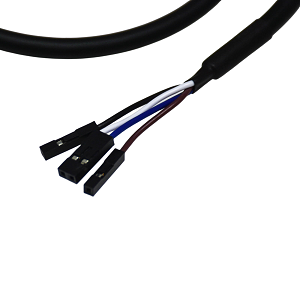
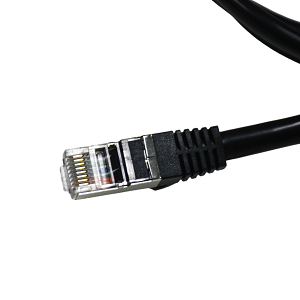
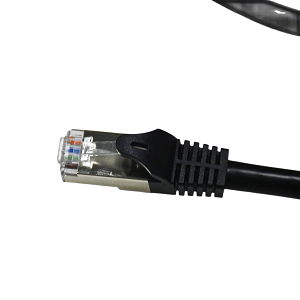
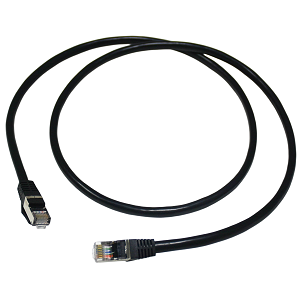
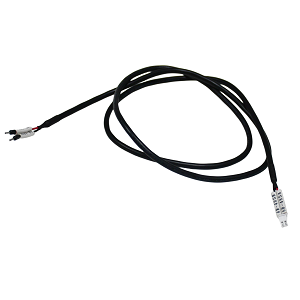
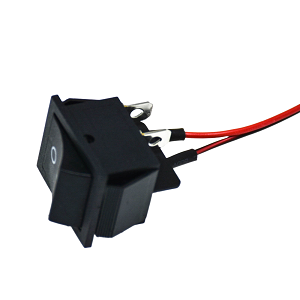
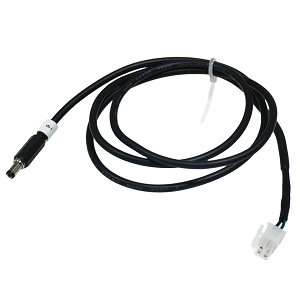
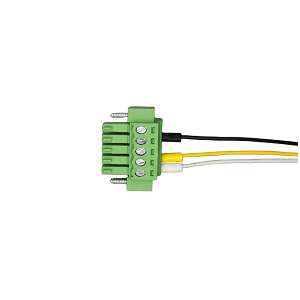
This series of industrial network cables adopts a 4-pair 8-core unshielded twisted pair structure, supports 24AWG, 26AWG, and 28AWG wire gauges, and is equipped with a cross-filler and PVC jacket. It offers excellent anti-interference performance and durability, suitable for various industrial network environments. Product Features: Wire gauge options: 24AWG, 26AWG, 28AWG; Structure: 4-pair 8-core unshielded twisted pair (UTP); Cross-filler: Reduces pair-to-pair crosstalk, enhances signal integrity; Jacket: PVC material, flexible and wear-resistant; Compatibility: Supports Gigabit and Fast Ethernet. Technical Parameters: Conductor specification: 24AWG / 26AWG / 28AWG; Number of cores: 4 pairs (8 cores); Shielding type: Unshielded (UTP); Jacket material: PVC; Operating temperature: -20°C ~ +60°C; Impedance: 100Ω ± 15%. Application Scenarios: Industrial automation network communication, Data center and server room, Security surveillance system cabling, Smart building and IoT projects.
Technical Specifications
| Conductor Specification | 4 pairs 8 cores, 24AWG stranded tinned copper wire |
| Insulation Material | HDPE (High-Density Polyethylene) |
| Jacket Material | PVC (Polyvinyl Chloride) |
| Characteristic Impedance | 100Ω ± 15Ω |
| Transmission Rate | 1000 Mbps (Cat5e standard) |
| Operating Temperature | -20°C to +75°C |
| Maximum Voltage | 30V DC |
| Certification | UL certified, RoHS compliant |
Product Features
- Industrial-grade unshielded design, suitable for industrial environments with low electromagnetic interference
- 4-pair 8-core twisted pair structure, effectively reduces crosstalk, ensuring stable data transmission
- Supports custom terminal wire processing, compatible with RJ45, IDC, and other connectors
- High-flexibility PVC jacket, easy for cabling installation, good bending resistance
Applicable Scenarios
- Home Appliances & Consumer Electronics
Customization of power cords, signal wires, and ribbon cables, meeting ROHS/REACH environmental standards, suitable for white goods and small appliances. - Automotive Electronics & New Energy
Automotive wire harnesses, sensor harnesses, high-voltage connection harnesses, certified under TS16949 quality system, resistant to high temperature and vibration. - Industrial Automation & Equipment
Robot harnesses, servo motor harnesses, drag chain cables, high-flexibility and bending-resistant, suitable for complex industrial environments. - Medical Device Harnesses
Medical-grade harness customization, biocompatible materials, precision terminal crimping, suitable for monitors, ultrasound equipment, etc.
Frequently Asked Questions
What is the flame retardant rating of the harness? Does it comply with UL VW-1 standard?
The flame retardant rating of this harness reaches UL VW-1 (Vertical Wire Flame Test), which is the minimum flame retardant requirement of the UL 758 standard for electronic wires. Higher flame retardant grades are optional: UL VW-1+ vertical flame test, UL FT2 (horizontal flame test), UL VW-1+FT2 dual certification. Significance of flame retardant standards: A VW-1 certified harness, after 5 applications of a 15-second flame, will self-extinguish within 60 seconds, will not ignite the cotton indicator below, and will have no flaming drips. For applications with high fire safety requirements (e.g., inside new energy vehicle battery packs, medical equipment), it is recommended to choose harnesses with higher flame retardant grades.
What is the temperature range of the harness? Can it be used long-term in high-temperature environments?
The temperature range of this harness varies by insulation material: Silicone rubber insulation: -60°C ~ +200°C (peak 250°C for short periods), PVC insulation: -20°C ~ +105°C. In high-temperature environments (e.g., automotive engine compartments, industrial furnace surroundings, inside new energy vehicle battery packs), silicone rubber material harnesses must be used. PVC material will accelerate aging and cause insulation cracking in such scenarios. For low-temperature environments (e.g., outdoor polar regions) or high-low temperature cycling situations, silicone rubber harnesses are also recommended.
Can this harness be used in medical equipment? What standards must it meet?
This standard harness is not recommended for direct use inside medical equipment. Medical device harnesses must meet the IEC EN60601 standard, requiring: ① Low leakage current – standard harness leakage current ≤0.5mA, medical grade ≤0.1mA;
② Biocompatibility – insulation and terminal materials must pass ISO 10993 biocompatibility testing;
③ High isolation voltage – reinforced insulation, isolation voltage ≥4000V;
④ Cleanliness – produced in a cleanroom, free from ionic contamination. Yingna Technology can customize medical-grade harnesses (including EN60601 certification). Technical parameters and certification requirements must be communicated in advance for separate production scheduling.
What is the conductor material of this harness? Bare copper or tinned copper?
This harness uses a multi-strand tinned copper wire conductor, balancing conductivity and corrosion resistance. Bare copper conductivity is approximately 101% IACS, while tinned copper is about 98% IACS (a difference of only ~3%). Advantages of tinning: 3-5 times stronger oxidation resistance, better solderability (avoids soldering issues), and significantly improved corrosion resistance. For high-reliability applications like new energy vehicles and outdoor equipment, tinned copper wire harnesses are recommended.
What after-sales services are provided after purchasing the harness?
Yingna Technology harness products come with a standard 2-year warranty. Non-human-induced damage within the warranty period is repaired or replaced free of charge. Domestic customers enjoy a 48-hour response time and repair completion within 7 working days; overseas customers can arrange for DHL/FedEx repair shipment. Products beyond the warranty period are eligible for paid repair services (cost approximately 30-50% of a new product). Lifetime technical support is provided, including harness selection consultation, terminal processing solutions, and quality issue diagnosis. Annual framework agreement customers enjoy value-added services such as priority production scheduling, free samples, and factory inspection support.
What is the difference between Chinese standard harnesses and American standard harnesses?
The main differences between the Chinese standard (GB/T 5023) and the American standard (UL 758/AWM) are: ① Nominal cross-section – Chinese standard uses mm² (e.g., 0.5/0.75/1.0mm²), American standard uses AWG (e.g., 22/20/18AWG);
② Test methods – Chinese standard focuses on conductor resistance and insulation resistance, American standard focuses on mechanical properties (bending/tensile/impact);
③ Certification labeling – American standard harnesses must print the UL/AWM number, Chinese standard harnesses print the CCC certification number;
④ Customer base – Export to the USA/Canada requires UL certification, domestic sales require CCC certification. Yingna Technology harnesses meet both Chinese and American standards, with a traceable UL certification number.
How to waterproof the harness for outdoor use?
The insulation layer of this harness is inherently water-resistant (silicone rubber/PVC do not absorb water), but for outdoor exposed use, it is recommended to enhance waterproofing with the following solutions: ① Choose IP67/IP68 grade waterproof connectors;
② Add waterproof heat shrink tubing (with hot melt adhesive) at crimping points;
③ Use PVC or PE protective conduit over the cable for enhanced mechanical protection;
④ Use potting compound (epoxy resin or polyurethane) at connection points for permanent waterproofing. With these solutions, long-term underwater connection (10 meters depth) can be achieved, suitable for scenarios like LED underwater lights, sewage treatment equipment, and marine harnesses.
Will the harness age after long-term use? How to extend its service life?
Under normal use conditions, the service life of this harness is 10-15 years for silicone rubber material and 5-8 years for PVC material. Factors affecting lifespan: ① Operating temperature – long-term operation at the rated temperature upper limit accelerates aging (halving lifespan);
② Bending frequency – use high-flexibility harnesses (bending life ≥10 million cycles) for frequent bending applications;
③ Environmental factors – UV, ozone, and chemical solvents accelerate the aging of the silicone rubber outer layer. Suggestions for extending lifespan: Leave a 20% margin in operating temperature, avoid contact with chemical solvents, install protective conduits for fixed wiring, and periodically check crimping points for overheating.
Can the harness be processed with terminals? What terminal types are supported?
Winna Technology offers wire harness terminal processing services, supporting various terminal types: pre-insulated terminals (O-type/U-type/barrel type), bare terminals (OT/SC/GT), flag terminals, closed-end terminals, and spade terminals. Terminal crimping is performed using fully automatic crimping machines, with pull force meeting UL 486A standards. We accept customer-supplied materials (wire + terminals) or can use specified brands and models. After crimping, heat shrink tubing or insulating sleeves can be applied to further enhance insulation performance and mechanical strength.
What is the minimum bending radius of the wire harness? Can it be used for wiring in tight spaces?
The minimum bending radius of this wire harness is 5 times the cable diameter, far less than the 10 times requirement for ordinary PVC cables. Due to the multi-strand ultra-fine tinned copper wire stranded structure, the harness offers excellent flexibility, allowing flexible wiring in tight spaces such as mobile phones, sensors, car door panels, and LED lamps, with reduced risk of core breakage even under frequent bending. For applications requiring an even smaller bending radius (e.g., robot drag chains), a high-flexibility drag chain-specific harness is available.
What is the insulation material of this wire harness? Does it meet environmental requirements?
The insulation material for this product is silicone rubber or PVC, selected based on the specific model and specifications. Silicone rubber withstands temperatures from -60°C to 200°C, while PVC withstands -20°C to 105°C. All wire series comply with RoHS 10-item testing and REACH SVHC screening, free of lead, mercury, cadmium, and other harmful substances, with third-party SGS test reports available. Electronic wires exported to North America must meet UL VW-1/FT2 flame retardant ratings, while those exported to Europe must comply with the CE Low Voltage Directive.
What are the differences between new energy vehicle wire harnesses and ordinary wire harnesses?
New energy vehicle (EV/HEV) wire harnesses must meet higher standards: ① Temperature rating—internal battery pack temperatures can reach 85~150°C, requiring silicone rubber harnesses (PVC is insufficient);
② Voltage rating—high-voltage connection harnesses withstand 600V~1000V, far exceeding the ordinary 300V;
③ EMC shielding—high-voltage harnesses require a braided shield layer to prevent electromagnetic interference (EMC, compliant with CISPR 25);
④ Flame retardancy—VW-1 + low smoke zero halogen (LSZH);
⑤ Vibration resistance—terminal crimping must remain secure under high-frequency vibration (vehicle operation);
⑥ TS16949 automotive quality management system certification. Ordinary wire harnesses do not meet these requirements and are prohibited for use in new energy vehicles.