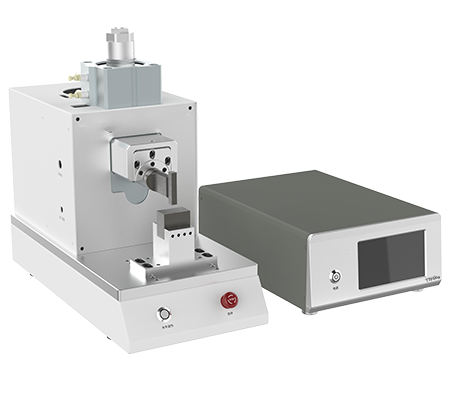
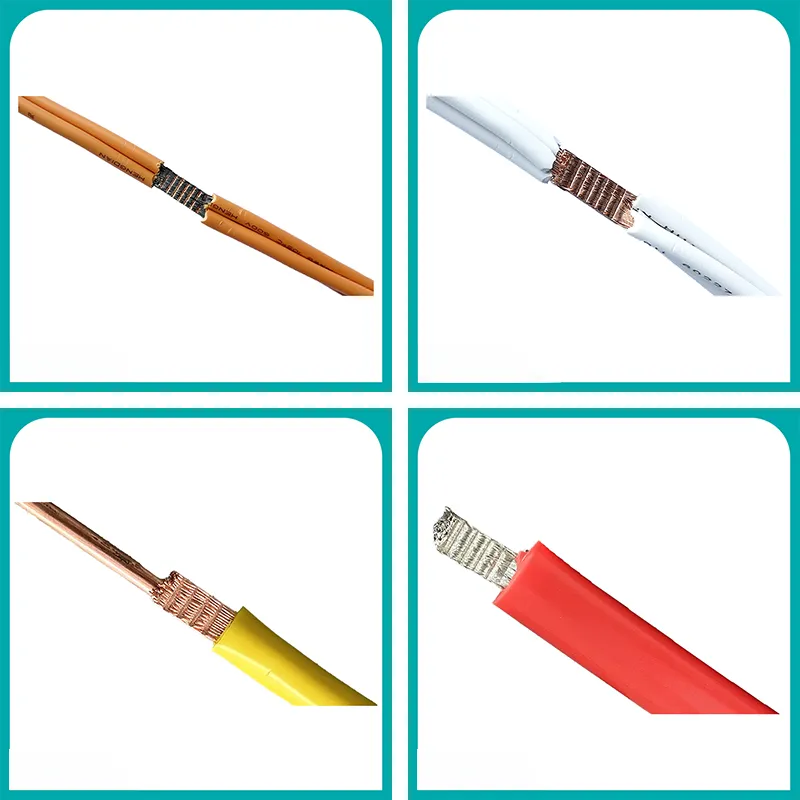
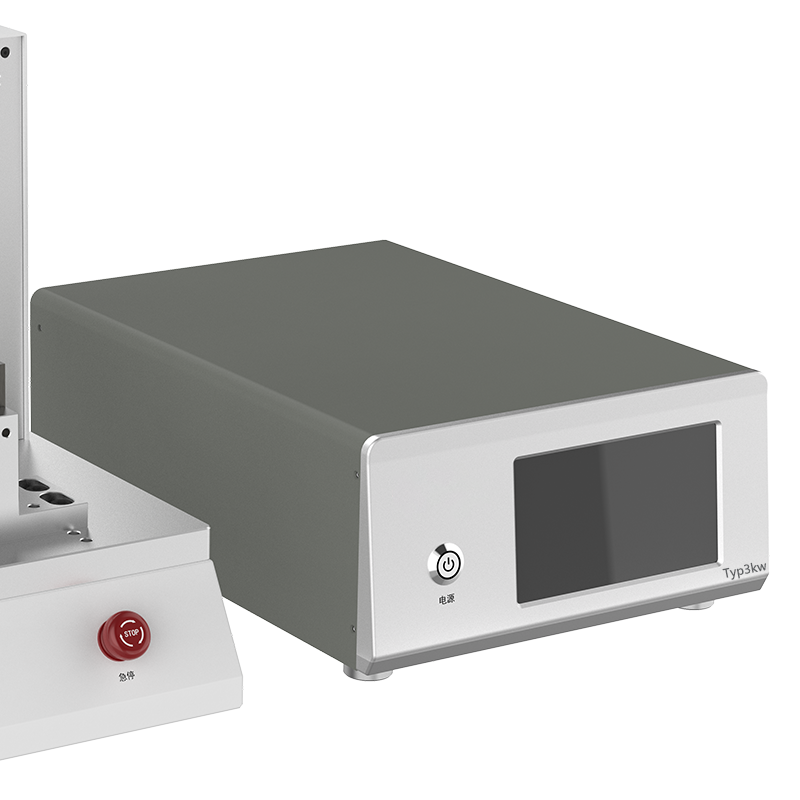
Ultrasonic metal welding machines are precision welding equipment for the lithium battery and energy storage industries, covering a power range from 3000W to 12000W, with welding areas from 0.35 to 120mm², suitable for copper and aluminum busbars, high-voltage wiring harnesses, and power battery module connections. The full series is CE, FCC, and ISO certified, meeting the stringent requirements for consistency and reliability in mass production.
In the manufacturing field of power batteries and energy storage systems, the selection of lithium battery ultrasonic metal welding machines directly determines the reliability of copper-aluminum dissimilar metal connections and production line takt time. Based on verified machine parameters, this article provides B2B procurement and engineering decision-makers with a complete selection framework covering power matching, structural rigidity, and scenario adaptation, helping you avoid welding quality fluctuations and capacity bottlenecks caused by parameter misjudgment.
Core Considerations for Lithium Battery Ultrasonic Metal Welding Machine Selection
Lithium battery ultrasonic metal welding machine selection is not a simple parameter comparison, but a systematic engineering decision involving the welding physical process, equipment mechanical characteristics, and production line process requirements. Decision-makers must simultaneously evaluate six technical dimensions: the matching relationship between welding area and power, horn amplitude and 20KHz frequency characteristics, the impact of equipment frame rigidity on welding consistency, control system precision and data traceability, the service life of transducers and amplitude transformers, and interface compatibility required for automated production line integration. Ignoring any dimension may lead to excessive dispersion in welding strength during mass production or frequent equipment downtime.
Power Level and Welding Area Matching: Selection Logic from 3000W to 12000W
Different power levels of ultrasonic metal welding machines correspond to clear applicable welding area ranges, which is the primary basis for lithium battery ultrasonic metal welding machine selection. According to verified data, the power and area matching relationships for each model are as follows:
- YN-X203-Y(3000W, welding area 0.35-20mm², weight 88KG, dimensions 670×520×410mm, (Fact 7)/16/28): Suitable for precision sensors and small lithium battery tab welding, with CE/FCC/ISO certification ensuring export compliance.
- YN-X204-Z(4000W, welding area 1-30mm², weight 132KG, dimensions 1020×610×1200mm, (Fact 6)/15/27): Suitable for medium cross-section welding of lithium battery copper and aluminum terminals, with the X series specifically optimized for power battery wiring harness processes.
- YN-X206-Z(6000W, welding area 10-50mm², weight 118KG, dimensions 1020×610×1200mm, (Fact 5)/8/14/26): Expert model for power battery wiring harness welding, achieving a balance between power output and structural compactness.
- YN-D206-G(6000W split-type, welding area 15-50mm², weight 192KG, dimensions 1400×760×2000mm, (Fact 3)/11/23): Dedicated to high-voltage wiring harness copper and aluminum terminal welding, with a split structure for flexible production line layout.
- YN-D208-G(8000W, welding area 20-70mm², weight 957KG, dimensions 1750×1050×2150mm, (Fact 2)/10/22): Designed for large wiring harnesses and copper-aluminum busbars, with the D-series high-power platform ensuring continuous operation stability.
- YN-D2012-G(12000W, welding area 35-120mm², weight 988KG, dimensions 1750×1050×2150mm, (Fact 1)/9/21): Flagship model of the D series, specifically designed for energy storage copper-aluminum busbar welding, with ultra-high power covering maximum cross-section requirements.
Structural Design and Production Line Adaptation: Trade-offs Between Integrated and Split Types
The physical form of the equipment has a direct impact on workshop layout and automation integration. The split-type structure represented by YN-D206-G (Fact 3)/11/23) separates the generator from the welding head, allowing flexible arrangement in limited spaces, especially suitable for retrofitting existing production lines. Integrated models such as YN-X204-Z and YN-X206-Z (Fact 6)/15/27, 5/8/14/26) feature compact structures, facilitating overall transport and rapid deployment.
Equipment weight and frame rigidity are equally important. Heavy-duty equipment such as YN-D208-G (957KG) and YN-D2012-G (988KG) (Fact 1)/2/9/10/21/22) has significant advantages in absorbing welding reaction forces and suppressing frame resonance, maintaining stable welding pressure curves during large-volume continuous production and reducing the risk of cold welds caused by mechanical vibration.
In-Depth Technical Specification Analysis: Practical Significance of Key Parameters
| Model | Power | Welding Area | Weight | Dimensions | Application Scenario |
|---|
| YN-X203-Y | 3000W | 0.35-20mm² | 88KG | 670×520×410mm | Precision electronics, small tabs |
| YN-X204-Z | 4000W | 1-30mm² | 132KG | 1020×610×1200mm | Lithium battery copper-aluminum terminals |
| YN-X206-Z | 6000W | 10-50mm² | 118KG | 1020×610×1200mm | Power battery wiring harnesses |
| YN-D206-G | 6000W | 15-50mm² | 192KG | 1400×760×2000mm | High-voltage wiring harness copper-aluminum terminals |
| YN-D208-G | 8000W | 20-70mm² | 957KG | 1750×1050×2150mm | Large wiring harnesses, copper-aluminum busbars |
| YN-D2012-G | 12000W | 35-120mm² | 988KG | 1750×1050×2150mm | Energy storage copper-aluminum busbars |
| YN-P203-F | 3000W | 1-100mm² | 73KG | 565×269×442mm | Precision sensors, electronics |
The 20KHz operating frequency in metal welding features strong penetration and a small heat-affected zone, making it suitable for copper-aluminum dissimilar metal connections. The welding area range directly determines the applicable combination of electrode thickness and tab width, while equipment weight and dimensions impose hard requirements on workshop load-bearing capacity, logistics access, and operating space. The matching relationship between power level and welding time affects the cycle time per piece and must be evaluated in conjunction with target production line capacity.
Typical Application Scenarios: Selection Comparison for Power Batteries, Energy Storage Busbars, and High-Voltage Wiring Harnesses
For different application scenarios, lithium battery ultrasonic metal welding machine selection strategies differ significantly:
- Power battery module wiring harness welding: Recommended YN-X206-Z (Fact 5)/8/14/26) and YN-X204-Z (Fact 6)/15/27), with the X series specially optimized for power battery wiring harness processes, ensuring matching between the vibration system and fixture design.
- Energy storage system copper-aluminum busbar welding: Recommended YN-D2012-G (Fact 1)/9/21), with 12000W ultra-high power covering a 35-120mm² welding area, meeting the welding strength requirements for large cross-section copper-aluminum busbars in energy storage systems.
- High-voltage wiring harness copper-aluminum terminal welding: Recommended YN-D206-G (Fact 3)/11/23), with a split structure facilitating integration into automated production lines and reducing equipment footprint.
- Precision electronics and sensor welding: Recommended YN-P203-F (Fact 4)/13/25), with the P-series precision welding platform providing a wide 1-100mm² adjustable welding area, adapting to multi-variety, small-batch production.
Selection Decision Checklist and Common Mistake Avoidance
To ensure scientific and reliable lithium battery ultrasonic metal welding machine selection, it is recommended to follow the decision checklist below:
- Measure the actual copper-aluminum material thickness, tab width, and stack layer count of the workpiece to be welded, confirming the required welding area range, avoiding estimation based solely on experience.
- Reserve a 15%-20% power margin to account for energy losses caused by material batch variations and horn wear.
- Evaluate equipment weight and frame rigidity; heavy-duty equipment better ensures welding consistency during extended continuous production.
- Confirm the compatibility of automation interface protocols (such as IO, bus communication) with existing production line control systems.
- Verify CE, FCC, ISO and other certification qualifications to ensure equipment meets the compliance requirements of target markets.
Common mistakes include: focusing only on peak power while ignoring welding area matching, overlooking the impact of split-type versus integrated structures on production line layout, failing to consider equipment weight requirements for floor load-bearing capacity, and not reserving automation upgrade interfaces. Avoiding these mistakes can significantly reduce retrofit and downtime costs.
FA
Q:??Common Questions on Lithium Battery Ultrasonic Metal Welding Machine Selection
How to determine the appropriate welding area range?
The welding area range is determined by tab width, material thickness, and stack layer count. It is recommended to provide actual workpiece samples for welding tests to verify the matching between equipment power and area.
What are the advantages of 20KHz frequency in copper-aluminum welding?
20KHz is a common frequency for ultrasonic metal welding, featuring strong penetration and a small heat-affected zone, suitable for copper-aluminum dissimilar metal connections, effectively reducing the formation of intermetallic compounds.
How to choose between split-type and integrated structures?
Split-type (such as YN-D206-G) facilitates flexible production line layout and maintenance, while integrated (such as YN-X206-Z) is compact and easy to transport as a whole. The decision depends on workshop space and automation integration requirements.
What impact does equipment weight have on welding quality?
Heavier equipment (such as YN-D208-G, 957KG) has advantages in absorbing welding reaction forces and reducing frame resonance, helping maintain stable welding pressure during mass production.
What scenarios is the 12000W model suitable for?
YN-D2012-G (12000W) covers a 35-120mm² welding area, primarily for energy storage system copper-aluminum busbar welding and large conductive connectors, meeting the welding strength requirements for ultra-large cross-sections.
Can the 3000W model be used for power battery tab welding?
YN-X203-Y (3000W) is suitable for a 0.35-20mm² welding area and can be used for small tabs or precision sensor welding. If power battery module tabs exceed this area range, a higher power model is recommended.
What certification qualifications does the equipment include?
YN-X203-Y has CE/FCC/ISO certification (Fact 7)/16/28). Certification status for other models needs to be confirmed with the supplier to ensure compliance with target market access requirements.
How to evaluate welding quality consistency?
It is recommended to conduct batch welding tests, checking tensile strength, cross-section metallography, and contact resistance of weld points to evaluate equipment stability during continuous production.
What requirements do equipment dimensions impose on workshop layout?
Large equipment such as YN-D208-G and YN-D2012-G (1750×1050×2150mm) requires sufficient operating and maintenance space, and workshop load-bearing capacity must be confirmed to meet equipment weight requirements.
Is automated production line integration supported?
All models support automation integration. Specific interface protocols (such as IO, bus communication) need to be confirmed with the supplier to ensure compatibility with existing control systems.
How to understand the matching relationship between welding area and power?
Power determines the energy input per unit time, while welding area determines the total energy required. Insufficient power leads to inadequate welding strength, while excessive power may cause over-welding or material splatter.
What is the equipment maintenance cycle and transducer lifespan?
The lifespan of transducers and amplitude transformers is affected by load rate and maintenance quality. It is recommended to regularly inspect the vibration system connection status. Specific maintenance cycles need to be confirmed with the supplier based on actual operating conditions.
What are the difficulties in copper-aluminum dissimilar metal welding?
Copper and aluminum easily form brittle intermetallic compounds, affecting electrical conductivity and mechanical strength. Ultrasonic metal welding achieves solid-state connections through high-frequency mechanical vibration, effectively controlling the compound layer thickness.
How to reserve power margin?
It is recommended to add a 15%-20% power margin based on maximum welding area requirements to account for energy losses from material batch fluctuations, horn wear, and ambient temperature changes.
How are equipment delivery lead time and installation commissioning arranged?
Delivery lead time and installation commissioning plans need to be confirmed with the supplier based on order quantity and site conditions. It is recommended to clearly define timelines and acceptance criteria in the procurement contract.
Qualifications and Contact
The ultrasonic metal welding machine series we provide is based on verified technical specifications, with some models already holding CE/FCC/ISO certification (Fact 7)/16/28). For certification details of specific models, technical parameter confirmation, or production line integration solutions, please contact our engineering team directly for one-on-one technical support.
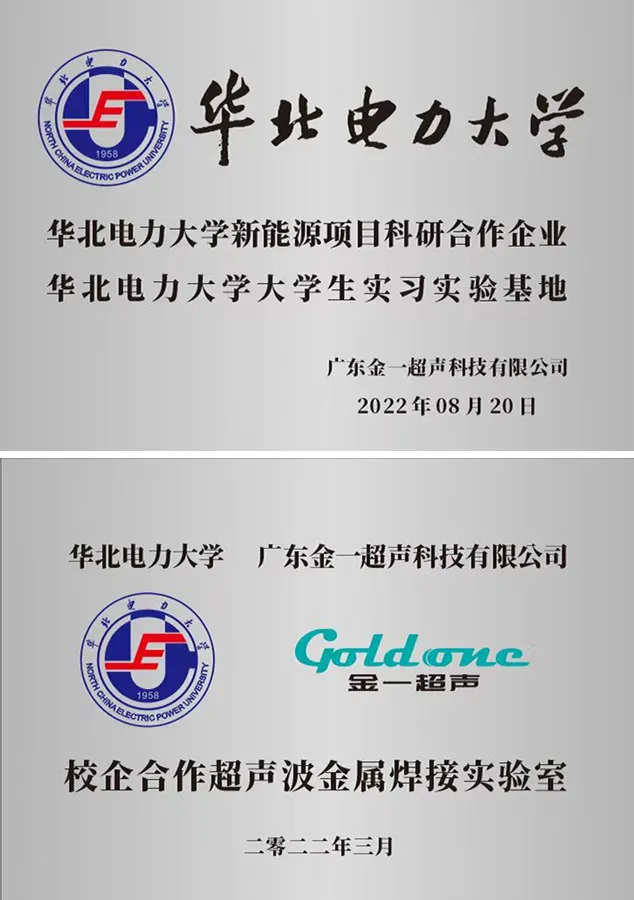
Certifications
Products meet international safety and EMC standards