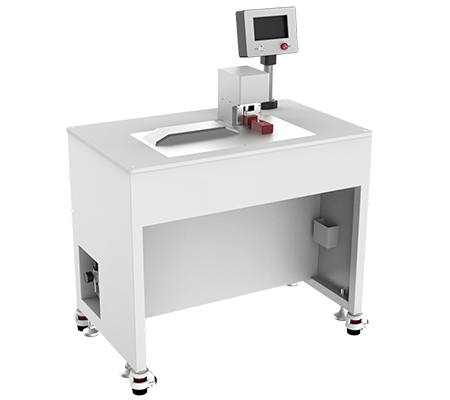
Ultrasonic metal welding machines are precision welding equipment designed for non-ferrous metal connections such as copper and aluminum. Factory-direct sales ensure quality and supply efficiency. This series covers a power range from 3000W to 12000W, with a welding area range of 0.35 to 120mm², suitable for energy storage copper-aluminum busbar and high-voltage wire harness terminal welding applications.
The factory-direct sales model for ultrasonic metal welding machines is reshaping the procurement landscape of industrial welding equipment. This article provides an in-depth analysis of the technical specifications, selection logic, and delivery assurance of the full ultrasonic metal welding machine series, helping B2B procurement and engineering decision-makers build a complete knowledge framework from principle understanding to equipment implementation. From an original manufacturer direct-supply perspective, we present the complete product matrix from the 12000W flagship model to the 3000W precision model, with all verified technical parameters clearly specified.
Ultrasonic Metal Welding Machine Factory Direct: Value Reconstruction of Source Factory Direct Supply Model
Choosing factory-direct sales for ultrasonic metal welding machines means completely removing intermediate distribution links from the procurement process. The core value of this model is reflected in three dimensions: First, procurement costs are significantly optimized, as factory-direct pricing excludes channel markups and regional agent commissions, especially for multi-unit batch procurement for production line projects where the cost gradient advantage is more prominent; Second, technical response achieves zero delay, with requirement confirmation, solution adjustments, and parameter fine-tuning all directly connected to the R&D and process teams, avoiding information distortion through multi-layer transmission; Third, after-sales service goes directly to the factory, with equipment installation and commissioning, fault diagnosis, and spare part replacement all directly handled by the manufacturer, ensuring clear accountability and greatly improved service efficiency.
The quality assurance system of original factory direct supply covers the entire process from frame assembly to ultrasonic transducer calibration. Each machine undergoes strict amplitude calibration, pressure system verification, and welding pull-force sampling tests before leaving the factory, ensuring the delivered condition is at the optimal process window. On the commercial level, factory-direct sales grants buyers equipment customization capabilities, including welding head geometry, machine height, automation interfaces, and other personalized configurations; delivery commitments are clear and transparent, with standard models kept in stock and customized models having clear production milestone schedules.
Core Technical Principles and Process Advantages of Ultrasonic Metal Welding
The physical essence of ultrasonic metal welding is the use of high-frequency mechanical vibration (typically 20KHz) to generate periodic shear stress at the metal contact surface, thereby breaking surface oxide films and promoting solid-state metallurgical bonding between atoms. This process does not involve melting, thus avoiding the brittle intermetallic compound formation problems common in traditional joining processes. Compared to the contact resistance drift of bolted crimping, the heat-affected zone damage of soldering, and the spatter and electrode wear of resistance welding, ultrasonic welding has significant advantages in electrical conductivity, mechanical strength, and long-term reliability.
Among key components, the transducer converts electrical energy into high-frequency mechanical energy, the booster is responsible for amplitude amplification and impedance matching, and the welding head (ultrasonic mold) directly determines the weld mark morphology and energy distribution. Our welding heads are manufactured from special alloy steel, treated with vacuum heat treatment and precision grinding, with a single set lifespan of up to hundreds of thousands of welding cycles. The welding quality evaluation system revolves around three core indicators: pull-off force (reflecting bond strength), cross-section resistivity (reflecting electrical conductivity), and metallographic structure consistency (reflecting metallurgical bond uniformity).
Factory Direct Full Series Model Specifications and Selection Guide
The following are the key specification parameters of the full ultrasonic metal welding machine series. All data comes from original factory technical archives, allowing buyers to conduct preliminary selection matching based on this information.
| Model |
Power Rating |
Welding Area |
Machine Weight |
Dimensions (mm) |
Typical Applications |
| YN-D2012-G |
12000W |
35-120mm² |
988KG |
1750×1050×2150 |
Energy storage copper-aluminum busbar welding【Fact 1】【Fact 9】 |
| YN-D208-G |
8000W |
20-70mm² |
957KG |
1750×1050×2150 |
Large wire harness copper-aluminum busbar welding【Fact 2】【Fact 10】 |
| YN-D206-G |
6000W |
15-50mm² |
192KG |
1400×760×2000 |
High-voltage wire harness copper-aluminum terminal welding【Fact 3】【Fact 11】 |
| YN-X206-Z |
6000W |
10-50mm² |
118KG |
1020×610×1200 |
Power battery wire harness welding【Fact 5】【Fact 8】 |
| YN-X204-Z |
4000W |
1-30mm² |
132KG |
1020×610×1200 |
Lithium battery wire harness terminal welding【Fact 6】 |
| YN-P203-F |
3000W |
1-100mm² |
73KG |
565×269×442 |
Precision electronics and sensor welding【Fact 4】 |
| YN-X203-Y |
3000W |
0.35-20mm² |
88KG |
670×520×410 |
High-efficiency precision metal welding, CE/FCC/ISO certified【Fact 7】 |
| JY-D204-F |
4000W |
1-35mm² |
82KG |
660×350×680 |
General-purpose copper-aluminum terminal welding【Fact 12】 |
Flagship D Series: Power Benchmark for Energy Storage Copper-Aluminum Busbar Welding
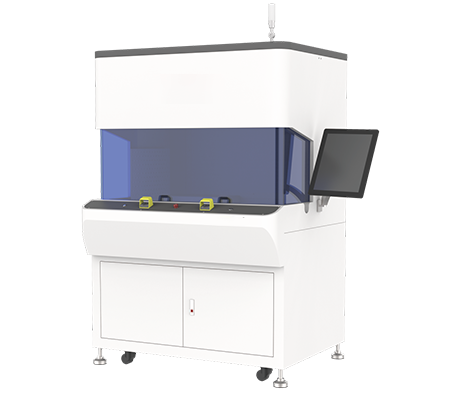
YN-D2012-G, as the flagship model of the D series, uses 12000W ultra-high power to handle the most demanding copper-aluminum busbar parallel welding requirements in the energy storage industry. Its 988KG total machine weight ensures rigid stability during the welding process, and the 1750×1050×2150mm dimensions are suitable for large production line layouts. This model is especially suitable for copper-aluminum transition connections within the 35-120mm² welding area range, meeting the high conductivity and low impedance requirements of energy storage modules and PACK-level connection busbars.
Split D Series and Standard X Series: Balanced Choice for Production Line Flexibility
YN-D206-G adopts a split structure design with the main unit and control unit separated, making it easy to integrate into limited spaces of automated production lines. Its 6000W power covers a 15-50mm² welding area, and the 192KG weight provides certain mobility flexibility while ensuring power output. The YN-X206-Z in the X series focuses on power battery wire harness welding scenarios, with the combination of 6000W power and 10-50mm² welding area specifically optimized for series copper busbars between battery modules and high-voltage wire harness terminal connections.
Precision P Series and High-Efficiency X Series: Precision Assurance for Small Cross-Section Welding
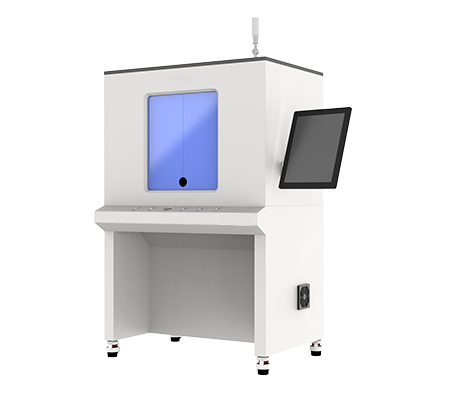
YN-P203-F achieves a wide welding area coverage of 1-100mm² with 3000W power, and its 73KG lightweight design makes it suitable for workstation integration in precision electronics production lines. YN-X203-Y further extends down to a minimum welding area of 0.35mm², meeting ultra-precision welding needs such as sensor internal leads and miniature relay contacts, and has passed CE safety, FCC electromagnetic compatibility, and ISO quality management system triple certification.
Typical Application Scenarios and Industry Solutions
The application landscape of ultrasonic metal welding machines spans three major fields: new energy, automotive manufacturing, and precision electronics. In the new energy storage industry, copper-aluminum busbar parallel welding, energy storage module connections, and BMS sampling wire welding are the three core processes, where the D series high-power models play a key role. In power battery PACK production lines, processes such as high-voltage wire harness terminal welding, inter-module series copper busbars, and tab transfer welding have extremely high requirements for weld conductivity and mechanical strength, and the X series models have become standard production line equipment with their stable process windows.
In the automotive wire harness manufacturing field, application scenarios such as complete vehicle wire harness branch welding, large cross-section terminal connections, and shield layer grounding test the equipment's continuous operation capability and cycle efficiency. In precision electronics manufacturing, welding of sensor packaging, relay internal contacts, and miniature motor lead wires relies more on the precise energy control of the P series and X series low-power models. The matching of each model to its scenario follows the triple comparison principle of power rating, welding area, and cycle efficiency, allowing buyers to conduct matrix-based selection according to actual production line requirements.
Factory Direct Ultrasonic Metal Welding Machine Quality Certification and Delivery Assurance System
The quality control of factory-direct ultrasonic metal welding machines begins with the factory inspection process. After assembly, each machine must pass ultrasonic amplitude calibration (confirming transducer output deviation from set values is within allowable range), pressure system verification (validating consistency between cylinder output force and actual displayed values), and welding pull-force sampling tests (using standard test pieces to verify welding strength meets standards). This triple inspection mechanism ensures equipment leaves the factory with stable process performance.
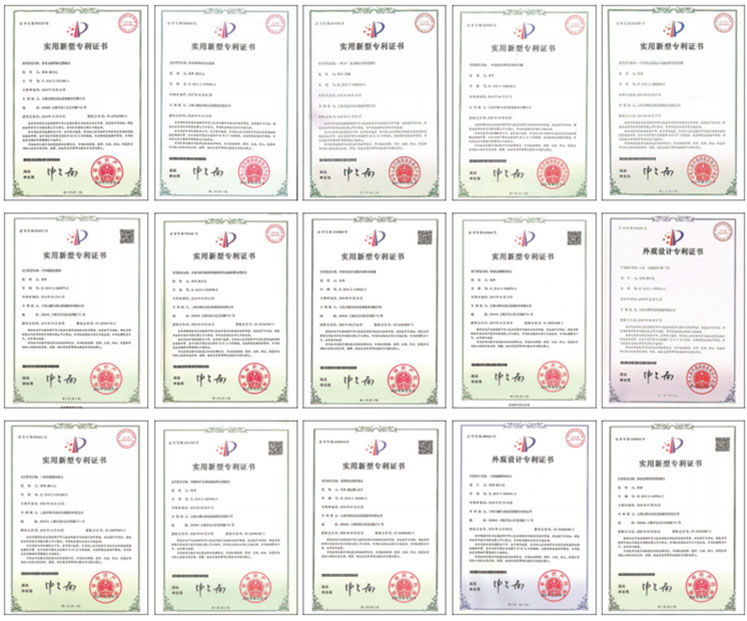
Regarding the international certification system, the YN-X203-Y model has passed CE safety certification, FCC electromagnetic compatibility certification, and ISO quality management system certification【Fact 7】, and other models follow the same design and manufacturing standards. Delivery cycle commitments are clear: standard models (X series, P series) have stock inventory and can be arranged for shipment immediately after ordering; customized models (D series and special welding head configurations) have clear delivery milestones based on configuration complexity, typically 30-45 working days. The after-sales service network covers major industrial cities nationwide, with original factory engineers providing on-site commissioning services, a remote diagnostic system supporting 7×24 hour fault response, and a spare parts center maintaining inventory of key consumable parts such as transducers, welding heads, and boosters.
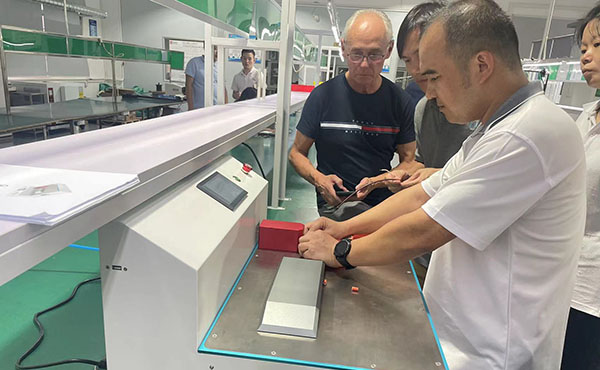
The operation training system is divided into two stages: theoretical training and hands-on practice. Theoretical training covers ultrasonic welding principles, equipment operation panel functions, and process parameter setting logic; hands-on practice involves welding parameter debugging with the customer's actual workpieces, and sharing our accumulated process parameter database to help customers quickly build independent debugging capabilities.
Frequently Asked Questions About Factory Direct Ultrasonic Metal Welding Machines
How significant is the price difference between factory-direct and dealer quotes? What service items are included in the price composition?
Factory-direct prices are typically 10%-15% lower than dealer channel prices, with the difference mainly coming from channel commissions and regional market expenses. The price composition includes the equipment body, one standard welding head, operation manual, basic training, and one-year warranty. Custom welding heads, automation interface expansion, and special process development services are priced separately.
How to select the appropriate power rating based on welding materials?
For copper-copper welding, 3000W-4000W models can be selected; for aluminum-aluminum welding, 4000W-6000W is recommended; for copper-aluminum dissimilar metal welding, due to material hardness differences, models above 6000W are recommended to ensure sufficient vibration energy to break the oxide film. Specific selection also needs to consider welding area and cycle requirements for comprehensive judgment.
What key performance indicators should be focused on during equipment acceptance?
Three core indicators: First, welding pull-force testing, using customer's actual workpieces or standard test pieces for pull-off force verification, which must reach over 70% of the base material strength; Second, cross-section resistivity testing, where the weld area resistance should not exceed 1.2 times that of the base material; Third, continuous operation stability testing, running continuously for 2 hours at the set cycle rate to observe welding quality consistency.
What is the lead time and cost for custom welding heads?
Standard welding heads are included with the equipment. Custom welding heads, depending on geometric complexity and material usage, typically have a lead time of 7-15 working days, with costs ranging from 2000-8000 RMB. Bulk customization (10 sets or more) qualifies for tiered discounts.
What are the daily maintenance points and replacement cycles for consumable parts?
Clean the welding head work surface and check tightening torque daily; check transducer cooling air duct unobstructed weekly; verify pressure system zero drift monthly. Welding head lifespan is approximately 200,000-500,000 welding cycles, boosters approximately 500,000-800,000 cycles, and transducers can last over 5 years under normal use.
Does the factory support sample welding testing and process feasibility verification?
Yes. Buyers can send welding samples to the original factory laboratory, and we will complete trial welding within 24 hours and issue a test report including pull-off force data, cross-section photos, and process parameter recommendations. This service is free of charge and creates no subsequent purchase obligation.
What is the core difference between the D series and X series?
The D series is positioned for high-power heavy-duty applications, with reinforced machine structure and higher welding area limits, suitable for large cross-section workpieces such as copper-aluminum busbars and energy storage connectors; the X series focuses more on production line integration flexibility, with lighter weight and more compact dimensions, suitable for medium cross-section welding of battery wire harnesses and terminals.
Can the equipment be integrated into automated production lines?
All models have reserved PLC communication interfaces (I/O signals and Ethernet optional), supporting coordinated control with robots, conveyors, and vision inspection systems. Split-type models (such as YN-D206-G) are more suitable for embedded integration.
How are welding parameters set and optimized?
Main parameters include amplitude (40-100% adjustable), welding time (0.1-5 seconds), and pressure (0.2-0.6MPa). We provide a process parameter database covering recommended parameter ranges for different copper-aluminum thickness combinations, and customers can fine-tune based on this foundation.
What is the noise level during equipment operation?
During normal welding, noise is approximately 75-85 decibels, meeting occupational health standards for industrial workplaces. For further noise reduction, a soundproof enclosure (optional item) can be configured.
Does the equipment support multiple welding head switching?
Yes. The equipment uses a quick mold change structure, with standard mold change time not exceeding 5 minutes. Different welding heads correspond to different welding area ranges, and one machine serving multiple purposes can reduce equipment investment.
What are the power requirements and energy consumption levels?
All models use three-phase 380V/50Hz power supply, with maximum power consumption at 1.3 times the rated power (including control system and cooling fan). Standby power consumption is below 5% of rated power.
What is the warranty period and extended warranty policy?
The standard warranty period is 12 months, covering core components such as transducers, boosters, and welding heads. Extended warranty services are available, extending up to 36 months, including two free inspections per year during the extended warranty period.
Is welding quality traceable?
The equipment supports welding parameter recording functions, allowing export of amplitude, time, and pressure data for each weld, enabling quality traceability when integrated with MES systems. Data storage capacity supports continuous recording of 1 million welding records.
Are there rental or trial programs available?
For first-time purchasing customers, we offer a 30-day equipment trial program. During the trial period, 10% of the equipment value is paid as a deposit, which can be applied toward the purchase price if satisfied with the trial. Specific terms should be confirmed with original factory sales personnel.
Certifications and Contacting the Original Factory for Technical Support
All our ultrasonic metal welding machines are designed and manufactured in accordance with the ISO9001 quality management system, and the YN-X203-Y model has passed CE safety certification and FCC electromagnetic compatibility certification【Fact 7】. All shipped equipment comes with complete inspection reports and certificates of conformity, ensuring that the technical parameters of each machine are consistent with stated values.
To obtain model recommendations and process verification solutions tailored to your specific welding needs, you can contact the original factory technical team through the following channels: Submit basic information such as welding materials, cross-sectional area, and cycle requirements, and we will reply with preliminary selection recommendations within 1 working day; Send samples to the original factory laboratory to receive free trial welding services including weld cross-section inspection reports; Request product brochures, detailed parameter tables, and application case collections.
The value of factory-direct ultrasonic metal welding machines is ultimately reflected in the precision of technical matching and the timeliness of after-sales response. We look forward to direct dialogue with every procurement decision-maker, supporting your production line upgrade needs with the original factory's technical depth.