Power Adapter·Ultrasonic Welding Machine·AC/DC Cable Harness Customization | Winna Technology
Home page
About Us
Exhibition
AC/DC Cable Harness
All
Cable Harness Cases
Equipment Certification
Customization Capability
Product Center
Wire Harness FAQ
Ultrasonic Metal Welding
All
Accessories and Consumables
Device Center
Case
Ultrasound FAQ
Power Adapter
All
Product Center
Custom Submission
Certification/Equipment
Power Adapter Cases
Adapter FAQ
Technical Resources
All
Adapter Technology Resources
Ultrasonic welding technology resources
Wire Harness Technical Resources
Contact us
Submit requirements
Download Center
Sample Application
Privacy Policy
Careers
EN
CN
DE
ES
JP
TH
VI
Case
Your location
Home page
Ultrasonic Metal Welding
Case
Ultrasonic Terminal Welding | Precision Welding of Copper Terminals and Wires
2026-08-05 00:00:00
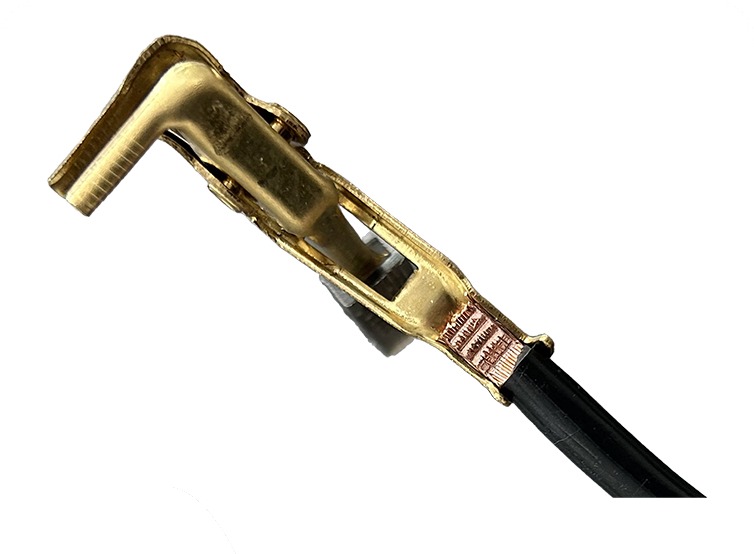
.welder-sample{font-size:15px;line-height:1.85;color:#374151;max-width:900px} .welder-sample h3{font-size:18px;font-weight:600;color:#111827;margin:28px 0 12px;padding-left:14px;border-left:3px solid #DC2626} .welder-sample p{margin:0 0 14px} .welder-sample .spec-box{background:#F9FAFB;border-radius:10px;padding:18px 22px;margin:16px 0;border-left:3px solid #DC2626} .welder-sample .spec-box strong{color:#111827} .welder-sample img{max-width:100%;height:auto;border-radius:10px;margin:8px 0;box-shadow:0 2px 12px rgba(0,0,0,0.08)} .welder-sample .img-grid{display:grid;grid-template-columns:1fr 1fr;gap:12px} .welder-sample .img-grid img{width:100%;height:auto;margin:0} .welder-sample .tag{display:inline-block;background:#FEF2F2;color:#DC2626;font-size:12px;font-weight:600;padding:2px 10px;border-radius:10px;margin-right:4px} @media(max-width:768px){.welder-sample .img-grid{grid-template-columns:1fr}} Welding Type Ultrasonic Terminal Welding — Solid-state bonding of wires to metal terminals (copper terminals, brass terminals, etc.) using ultrasonic waves, achieving excellent electrical conductivity and mechanical strength. Process Parameters: Frequency 20kHz | Welding Power 3000W | Welding Time 0.3~0.6s | Amplitude 50~70μm Applicable Terminals: Copper/Brass/Tinned terminals, compatible with wire diameters 1.5mm² ~ 25mm² Welding Results: Shear force ≥ terminal body strength | Contact resistance ≤ joint body resistance × 1.2 | Degradation <5% after 200°C high-temperature aging Process Advantages Ultrasonic terminal welding eliminates issues of inconsistent terminal deformation and unstable contact resistance found in traditional crimping processes. By precisely controlling welding energy and amplitude, it achieves consistent bonding between copper wires and tinned terminals, with neat and burr-free weld appearances, meeting the strict quality requirements of the automotive and new energy industries. ▼ Terminal Welding Sample Physical Image Display
No more
No more