产品概述
XHP terminal wire harness is precision-manufactured using XHP series connectors and high-quality wires, suitable for internal signal transmission and power connections in electronic equipment. The product features resistance to repeated plugging/unplugging, vibration resistance, and good flame retardancy, meeting custom requirements across various industrial and consumer electronics scenarios. As a professional
AC/DC wire harnessmanufacturer, we provide full-process customization services from design to mass production, ensuring that every wire harness meets stringent electrical and mechanical performance standards.
产品特点
- Uses XHP original-compatible terminals, with low contact resistance and long plug/unplug lifespan
- Wire options include UL1007, UL1571, and other specifications, supporting AWG18-28 wire gauges
- Supports single-row/double-row, different PIN counts, and customized wire lengths
- Crimping is tight and passes pull force testing, ensuring long-term reliability
- RoHS, REACH, UL and other environmental and safety certifications available
- Flame retardancy rating complies with UL VW-1 standard, suitable for high-safety requirement scenarios
技术参数
| Rated Voltage | 300V |
| Rated Current | 3-10A depending on wire gauge |
| Temperature Range | -25℃~+105℃ |
| Insulation Resistance | ≥1000MΩ |
| Contact Resistance | ≤20mΩ |
| Applicable Terminal Pitch | 2.54mm / 3.96mm |
| Conductor Material | Tin-plated copper (pure copper optional) |
| Insulation Material | PVC / XLPE (temperature resistance 105℃/125℃) |
| Flame Retardancy Rating | UL VW-1 / CSA FT1 |
应用场景
XHP terminal wire harnesses are widely used in household appliance control boards, LED lighting drivers, security equipment, automotive electronics, industrial automation equipment, instrumentation, and other fields, especially suitable for internal connection solutions requiring frequent plugging/unplugging or compact space. In AC/DC power conversion systems, this wire harness can carry up to 16A/250VAC current, ensuring insulation safety and signal integrity under long-term full-load operation.
定制加工能力
We provide comprehensiveprofessional wire harness customization services, supporting the following customization options:
- Wire specifications: UL1007, UL1571, UL1430, etc., AWG18-28
- Connector PIN count: 2-20 PIN, single-row or double-row
- Wire length: customized as required, tolerance ±2mm
- Terminal types: crimp terminals, pre-insulated terminals (O-type/Y-type)
- Certification requirements: UL, CCC, CE, RoHS, REACH
质量保证
Every batch of XHP terminal wire harnesses undergoes strict inspection to ensure:
- Terminal crimp height is within specification range
- Pull force testing passes UL standard requirements
- Continuity testing is 100% qualified
- Withstanding voltage testing shows no breakdown or flashover
- Insulation resistance ≥100MΩ
- Appearance free of scratches, oxidation, and contamination
FAQ
What advantages does the XHP terminal wire harness have compared to ordinary flat cables?
The XHP terminal wire harness uses original-compatible terminals, with contact resistance as low as ≤20mΩ and longer plug/unplug lifespan; it also supports 2.54mm/3.96mm pitch, compatible with various PCB interfaces. Compared to ordinary flat cables, it has a higher flame retardancy rating (UL VW-1) and wider temperature range (-25℃~+105℃), making it more suitable for industrial environments with high vibration and high humidity.
How do I select the appropriate wire gauge and rated current for my equipment?
Select the wire gauge based on the equipment's operating current: AWG28 is suitable for signal transmission below 1A, AWG22 is suitable for 3-5A power connections, and AWG18 can carry 8-10A. We provide free technical consultation to help you match the optimal wire gauge and terminal combination, ensuring long-term reliability.
How are delivery lead times and after-sales service guaranteed?
Standard custom order delivery time is 7-15 working days; 24-hour remote support and on-site repair services are provided, with critical spare parts kept in stock to ensure continuous production line operation. All products are provided with RoHS, REACH and other environmental certification documents.
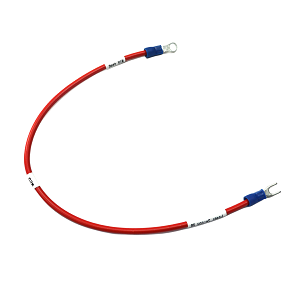
XHP terminal wire harness customization: low-resistance, plug-durable connection solution
What are the differences between XHP terminal wire harnesses and XH, XHB series connectors, and how should I choose?
The XHP series is an enhanced connector with terminal pitch typically 2.54mm or 3.96mm. Compared to XH (2.5mm pitch) and XHB (2.5mm pitch with latch), XHP shows significant improvements in rated voltage (300V), temperature range (-25℃~+105℃), and flame retardancy rating (UL VW-1). If your application environment involves strong vibration, high humidity, or requires frequent plugging/unplugging, XHP is the more reliable choice; while XH is more suitable for low-stress scenarios such as ordinary household appliance control boards. When selecting, please consider the actual current load and mechanical lifespan requirements. We can provide free selection recommendations.
What application scenarios are suitable for 2.54mm and 3.96mm terminal pitches respectively?
The 2.54mm pitch is compatible with standard PCB board-to-board connections, suitable for signal transmission and low-current power circuits (below 3A), commonly used in instrumentation and security equipment; the 3.96mm pitch accommodates higher current-carrying requirements (5-10A), commonly found in LED driver power supplies, air conditioner control boards, industrial controllers, and other applications requiring high-power supply. The core basis for determining the pitch is the PCB pad layout and actual operating current. It is recommended to confirm the circuit board design files before selecting the corresponding pitch connector.
What reinforcement and protection measures are available for using XHP terminal wire harnesses in high-vibration environments?
In high-vibration environments, it is recommended to use XHP connectors with latches (such as XHP series latching models) to ensure secure mating. Additionally, heat-shrink tubing or corrugated conduit can be added at the wire harness end for protection, and secondary reinforcement with potting adhesive can be applied at the terminal crimping area. Furthermore, selecting thicker wire gauges such as AWG18-AWG20 and ensuring crimp pull force passes UL standards can reduce the risk of wire breakage. We provide vibration test reports and can customize reinforcement solutions based on your actual application environment (such as automotive or industrial equipment).
Can XHP terminal wire harnesses be used in AC/DC power conversion systems? What is the maximum power capacity?
Yes. The XHP terminal wire harness has a rated voltage of 300V, and with AWG18 wire gauge, the rated current can reach 10A. In a 220VAC system, it can carry approximately 2.2kW of power. However, since temperature rise coefficients and wire length need to be considered in practical applications, it is recommended to derate to 80% of the rated value, meaning continuous load should not exceed 80% of the rated value. For high-power scenarios of 16A/250VAC, please choose a 3.96mm pitch with thicker wire gauge design and reserve heat dissipation space. We can provide current-carrying capacity and temperature rise test data for design reference.
What are the differences between UL1007, UL1571, and UL1430 wires?
The core differences among the three lie in insulation layer thickness and temperature rating: UL1007 uses PVC insulation, rated 80-105℃, with a thicker insulation layer (approximately 0.41mm), suitable for general-purpose power connections; UL1571 also uses PVC insulation, but with a thinner insulation layer (approximately 0.25mm), suitable for space-constrained compact devices, rated 80-105℃; UL1430 uses XLPE cross-linked polyethylene insulation, with a temperature rating up to 125℃, offering superior flame retardancy and aging resistance, suitable for high-temperature environments. When selecting, you need to weigh temperature requirements, bending radius requirements, and the aperture size of the space through which the harness will pass.
What exactly does the VW-1 flame retardancy rating of XHP wire harnesses represent? How is it different from CSA FT1?
UL VW-1 is a vertical flame test rating under the UL 1581 standard, requiring that after the wire is subjected to five 15-second flame applications in a vertical position, the total burn time does not exceed 60 seconds, and the cotton pad must not be ignited; CSA FT1 is the equivalent vertical flame test under the Canadian Standards Association, with acceptance criteria close to VW-1. The two are essentially equivalent. XHP terminal wire harnesses meet both UL VW-1 and CSA FT1, making them suitable for household appliances, commercial equipment, and public facility scenarios with strict fire safety requirements.
How do I quickly determine the required AWG wire gauge based on equipment power consumption?
You can select according to the principle of "current first, length correction": AWG28 is suitable for 0.5-1A (signal wires), AWG26 for 1-2A, AWG24 for 2-3A, AWG22 for 3-5A, AWG20 for 5-7A, and AWG18 for 7-10A. If the wire length exceeds 1 meter, since voltage drop will increase, it is recommended to go up one wire gauge level. Also, please check the rated current of the connector terminals to ensure the terminals match the wire gauge, avoiding excessive temperature rise caused by terminal overcurrent.
What are the respective advantages of tin-plated copper and pure copper conductors in XHP wire harnesses?
Tin-plated copper conductors have a tin coating on the surface, providing better oxidation and corrosion resistance, with more stable contact resistance in high-temperature and high-humidity environments. They are also easier for soldering, making them the most mainstream choice in the wire harness industry. Pure copper (bare copper) conductors have slightly higher conductivity (approximately 102% IACS) and are more economical, but they are prone to oxidation and blackening, mainly used in dry, sealed environments or cost-sensitive consumer electronics internal connections. If you need to balance cost and reliability, tin-plated copper is recommended.
What unique advantages do XHP terminal wire harnesses have in LED lighting drivers?
LED driver power supplies have compact internal space and high operating temperatures (typically above 85℃). XHP wire harnesses can withstand temperatures up to 105℃ (XLPE up to 125℃), and the VW-1 flame retardancy rating meets lighting safety requirements. Additionally, LED drivers require frequent switching and dimming, and the low contact resistance of XHP terminals (≤20mΩ) effectively reduces contact point temperature rise. When performing TUV or CCC certification for luminaires, selecting UL-certified wire harnesses can simplify the certification process and shorten time-to-market.
Can XHP wire harnesses meet automotive electronics application requirements? What special treatment is needed?
Yes, but automotive-grade adaptation is required on top of the standard product: automotive environments require a temperature range of -40℃~+125℃, UV aging resistance, and oil and chemical resistance. Standard PVC-insulated wires cannot meet these requirements; it is recommended to use XLPE insulation with increased thickness or customized automotive-grade wires (such as AV or AVSS types). Additionally, connectors need latching mechanisms and vibration testing (such as ISO 16750 standard). We can provide customized solutions that meet automotive requirements and provide corresponding test reports.
How should I quickly troubleshoot and locate the issue when a wire harness has poor contact?
It is recommended to troubleshoot in the following steps: 1) Use a multimeter to measure the continuity resistance between terminals and determine whether it exceeds 1.5 times the initial value (≤20mΩ); 2) Check whether the terminal crimping area has loosening or whether the insulation has been pressed into the crimp barrel; 3) Visually inspect whether the terminals show oxidation, discoloration, deformation, or terminal push-out; 4) Check whether the male and female connectors are fully mated and the latch is engaged. If the problem originates from the production process, we commit to providing failure analysis support to help identify whether it is a crimping parameter issue or a material issue.
What wire length tolerances can be customized for XHP wire harnesses? What are the minimum and maximum lengths?
The customizable wire length range is 30mm to 10m, with standard tolerance of ±2mm. Special requirements can achieve ±1mm (requiring automatic wire cutting machines and additional 100% inspection stations). For complex harnesses requiring precise branch positions, 3D simulated routing design can be performed based on drawings to ensure each branch length precisely meets assembly requirements. Note: excessive wire length causes signal attenuation and cost waste. It is recommended to reserve only 10-20mm of allowance based on the actual routing path.
Do you provide UL finished product certification for XHP terminal wire harnesses? How can the certification information be verified?
Yes, we can provide UL finished product certification services. The certification number can be verified in the UL Online Certifications Directory by searching the company name or product category (such as Appliance Wiring Material). The wires, terminals, and crimping processes used in XHP wire harnesses all comply with UL 758/UL 486A standards. We also support CUL (Canadian market) certification, CCC, CE, and other certification requirements. Batch orders can include certification certificate copies with shipment for your end-product certification records.
How is long-term supply stability guaranteed for high-volume production customers?
For high-volume production customers, we provide annual framework agreements and tiered pricing guarantees, securing safety stock of core raw materials (terminals, wires) in advance to ensure stable delivery. Standard models are kept in stock, with emergency orders shippable within 3-5 working days; for custom models, we coordinate with customers to set safety stock levels and rolling forecast-based stocking mechanisms. Additionally, all products undergo 100% continuity and withstanding voltage testing before shipment, combined with batch traceable barcodes to achieve full lifecycle quality traceability.
What is the minimum order quantity for small-batch custom XHP wire harnesses? How are costs calculated?
We support small-batch customization, with a minimum order quantity of 100 sets (or 500 wires). Costs include: mold fees (if terminals/connectors are non-standard), wire cutting and crimping processing fees, testing labor fees, and packaging and shipping costs. For standard 2-20PIN specifications, no additional mold fees are required—only processing service fees apply. After the first order is completed, subsequent reorder lead time can be shortened to 3-5 days. Special note: before starting a new project, it is recommended to arrange sample prototyping first (prototyping fees can be deducted from batch orders) to verify drawings and electrical performance.