Details
Which AC/DC wire harness custom manufacturer is good? Prefer UL-certified precision manufacturing suppliers
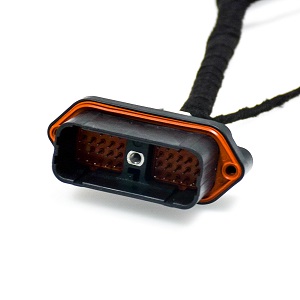
In supply chain decisions for industrial equipment and energy systems, the AC/DC wire harness is a key carrier for power transmission and signal connection, and its quality directly determines the stability and safety of the whole machine. Facing numerous suppliers in the market, how to answer the question "Which AC/DC wire harness custom manufacturer is good" requires establishing a systematic evaluation framework from three dimensions: material process, engineering adaptation capability, and quality assurance system. This article will provide a practical selection guide for B2B procurement and engineering decision-makers, helping you find the optimal balance between technical parameters and commercial terms.
Which AC/DC wire harness custom manufacturer is good — rigid evaluation of technical strength and material certification
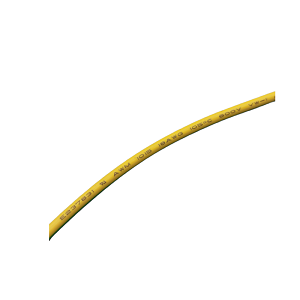
To judge which AC/DC wire harness custom manufacturer is good, the primary standard is whether it possesses a complete technical chain from conductor selection to insulation solution design.High-quality manufacturers typically use high-purity tinned copper stranded wire (AWG 24~6) as the conductor material, a specification covering a wide range of needs from low-current signal transmission to high-power drive delivery.The tinning process not only improves oxidation resistance but also maintains stable contact resistance in high-temperature and high-humidity environments.Regarding insulation layers, different application scenarios present differentiated requirements for temperature resistance and flame retardancy: PVC material is suitable for conventional industrial environments below 105°C, halogen-free flame-retardant XLPE can withstand 125°C high temperatures and meets environmental flame-retardant standards, while silicone rubber insulation can cope with extreme conditions of 200°C.
When evaluating suppliers, purchasers should request detailed technical parameter sheets and verify material certification documents (such as UL, CE, or IEC standards) as an objective basis for horizontal comparison of different manufacturers.
Core specifications and customization capabilities — key indicators for measuring engineering adaptation depth
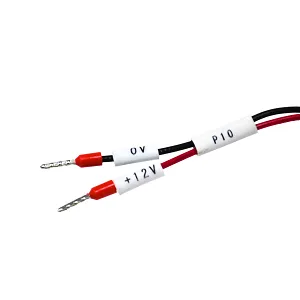
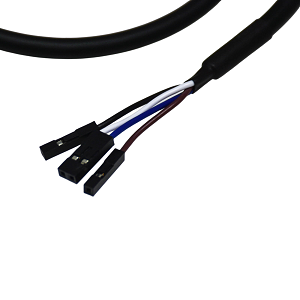
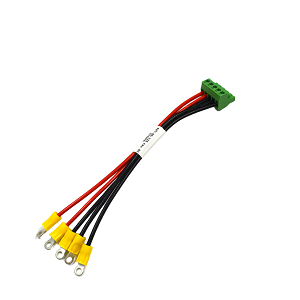
The technical specifications of an AC/DC wire harness are not simply a stacking of parameters, but require precise calculation based on actual load conditions. The rated voltage range (AC 100~600V / DC 5~48V) and current-carrying capacity directly determine wire gauge selection, while connector type and protection level (such as IP67, IP68) need to match the mechanical structure and operating environment of the equipment-end interface. Customization supports multiple wire gauges, lengths, connector types, and protection levels, but temperature-resistant and flame-retardant materials must be selected according to the application environment. This process requires the manufacturer to have material application recommendation and structural optimization capabilities. Before installation, confirm the rated voltage, current, and wire gauge specifications to ensure matching with the equipment interface. It is recommended to use original factory custom wire harnesses to ensure that electrical performance and mechanical strength meet OEM standards. The following is a reference table of common technical parameters:
| Parameter Category | Specification Range | Application Description |
|---|---|---|
| Conductor Specification | AWG 24 ~ AWG 6 | Signal transmission to large current power lines |
| Rated Voltage | AC 100~600V / DC 5~48V | Higher voltage levels can be customized |
| Insulation Material | PVC (105°C) / XLPE (125°C) / Silicone rubber (200°C) | Select by ambient temperature and flame retardant requirements |
| Protection Level | IP67 / IP68 optional | Dust and waterproof level customized by working condition |
| Connector Type | Customized according to OEM drawings | Ensure complete match with equipment interface |
Product Features and Quality Assurance System
Conductor process and electrical performance stability
Adopts high-purity tinned copper stranded wire structure, effectively reducing skin effect and eddy current loss, ensuring signal integrity and power transmission efficiency under high-frequency or large current working conditions. The stranding process undergoes strict tension control to avoid local resistance increase caused by single wire breakage, ensuring the long-term service life of the wire harness from the material source.
Scenario-based adaptation of multi-layer insulation solutions
According to different industry needs, three insulation layers are provided: PVC, halogen-free flame-retardant XLPE, and silicone rubber. PVC material has outstanding economy and is suitable for internal wiring of general industrial control cabinets; XLPE has excellent heat resistance and flame retardancy, suitable for new energy equipment and charging facilities; silicone rubber is used for high-temperature environments or dynamic application scenarios with frequent bending. Each material has passed corresponding withstand voltage and aging tests to ensure that the insulation level meets the electrical safety requirements of high-power application scenarios.
Full-process quality control and OEM standard compliance
From incoming inspection, terminal crimping tension testing to finished product power-on testing, each process sets a quality control node. For customized products, the manufacturer needs to provide a complete performance verification report at the sample stage, including key data such as insulation resistance, withstand voltage strength, and contact resistance, ensuring that the wire harnesses delivered in bulk comply with OEM standards in electrical performance and mechanical strength.
Typical application scenarios and selection matching
- Industrial control and automation equipment:Servo drives, internal power and signal transmission of PLC control cabinets, requiring the wire harness to have good flexibility and anti-interference ability. PVC or XLPE insulation is usually selected, with wire gauges concentrated in AWG 16~22.
- New energy and energy storage systems:Battery module connection, inverter DC side wiring, need to meet high withstand voltage and flame retardant requirements. Halogen-free flame-retardant XLPE insulation is recommended, and AWG 6~12 conductors are selected according to the current magnitude.
- Medical electronic equipment:Strict requirements for material biocompatibility and low toxicity. The silicone rubber insulation solution can meet high-temperature sterilization needs while ensuring long-term contact safety.
- Communication base stations and data centers:High-density wiring environments challenge the shielding performance and bending radius of wire harnesses. It is necessary to customize connectors according to specific interface types and confirm that the protection level meets the waterproof and dustproof requirements of outdoor cabinets.
Warranty policy and after-sales commitment
All products enjoy a one-year warranty service, covering material defects, manufacturing process issues, and substandard performance parameters. Under normal use conditions, if quality problems such as insulation aging, conductor breakage, or poor contact occur, the manufacturer provides free repair or replacement services. It should be specifically noted that human damage, improper installation, and use beyond technical parameters are not covered by the warranty. When signing the contract, the purchaser should clarify the trigger conditions and response time of the warranty terms to avoid potential commercial risks.
Procurement decision checklist and frequently asked questions
Before finally determining which AC/DC wire harness custom manufacturer is good, it is recommended that you systematically score from the following dimensions: technical parameter sheet completeness (material certification, electrical performance data), sample testing cycle and cooperation, bulk delivery capability (capacity and delivery commitment), and warranty term clarity. The following is a summary of high-frequency procurement questions:
How to determine if the insulation level of an AC/DC wire harness meets high-power application scenarios?
First, calculate the load current and expected ambient temperature, and leave a temperature rise margin of at least 20% against the rated temperature resistance value of the insulation material (such as XLPE 125°C, silicone rubber 200°C). At the same time, verify whether the withstand voltage level of the material is higher than 1.5 times the maximum system voltage. It is recommended to request the manufacturer to provide the UL Yellow Card or IEC test report of the insulation material for data verification rather than empirical judgment.
What key parameters should be noted during the installation of AC/DC wire harnesses to ensure compatibility?
Before installation, confirm the rated voltage, current, and wire gauge specifications to ensure matching with the equipment interface. Focus on checking the connector locking structure, terminal plating material (tin-plated or gold-plated), and whether the bending radius of the wire harness meets the wiring space constraints. It is recommended to use original factory custom wire harnesses to ensure that electrical performance and mechanical strength meet OEM standards.
What are the typical Minimum Order Quantity (MOQ) and lead time for customization?
The MOQ depends on the complexity of the wire harness structure and terminal type. The MOQ for conventional products is 500 sets, while special customization (such as silicone rubber high-temperature wire harnesses or IP68 protection level) may require a minimum of 1000 sets. The standard lead time is 15~25 working days after sample confirmation, and bulk orders can be negotiated for expedited production scheduling depending on capacity. Please confirm with the sales engineer for details.
How to verify the reliability of a supplier's quality control process?
Request the supplier to provide ISO 9001 quality management system certification, and obtain recent outgoing inspection reports (including insulation resistance and withstand voltage test data). Qualified enterprises can arrange on-site audits, focusing on observing the tension test records and incoming inspection ledgers in the terminal crimping workshop.
How to choose the protection level (IP) of the wire harness?
The protection level should be determined according to the environmental conditions of the installation location. Indoor control cabinets generally require IP20; outdoor equipment or humid environments are recommended to be IP65 or above; long-term immersion or high-pressure washing scenarios require IP68. Customization supports multiple protection levels, but note that high protection levels will increase the cost of the connector sealing structure.
What is the performance difference between tinned copper and bare copper conductors?
Tinned copper conductors have better oxidation resistance in high-temperature and high-humidity environments, and the contact resistance is more stable, especially suitable for long-term operation or difficult-to-maintain scenarios. Bare copper conductors have slightly higher conductivity, but the surface is prone to oxidation, leading to an increase in contact resistance. For AC/DC wire harnesses, it is recommended to prioritize tinned copper stranded wire.
Can you provide wire harness products that meet UL or CE certification?
Yes. Our conventional products are UL certified (document number can be verified), and we can provide a CE Declaration of Conformity based on target market requirements. If customized products require specific certification standards, please propose this during the requirement confirmation stage so that corresponding testing and certification processes can be arranged.
Is a higher temperature resistance level for wire harnesses always better?
Not exactly. The cost of high-temperature resistant materials (such as silicone rubber) is significantly higher than that of PVC, and the difference in flexibility may affect the wiring process. It should be selected based on the actual maximum ambient temperature inside the equipment, leaving a reasonable margin is sufficient, to avoid over-design causing cost waste.
How to ensure the EMC (electromagnetic compatibility) performance of the wire harness?
For signal transmission wire harnesses, a shielding layer structure (braided shield or aluminum foil shield) can be used, and ensure the shielding layer is reliably grounded. Power wire harnesses and signal wire harnesses should maintain an appropriate spacing, and independent shielding should be used when necessary. The specific solution needs to be optimized in combination with the equipment EMC test results.
How is the delivery cycle of bulk orders guaranteed?
We have standardized production lines and a material preparation mechanism, with sufficient raw material inventory for common wire gauges (AWG 16~20). Bulk orders (5000 sets or more) can usually lock in a 30-day rolling delivery time, and a dedicated customer service team is set up to update production progress in real time.
How to troubleshoot poor contact in a wire harness?
First, check whether there is looseness or oxidation at the terminal crimping point, and use a micro-ohmmeter to measure the contact resistance. If the resistance value is abnormal, check whether the crimping process parameters (crimping height, tension value) meet the specification requirements. If such problems occur within the warranty period, you can contact after-sales for free repair or replacement services.
Can you provide 3D structural drawings or samples of the wire harness?
During the requirement confirmation stage, we can provide 2D engineering drawings for wiring evaluation. For wire harnesses with complex 3D routing, 3D scanning reverse modeling services can be arranged. The sample production cycle is generally 5~7 working days, and the sample fee can be deducted after placing a bulk order.
What are the options for the flame retardant level of the wire harness?
Conventional options include VW-1, FT1, and UL94 V-0 flame retardant solutions. Halogen-free flame-retardant XLPE material meets the IEC 60332-1 standard and is suitable for rail transit or marine applications with dual requirements for environmental protection and flame retardancy.
How to prevent wire harnesses from loosening in vibration environments?
For vibration conditions, it is recommended to use connectors with locking structures, and use stress relief loops or corrugated tubes for protection at wire harness fixing points. Terminal crimping must pass tension testing standards (such as IPC/WHMA-A-620) to ensure sufficient mechanical strength.
What items are included in the electrical test report for custom wire harnesses?
The standard test report includes: conductor DC resistance, insulation resistance (500V DC), withstand voltage test (AC 1500V/1min), contact resistance, and continuity test. If additional high-temperature aging or salt spray tests are required, they can be added by negotiation.
About Winna Technology
Winna Technology specializes in power adapters, AC/DC cable harness customization, and ultrasonic metal welding equipment R&D and manufacturing, providing one-stop OEM/ODM services.
Our products are CE/UL/FCC/CCC/RoHS certified, with an annual return rate below 0.02%, serving customers in 50+ countries and regions worldwide.
Specifications
Certifications
Products meet international safety and EMC standards