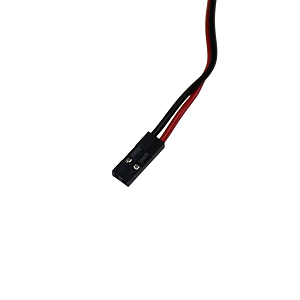
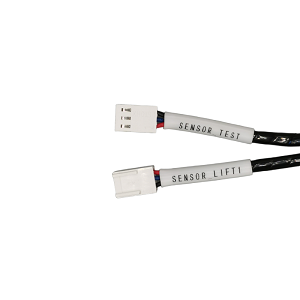
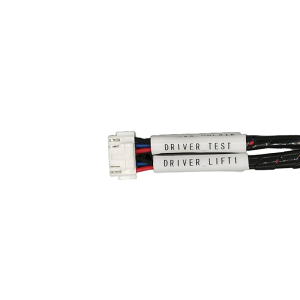
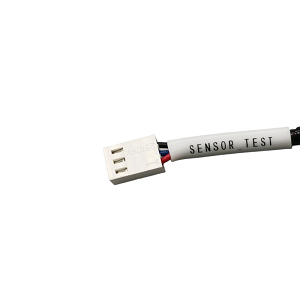
Details
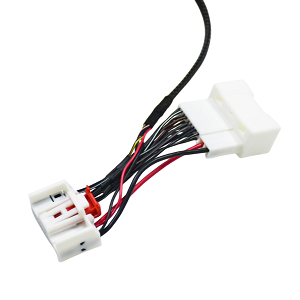
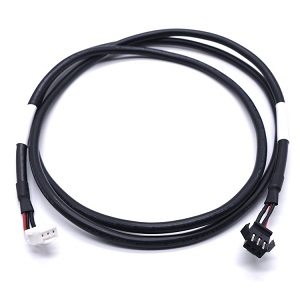
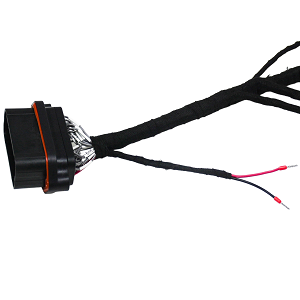
This harness is designed for high-precision data acquisition equipment, industrial sensors, measurement modules, and control systems. Shielded conductors and stable connectors reduce electrical noise.
Technical Specifications
| Conductor | Tinned copper, multi-strand |
| Shielding | Foil plus braid, optional |
| Rated voltage | 300 V |
| Temperature | -40°C to +105°C |
| Connector | Customized JST/MOLEX/terminal options |
Product Features
- Stable low-loss signal transmission
- Shielding against industrial EMI
- Custom lengths and connector layouts
- Durable jacket materials (PVC, TPE, silicone) offering flexibility, abrasion resistance, and wide temperature tolerance (-40°C to +105°C)
Application Scenarios
Industrial Automation & PLC Communication
Reliable data transmission between sensors, actuators, and programmable logic controllers (PLCs) in factory floors, ensuring real-time monitoring and control with minimal signal degradation.
Energy Monitoring & Smart Grid Systems
Used in power analyzers, smart meters, and renewable energy inverters to collect high-accuracy voltage, current, and temperature data over extended distances without interference.
Frequently Asked Questions
What is the temperature resistance range of the wire harness? Can it be used long-term in high-temperature environments?
The temperature resistance range of the wire harnesses in this machine varies by insulation material: silicone rubber insulation -60℃~+200℃ (short-term peak 250℃), PVC insulation -20℃~+105℃. In high-temperature environments (such as automotive engine compartments, around industrial furnaces, and inside new energy vehicle battery packs), silicone rubber wire harnesses must be selected; PVC material will accelerate aging and crack the insulation layer in such scenarios. For low-temperature environments (such as extremely cold outdoor areas) and high-low temperature cycling applications, silicone rubber wire harnesses are also recommended.
What after-sales services are available after purchasing wire harnesses?
Yingna Technology wire harness products have a standard warranty of 2 years. During the warranty period, free repair or replacement is provided for damage not caused by human factors. Domestic customers receive 48-hour response and repair completion within 7 working days; overseas customers can arrange repair by DHL/FedEx. Products beyond the warranty period are provided paid repair services (cost approximately 30~50% of a new product). Lifetime technical support is provided, including wire harness selection consultation, terminal processing solutions, and quality problem diagnosis. Annual framework agreement customers enjoy value-added services such as priority production scheduling, free samples, and factory inspection support.
What is the insulation material of this wire harness? Does it meet environmental protection requirements?
The insulation material of this harness uses silicone rubber (Silicone Rubber) or PVC, with the corresponding material selected according to different model specifications. Silicone rubber withstands temperatures from -60℃ to 200℃; PVC withstands temperatures from -20℃ to 105℃. The entire series of wires complies with RoHS 10-item testing and REACH SVHC screening, contains no lead, mercury, cadmium, or other harmful substances, and third-party SGS test reports can be provided. Electronic wires exported to North America must meet the UL VW-1/FT2 flame retardant rating; those exported to Europe must meet the CE Low Voltage Directive.
What is the minimum order quantity for custom wire harnesses? How is the sampling fee calculated?
The minimum order quantity (MOQ) for standard wire harness products is 1000 meters/specification; for simple customization (such as color and printing), the MOQ can be as low as 500 meters. For first-time cooperation, sampling can be arranged: sample length 1~5 meters, sampling fee 200~500 yuan (including UL certification label), and the sampling fee will be refunded from the bulk order after the samples are qualified. The lead time for bulk orders is usually 7~15 working days (depending on quantity and complexity). Rush orders can be scheduled for insertion into production (rush fee about 15%), with lead time compressed to 3~5 working days.
What is the minimum bending radius of the wire harness? Can it be used for wiring in confined spaces?
The minimum bending radius of this wire harness is 5 times the wire diameter, far smaller than the 10 times wire diameter requirement for ordinary PVC wire. Due to the stranded structure of multiple extra-fine tinned copper wires, the harness offers excellent flexibility and can be routed flexibly in confined spaces such as mobile phones, sensors, automotive door panels, and LED luminaires, and repeated bending is unlikely to break the core. If a smaller bending radius is required (such as robot drag chains), a high-flexibility drag-chain-specific wire harness can be selected.
What is the difference between new energy vehicle wire harnesses and ordinary wire harnesses?
New energy vehicle (EV/HEV) wire harnesses must meet higher standards: ① Temperature resistance grade — the internal temperature of the battery pack can reach 85~150℃, so silicone rubber wire harnesses must be selected (PVC cannot meet the requirement); ② Voltage resistance grade — high-voltage connection wire harnesses withstand 600V~1000V, far higher than ordinary 300V; ③ EMC shielding — high-voltage wire harnesses require an added braided shielding layer to prevent electromagnetic interference (EMC, compliant with CISPR 25 standard); ④ Flame retardant requirements — VW-1 + low smoke zero halogen (LSZH); ⑤ Vibration resistance — terminal crimping must not loosen under high-frequency vibration environments (vehicle operation); ⑥ TS16949 automotive quality management system certification. Ordinary wire harnesses do not meet the above requirements and are prohibited for use on new energy vehicles.
What certifications has this wire harness passed? Can certification reports be provided?
This wire harness has passed UL (United States) and CE (European Union) certification and complies with RoHS environmental protection and REACH regulatory requirements. The UL certification number is traceable, and CE declaration documents are complete. For bulk purchases, the following can also be provided: UL certification copy, material certificate (MDS), SGS environmental test report, and product flame retardant test report. For customers with special certification requirements (such as VDE, CCC, PSE, KC, etc.), please inform us in advance, and certification applications can be arranged separately.
Can wire harnesses be processed with terminals? Which terminal types are supported?
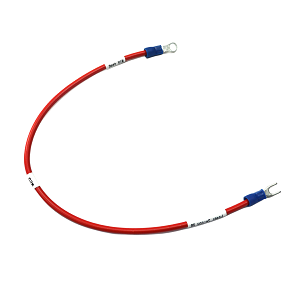
Yingna Technology provides wire harness terminal processing services and supports multiple terminal types: pre-insulated terminals (O-type/U-type/tube-type), bare terminals (OT/SC/GT), flag terminals, closed-end terminals, spade terminals, etc. Terminal crimping uses fully automatic crimping machines, and the crimp tensile strength complies with UL 486A. Customer-supplied materials (wire + terminals) processing or designated brand and model terminals are both acceptable. After terminal crimping, adding heat-shrink tubing or insulating sleeves can further improve insulation performance and mechanical strength.
What is the difference between GB standard wire harnesses and US standard wire harnesses?
The main differences between GB standard (GB/T 5023) and US standard (UL 758/AWM): ① Nominal cross-section — GB uses mm² (such as 0.5/0.75/1.0mm²), while US standard uses AWG (such as 22/20/18AWG); ② Test methods — GB focuses on conductor resistance and insulation resistance, while US standard focuses on mechanical properties (bending/tensile/impact); ③ Certification markings — US standard wire harnesses must be printed with UL/AWM number, while GB standard wire harnesses are printed with CCC certification number; ④ Customer groups — export to the US/Canada requires UL certification, and domestic sales require CCC certification. Yingna Technology wire harnesses meet both GB and US standards, and UL certification numbers are traceable.
How to judge the quality of wire harnesses?
3 methods to quickly identify wire harness quality: ① Visual inspection — the insulation surface is smooth with no marks, no bubbles, and no color difference or eccentricity; ② Bending test — after repeated bending 100 times, the insulation has no cracks (silicone rubber) and no obvious whitening (PVC); ③ Flame test — for high-quality wire harnesses, self-extinguishing time after removal from flame is ≤30 seconds (UL VW-1/FT2 standard); inferior wire harnesses continue burning with drippings. Also measure insulation thickness (whether it meets UL standard) and conductor resistance (≤ UL specified maximum). Before bulk purchasing, it is recommended to require the supplier to provide samples for comprehensive quality confirmation.
What is the conductor material of this wire harness? Bare copper or tinned copper?
This product uses stranded tinned copper wire conductors, balancing conductivity and corrosion resistance. Bare copper conductivity is approximately 101%IACS, and tinned copper is approximately 98%IACS (difference only about 3%). Advantages of tinning: oxidation resistance is 3~5 times stronger, solderability is better (avoiding solder non-wetting issues), and corrosion resistance is significantly improved. For scenarios requiring high reliability such as new energy vehicles and outdoor equipment, it is recommended to prioritize tinned copper wire harnesses.
Will wire harnesses age after long-term use? How to extend service life?
Under normal operating conditions, this wire harness has a service life of 10~15 years for silicone rubber material and 5~8 years for PVC material. Factors affecting service life: ① Operating temperature — long-term operation at the upper limit of rated temperature will accelerate aging (service life halved); ② Bending frequency — for frequent bending applications, choose high-flexibility wire harnesses (bending life ≥10 million cycles); ③ Environmental factors — UV, ozone, and chemical solvents will accelerate aging of the silicone rubber outer layer. Recommendations to extend service life: leave a 20% margin in operating temperature, avoid contact with chemical solvents, install protective sleeves during fixed wiring, and regularly check whether the terminal crimp area is heating.
About Winna Technology
We specialize in power adapters, custom AC/DC cable harnesses, and ultrasonic metal welding equipment.