Details
AC/DC wire harness processing and customization manufacturer, UL certified, supporting small-batch prototyping and fast delivery
As key components for power transmission and signal connection in industrial electrical systems, the quality of AC/DC wire harnesses directly determines the operational stability and service life of complete equipment. This article systematically elaborates on the engineering capabilities, technical selection, and quality assurance systems of AC/DC wire harness processing and customization manufacturers, providing B2B procurement and engineering decision-makers with a full-process technical reference from specification confirmation to installation acceptance.
AC/DC Wire Harness Product Line Overview: Technical Positioning and Industry Value of Customized Processing
In the fields of industrial automation, new energy equipment, and precision instruments, AC/DC wire harnesses perform the core function of bidirectional transmission of power supply and control signals. Professional AC/DC wire harness processing and customization manufacturers ensure stable electrical performance and mechanical strength of wire harnesses under rated operating conditions through material science selection and precision manufacturing processes. The value of customized processing models for B2B procurement decisions is reflected in three dimensions: first, precise matching of wire gauge, length, and connector type based on actual equipment electrical parameters, avoiding performance redundancy or insufficiency of universal wire harnesses; second, customizing protection levels and temperature-resistant flame-retardant solutions for special application environments such as high temperature, high humidity, and strong vibration, extending the service life of wire harnesses; third, consistency control and batch traceability systems in mass production provide data support for after-sales maintenance of terminal equipment manufacturers.
Core Functions and Technical Architecture: Engineering Capability Analysis of AC/DC Wire Harness Processing and Customization Manufacturers
The technical architecture of professional AC/DC wire harness processing and customization manufacturers revolves around three core modules: conductor materials, insulation layers, and rated parameters. The following analyzes the technical logic layer by layer from an engineering selection perspective.
Multi-Layer Insulation Solution Analysis: Selection Logic of PVC, Halogen-Free Flame-Retardant XLPE, and Silicone Rubber
The selection of insulation materials directly determines the temperature rating and flame-retardant safety performance of wire harnesses. Conventional PVC insulation solutions are suitable for general industrial environments below 105°C, offering good flexibility and economy; halogen-free flame-retardant XLPE insulation solutions raise the temperature rating to 125°C while meeting low-smoke halogen-free environmental flame-retardant requirements, suitable for scenarios with clear fire safety regulations such as rail transit and building automation; silicone rubber insulation solutions can withstand continuous high temperatures of 200°C, suitable for internal wiring of high-heat-radiation equipment such as metallurgy and heat treatment. When selecting, comprehensive consideration should be given to equipment operating environment temperature, overload margin, and flame-retardant grade requirements. AC/DC wire harness processing and customization manufacturers can provide material matching recommendations based on application scenarios.
Current-Carrying Capacity and Anti-Corrosion Characteristics of High-Purity Tinned Copper Stranded Conductors
The conductor adopts a high-purity tinned copper stranded structure, with wire gauge covering the full series from AWG 24 to AWG 6. The tinned layer effectively inhibits oxidation and sulfidation corrosion of the copper substrate, maintaining stable contact resistance in humid or sulfur-containing industrial atmospheres. The stranded structure endows the wire harness with excellent flexibility, meeting the dynamic bending requirements of moving parts in equipment. Current-carrying capacity is positively correlated with conductor cross-sectional area. When selecting, calculations should be performed based on load current density and allowable temperature rise to ensure a reasonable margin in conductor cross-sectional area.
Rated Voltage Range: AC 100~600V / DC 5~48V Adaptation Scenarios
The standard product line covers a wide voltage range of AC 100V to 600V and DC 5V to 48V, suitable for mainstream industrial servo drives, PLC control cabinets, and low-voltage DC power supply systems. For voltage requirements beyond the standard range, custom extension to higher voltage ratings is supported, but requires special review by both supply and demand parties based on parameters such as insulation thickness and creepage distance.
Customization Dimensions: Combination Options for Wire Gauge, Length, Connector Type, and Protection Rating
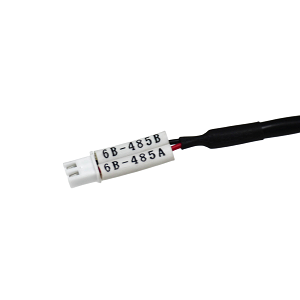
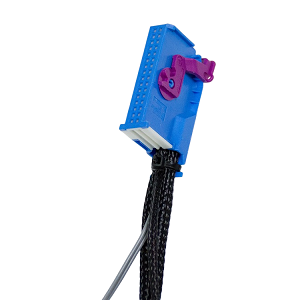
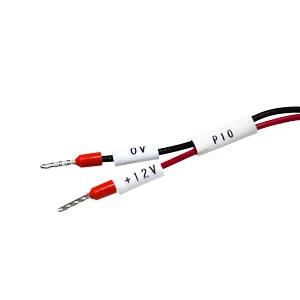
Customization supports combined configurations of multiple wire gauges, lengths, connector types, and protection ratings. Connector end types cover mainstream forms including aviation plugs, waterproof connectors, crimp terminals, and PCB board-to-board connectors. Protection ratings can be selected at IP67 and below based on installation location. Temperature-resistant and flame-retardant materials should be selected according to the application environment. AC/DC wire harness processing and customization manufacturers provide detailed technical parameter tables for selection reference.
Technical Specifications and Selection Guide: Ensuring Insulation Rating Matching in High-Power Applications
| Parameter Category | Standard Specification Range | Custom Expansion Capability |
|---|---|---|
| Conductor Material | High-purity tinned copper stranded conductor | Custom silver-plated/bare copper conductor available |
| Wire Gauge Range | AWG 24 ~ AWG 6 | Expandable to AWG 4 |
| Insulation Material | PVC (105°C) / Halogen-free flame-retardant XLPE (125°C) / Silicone rubber (200°C) | Customized by ambient temperature |
| Rated Voltage | AC 100~600V / DC 5~48V | Customizable to higher voltage ratings |
| Protection Rating | IP00 ~ IP67 | Customized by installation environment |
| Connector Type | Aviation plug / Waterproof connector / Crimp terminal, etc. | Customized by interface drawing |
How to Determine Whether the Insulation Rating of AC/DC Wire Harnesses Meets High-Power Application Scenarios
In high-power application scenarios, the determination of insulation rating requires comprehensive evaluation from two dimensions: temperature resistance limit and dielectric strength. First, calculate the conductor temperature rise under maximum continuous load to ensure that the continuous operating temperature of the insulation material is higher than the sum of conductor surface temperature and ambient temperature with a safety margin; second, verify insulation layer thickness and dielectric strength based on the equipment's maximum operating voltage to prevent high-voltage breakdown. For variable frequency drive systems with high power density, silicone rubber or XLPE insulation solutions are recommended, and insulation material withstand voltage test reports should be requested as a basis for selection.
Engineering Selection Comparison of Temperature Rating and Flame-Retardant Performance
In engineering selection, the temperature rating determines the thermal tolerance boundary of the wire harness, and flame-retardant performance determines the flame propagation suppression capability in fire scenarios. PVC material is suitable for conventional temperature rise environments but releases halogen gases when burned; halogen-free flame-retardant XLPE provides low-smoke halogen-free characteristics while meeting 125°C temperature resistance; silicone rubber combines 200°C temperature resistance with excellent flame-retardant self-extinguishing properties. Selection should be determined comprehensively based on fire safety regulations and heat dissipation conditions of the equipment installation area.
Usage Methods and Interpretation Guide for Detailed Technical Parameter Tables
AC/DC wire harness processing and customization manufacturers provide detailed technical parameter tables covering key data such as conductor structure, insulation thickness, rated current, bending radius, and terminal crimping specifications. Procurement parties can use the current-carrying capacity curves and derating factors in the parameter tables to calculate safe current-carrying capacity under actual operating conditions and complete preliminary matching against the electrical specifications of equipment interfaces.
Electrical Parameter Confirmation Checklist Before Customization
Before installation, rated voltage, current, and wire gauge specifications should be confirmed to ensure matching with equipment interfaces. It is recommended that procurement parties provide the following information before customization: equipment rated voltage and maximum continuous current, interface connector model and pin definitions, ambient temperature and bending radius limitations of the cable routing path, and whether there are mandatory flame-retardant or low-smoke halogen-free requirements. Original manufacturer customized wire harnesses are recommended to ensure electrical performance and mechanical strength meet OEM standards.
Installation Compatibility and OEM Standard Assurance
What Key Parameters Should Be Noted for AC/DC Wire Harness Installation to Ensure Compatibility
The core of installation compatibility lies in strict matching of interface physical dimensions and electrical parameters. The connector locking method, terminal crimping specifications, wire harness length allowance, and shield grounding method should be confirmed. For dynamic application scenarios, the minimum bending radius of the wire harness should also be verified to meet motion trajectory requirements, avoiding conductor breakage or insulation layer damage due to excessive bending.
Equipment Interface Matching Verification Process
A standardized matching verification process includes: the drawing confirmation stage, where the procurement party provides equipment interface drawings or samples, and the manufacturer completes connector selection and wire harness structure design based on these; the sample trial production stage, where first articles are produced for installation verification, focusing on insertion/withdrawal force, locking reliability, and electrical continuity; the small-batch testing stage, where temperature rise and vibration tests are conducted under simulated actual operating conditions, and batch supply begins only after confirming no poor contact or insulation aging hazards.
Assurance Mechanism of Original Manufacturer Customized Wire Harnesses for Electrical Performance and Mechanical Strength
Original manufacturer customized wire harnesses are executed according to OEM standards from conductor stranding processes, terminal crimping parameters, to insulation extrusion thickness, ensuring electrical performance and mechanical strength meet design expectations. The manufacturer implements dual control of process inspection and finished product testing, retaining crimping pull force, continuity resistance, and withstand voltage test records for each batch of wire harnesses, enabling forward traceability of quality issues.
Common Installation Errors and Avoidance Recommendations
Common installation errors include: using non-original replacement wire harnesses causing interface mismatch, over-stretching wire harnesses causing terminal loosening, and failing to install protective sleeves in sharp-edge or high-temperature areas. Improper installation falls within the warranty exclusion scope and may cause faults such as poor contact or insulation damage. During installation, the bending radius and fixing spacing requirements provided by the manufacturer should be strictly followed.
Typical Application Scenarios and Industry Solutions
- Industrial Automation Equipment:Internal wiring of servo drive systems and PLC control cabinets requires wire harnesses with high flexibility and anti-interference capability. Customized shield layer structures can effectively suppress the impact of electromagnetic interference on control signals.
- New Energy and Energy Storage Systems:Battery pack connections and high-voltage lines inside charging piles require halogen-free flame-retardant XLPE or silicone rubber insulation solutions to meet high-voltage, high-current, and stringent flame-retardant safety standards.
- Medical and Test Instruments:Precision signal transmission requires low noise and high stability. Customized tinned copper stranded conductors with double-layer shield structures ensure complete transmission of weak signals.
- Harsh Environment Applications:For outdoor or humid environments, custom IP67 protection rating connectors and weather-resistant sheath materials ensure long-term reliable operation of wire harnesses under rain and dust exposure.
Quality Assurance and After-Sales Service Commitment
Detailed Scope of One-Year Warranty Service
All products enjoy a one-year warranty service. The warranty scope includes material defects, manufacturing process issues, and performance parameters not meeting standards. Under normal use conditions, if quality issues such as insulation aging, conductor breakage, or poor contact occur, free repair or replacement services are provided.
Handling Process for Quality Issues Within the Warranty Period
If the above quality issues occur within the warranty period, the procurement party provides fault descriptions and batch information, and the manufacturer initiates the repair or replacement process after technical confirmation. Handling time is determined based on fault complexity and logistics cycles. Conventional issues receive solutions within five working days after confirmation.
Warranty Exclusion Clause Explanation
Human damage, improper installation, and use beyond technical parameters are not covered by the warranty. Procurement parties should ensure wire harnesses are used within rated voltage, current, and ambient temperature ranges, and are routed and fixed according to installation specifications.
Supply Cycle and Quality Traceability System for Batch Procurement
The supply cycle for batch orders is determined by customization complexity and order quantity. Conventional specifications are delivered within fifteen to twenty working days after drawing confirmation. Each batch of products is assigned a unique traceability code linked to raw material batches, production process records, and inspection reports, enabling full lifecycle quality traceability.
Frequently Asked Questions (FAQ) for AC/DC Wire Harness Processing and Customization Manufacturers
Q1: How are the minimum order quantity (MOQ) and sample cycle for customized wire harnesses confirmed?
The MOQ is determined by wire harness specifications and process complexity. The MOQ for conventional specifications is 100 sets, and complex custom solutions can be negotiated and adjusted. The sample cycle is generally seven to ten working days after drawing confirmation. Urgent needs can be coordinated for priority scheduling.
Q2: How can I obtain detailed technical parameter tables and complete selection confirmation?
Electronic technical parameter tables can be requested from AC/DC wire harness processing and customization manufacturers, containing complete data on conductor structure, current-carrying capacity, insulation temperature resistance, and more. Selection confirmation requires item-by-item comparison of equipment operating parameters with the parameter tables.
Q3: What insulation rating standards must be met for high-power application scenarios?
In high-power scenarios, the insulation rating must simultaneously meet dual requirements of temperature resistance and dielectric strength. XLPE (125°C) or silicone rubber (200°C) insulation solutions are recommended, and insulation layer thickness should be confirmed to meet the withstand voltage requirements of the equipment's maximum operating voltage.
Q4: What equipment interface information needs to be provided to the manufacturer before installation?
Connector model and pin definitions, installation space dimensions, ambient temperature range, and bending limitations of the cable routing path should be provided. If original wire harness samples are available, they can also be provided as a reference for reverse engineering.
Q5: What is the response time for repair or replacement when quality issues occur within the warranty period?
For faults confirmed to be within the warranty scope during the warranty period, the manufacturer completes confirmation of the repair or replacement plan within five working days after receiving fault information and arranges shipment of replacement products based on logistics timelines.
Q6: What is the maximum protection rating achievable for customized wire harnesses?
Standard customization supports IP67 and below protection ratings. For higher protection requirements, special evaluation is needed in combination with connector selection and potting processes.
Q7: How is the bending life of wire harnesses evaluated?
Bending life is related to conductor stranding structure, insulation material flexibility, and dynamic bending frequency of the application scenario. For high-flexibility applications, multi-strand fine conductors are recommended with bending radius margin reserved.
Q8: Is it supported to use different connector specifications at both ends of the wire harness?
Yes. Asymmetric connection solutions can be customized based on actual interface requirements at both ends of the equipment, such as an aviation plug at one end and a crimp terminal at the other.
Q9: How can the flame-retardant rating of wire harnesses be confirmed to meet fire safety acceptance requirements?
The flame-retardant rating of insulation materials (such as UL94 VW-1 or V-0 grade) should be confirmed, and corresponding flame-retardant test reports should be provided. Halogen-free flame-retardant XLPE solutions can meet low-smoke halogen-free environmental fire safety requirements.
Q10: What structural forms are available for wire harness shields?
Common shield structures include aluminum foil Mylar shielding, tinned copper braided shielding, and double-layer composite shielding. Shield selection should be determined based on interference source frequency and signal transmission sensitivity.
Q11: Are third-party test reports provided for customized wire harnesses?
Third-party authoritative test reports can be provided upon procurement party request, including conductor resistance, insulation withstand voltage, flame-retardant rating, and RoHS environmental testing items.
Q12: What are the storage and use environment limitations for wire harnesses?
Storage environment is recommended at -20°C to 60°C with relative humidity not exceeding 85%. Use environment should be within the temperature resistance range of insulation materials, avoiding prolonged exposure to strong ultraviolet radiation or corrosive gases.
Q13: Do batch orders support phased delivery?
Yes. Phased delivery plans can be negotiated based on the procurement party's production schedule, with each batch independently packaged and accompanied by batch inspection qualification certificates.
Q14: How is terminal crimping quality controlled for wire harnesses?
Terminal crimping uses precision crimping dies with dual control of pull force testing. Each batch undergoes sampling inspection of crimp cross-sections and pull-out force to ensure crimp resistance and mechanical strength meet standards.
Q15: Is wire harness installation guidance service provided?
Yes. For complex custom solutions, installation diagrams or on-site technical support can be provided to ensure wire harnesses are routed and fixed according to specifications.
Qualifications and Contact
AC/DC wire harness processing and customization manufacturers strictly implement the ISO9001 quality management system, with quality control points set at key processes. 100% continuity testing and withstand voltage testing are completed before product shipment. We are committed to providing B2B customers with full-process technical support from selection consultation, sample verification, to batch delivery. Procurement and engineering decision-makers are welcome to contact us for detailed technical parameter tables and custom solution evaluations.
About Winna Technology
Winna Technology specializes in power adapters, AC/DC cable harness customization, and ultrasonic metal welding equipment R&D and manufacturing, providing one-stop OEM/ODM services.
Our products are CE/UL/FCC/CCC/RoHS certified, with an annual return rate below 0.02%, serving customers in 50+ countries and regions worldwide.