Details
Which is the best custom power cable harness manufacturer? AC/DC cable harness factory direct supply, UL certified quality assurance
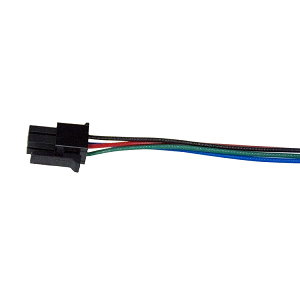
In procurement decisions for industrial equipment and new energy systems, which is the best custom power cable harness manufacturer remains a core issue repeatedly weighed by engineers and procurement managers. As the key carrier for power transmission and signal connection, the material selection, process precision, and warranty system of AC/DC cable harnesses directly determine the operational lifespan and safety margin of the entire equipment. This article provides an executable selection guide for B2B procurement decision-makers from four dimensions: technical specifications, customization capabilities, warranty boundaries, and supplier evaluation.
Which is the best custom power cable harness manufacturer: The technical gap from standard parts to custom parts
Although standard cable harnesses can meet basic power requirements under normal operating conditions, in high power density, frequent bending, or extreme temperature environments, the margins of conductor cross-sectional area, insulation thickness, and connector locking structures are often insufficient. The core value of custom harnesses lies in precisely matching electrical parameters and mechanical structures to the actual load curve of the equipment, rather than simply replacing standard parts. If buyers use unit price as the sole decision criterion, they can easily overlook the hidden costs of insulation ratings and temperature-resistant materials—for example, PVC insulation undergoes irreversible dielectric strength degradation above 105°C, while halogen-free flame-retardant XLPE maintains stable volume resistivity at 125°C operating conditions.
Establishing a scientific supplier evaluation framework requires three dimensions: first, whether the quality system covers incoming material inspection, in-process inspection, and finished product full inspection; second, whether certification qualifications include UL, CE, or CQC and other target market access requirements; third, whether delivery capability has flexible production scheduling mechanisms to handle urgent orders. These three dimensions collectively form the underlying logic for judging which is the best custom power cable harness manufacturer, rather than relying solely on horizontal comparison of sample quotations.
AC/DC Cable Harness Core Technical Specification Analysis
Conductor material and wire gauge range directly determine current-carrying capacity and temperature rise characteristics. We use high-purity tin-plated copper stranded conductors (AWG 24~6), where the tin plating effectively inhibits oxidation corrosion of the copper substrate, maintaining stable contact resistance in humid or sulfur-containing environments. The multi-layer insulation solution covers three typical operating conditions: PVC (105°C) suitable for ordinary indoor equipment; halogen-free flame-retardant XLPE (125°C) meeting mandatory low-smoke halogen-free requirements for rail transit and data centers; silicone rubber (200°C) targeting extreme thermal environments such as high-temperature furnaces or motor cavities. Rated voltage range AC 100~600V / DC 5~48V (customizable), compatible with wide voltage platforms from servo drives to energy storage converters.
| Parameter Dimension | Specification Range | Application Scenario Description |
|---|---|---|
| Conductor Material | High-purity tin-plated copper stranded conductor | Corrosion-resistant, long-term stability superior to bare copper |
| Wire Gauge Range | AWG 24~6 | Full coverage from small signal transmission to high-current main circuits |
| Insulation Layer | PVC / XLPE / Silicone Rubber | Graded selection based on temperature resistance and flame retardancy requirements |
| Rated Voltage | AC 100~600V / DC 5~48V | Higher voltage ratings customizable |
| Protection Rating | IP40~IP67 | Determined by dust and water resistance requirements of installation location |
How to determine whether the insulation rating of an AC/DC cable harness meets high-power application scenarios? Key verification methods include: comparing the continuous operating temperature of the insulation material with the maximum ambient temperature inside the equipment, reserving at least 15°C safety margin; simultaneously verifying the dielectric strength test report of the insulation layer to ensure no breakdown or flashover at 1.5 times rated voltage. For loads with frequent start-stop cycles, the fatigue resistance of conductors under thermal cycling must also be evaluated, where the stranding pitch design of tin-plated copper conductors is particularly important.
Customization Capability Assessment: From Parameter Confirmation to OEM Standard Implementation
Customization supports various wire gauges, lengths, connector types, and protection ratings, requiring selection of temperature-resistant and flame-retardant materials based on the application environment. We provide detailed technical parameter tables for reference, covering 12 core data points including conductor structure, insulation thickness, rated current-carrying capacity, bending radius, and terminal crimping specifications, allowing buyers to compare item by item against equipment interface drawings. In the early stages of customization communication, it is recommended to submit the equipment duty cycle (continuous/intermittent), ambient temperature range, and vibration level simultaneously, enabling engineers to make targeted adjustments in insulation selection and harness fixing methods.
Essential Differences Between Original Customization and Third-Party Modification
Original custom harnesses follow OEM design specifications in terminal crimping processes, harness shielding layer grounding methods, and jacket material formulations, ensuring electrical performance and mechanical strength meet vehicle or machine EMC testing requirements. Third-party modifications often only replace connectors or extend cable lengths, ignoring technical details of impedance matching and shielding continuity, which can easily cause radiated interference near variable frequency drives or switching power supplies. Before installation, confirm rated voltage, current, and wire gauge specifications to ensure compatibility with equipment interfaces. It is recommended to use original custom harnesses to ensure electrical performance and mechanical strength meet OEM standards.
The Core Role of Technical Parameter Tables in Customization Communication
A complete technical parameter table is not only a selection basis but also a contractual document to avoid ambiguity between supply and demand parties. Buyers should require suppliers to clearly specify the flame retardancy rating of insulation materials (UL94 V-0 or VW-1), oil resistance test standards, and salt spray test duration in the parameter table, as these data directly affect the replacement cycle of harnesses under specific operating conditions. For high-power applications, special attention should be paid to the current-carrying derating curve—when ambient temperature exceeds the rated temperature of the insulation material, the allowable current-carrying capacity must be proportionally reduced.
Typical Application Scenarios and Selection Recommendations
- Industrial Automation Equipment:High-power servo drives and robot joint motors require silicone rubber insulated harnesses, paired with high-flexibility drag chain cable structures, ensuring conductors do not break after millions of bending cycles. It is recommended to prioritize verification of insulation rating and temperature-resistant material matching.
- New Energy and Energy Storage Systems:DC-side harnesses must meet UL 94 V-0 flame retardancy rating and possess ozone aging resistance. For energy storage container interiors, halogen-free flame-retardant XLPE insulation is recommended to reduce fire smoke toxicity.
- Medical and Communication Equipment:High reliability and long service life are core requirements; harnesses must pass biocompatibility testing (ISO 10993) or meet communication equipment temperature rise limits. At this point, the customization focus lies in terminal plating processes and shielding layer braiding density.
- Outdoor and Harsh Environment Applications:Protection rating must reach IP65 or above, and jacket materials should possess UV resistance and chemical corrosion resistance. Thermoplastic elastomer (TPE) jackets are recommended, maintaining elasticity from -40°C to +125°C.
Warranty System and After-Sales Support Boundaries
All products enjoy a one-year warranty service, covering: material defects, manufacturing process issues, performance parameters not meeting standards, etc. Under normal use conditions, if quality issues such as insulation aging, conductor breakage, or poor contact occur, free repair or replacement services are provided. Human damage, improper installation, and use beyond technical parameters are not covered by the warranty. Buyers should note that the disclaimer boundaries of warranty terms are not a gray area—for example, accelerated aging caused by long-term operation of harnesses at temperatures exceeding the insulation rating limit will be defined as use beyond technical parameters. Therefore, clarifying actual operating condition boundaries during the selection stage is more valuable than post-event disputes.
FAQ—Frequently Asked Questions About Custom Power Cable Harnesses
How to determine whether the insulation rating of an AC/DC cable harness meets high-power application scenarios?
The rated continuous operating temperature, dielectric strength (≥1.5 times rated voltage), and thermal life curve of the insulation material must be verified simultaneously. It is recommended to require suppliers to provide thermal aging projection data based on the Arrhenius equation, rather than only short-term withstand voltage test reports.
What key parameters should be noted during installation of AC/DC cable harnesses to ensure compatibility?
Before installation, confirm rated voltage, current, and wire gauge specifications to ensure compatibility with equipment interfaces. Also check connector locking torque requirements, minimum bending radius, and spacing of harness fixing clips to avoid terminal pin retraction due to mechanical stress.
What is the typical lead time for custom harnesses? Are rush orders supported?
Standard lead time is 15~20 working days (including sample confirmation). Rush orders need to be evaluated based on current production load; it is recommended to include rush response clauses and corresponding capacity guarantee measures in the technical agreement.
Can sample testing or small-batch trial production services be provided?
We support providing 3~5 free samples for installation verification, and small-batch trial production (50~200 sets) can be completed within one week. Sample testing requires clear test standards and acceptance criteria to avoid acceptance disputes.
What is the minimum order quantity (MOQ) for custom harnesses?
The MOQ for standard products is 500 sets, but for standardized wire gauges and connector combinations, it can be negotiated down to 200 sets. The specific MOQ depends on material commonality and process complexity.
How to obtain detailed technical parameter tables and selection guidance?
You can contact our application engineers to obtain a PDF version of the parameter manual, or provide equipment interface drawings for joint selection. The technical parameter table includes current-carrying derating curves, bending life test data, and terminal crimping cross-section diagrams.
What impact does the shielding layer grounding method of harnesses have on EMC performance?
The shielding layer should be grounded using a 360° circumferential connection method, rather than pigtail grounding. Circumferential connection reduces transfer impedance, providing superior shielding effectiveness above 1MHz. It is recommended to specify the shielding layer termination method during customization.
What are the material differences between oil-resistant harnesses and standard harnesses?
Oil-resistant harness jackets use nitrile rubber or chlorinated polyethylene (CPE), tested per ASTM D471 standards, maintaining tensile strength retention ≥80% after 70 hours of immersion in IRM 902 oil.
What are the conductor structure differences between high-flexibility harnesses and fixed installation harnesses?
High-flexibility harnesses use multiple fine copper strands (e.g., 0.05mm diameter) with special stranding pitch, paired with polyurethane (PUR) jackets, capable of withstanding over 10 million drag chain cycles. Fixed installation harnesses use thicker copper strands to reduce cost.
How does the flame retardancy rating of harnesses affect system safety?
UL 94 V-0 rating indicates the material self-extinguishes within 10 seconds in vertical burn testing, with no flaming drips. For enclosed electrical cabinets, V-0 rated harnesses can significantly reduce flame spread risk, but note that flame retardants may have a slight impact on mechanical strength.
How to verify the crimping quality of harnesses?
Verification can be performed through pull force testing (terminal-to-conductor pull-out force ≥ specified value) and cross-section inspection (crimp barrel wall thickness uniformity). For mass production, fully automatic crimping machines with pull force monitoring systems should be used.
Does the allowable operating temperature range of harnesses include transient overloads?
The rated temperature of insulation materials typically refers to continuous operating temperature; transient overloads (such as motor stalling) require separate evaluation. It is recommended to provide the transient thermal model of the load during customization so engineers can select insulation materials with higher temperature ratings.
Is pre-assembly service for harnesses supported?
We support pre-assembling harnesses with connectors, relays, fuse holders, and other components into functional modules, reducing on-site wiring labor. Pre-assembled modules must pass 100% electrical continuity testing and insulation withstand voltage testing.
What are the packaging and labeling standards for harnesses?
Anti-static bags and corrugated cardboard boxes are used for packaging, with each harness carrying a unique serial number label containing material code, production batch, and inspector code. Outer boxes are labeled with moisture-proof and fragile markings.
How are quality issues handled during the warranty period?
Fault photos or failed samples must be provided; after technical analysis confirms the issue falls within warranty coverage, we will provide free repair or replacement and bear round-trip shipping costs. The warranty period restarts from the date of replacement.
Can 3D models or installation drawings of harnesses be provided?
STEP format 3D models and 2D installation drawings can be provided, including harness routing, fixing point locations, and minimum bending radius annotations. Drawings must be jointly signed by both parties before serving as production basis.
Supplier Selection Decision Checklist: From Technical Communication to Batch Delivery
During the technical communication phase, focus on whether the supplier proactively provides detailed technical parameter tables and selection recommendations, rather than passively responding to inquiries. During the sample verification phase, clarify test standards and acceptance criteria for electrical performance (continuity resistance, insulation resistance, withstand voltage), mechanical strength (pull-out force, bending life), and environmental adaptability (high temperature, low temperature, humidity). During the batch delivery phase, focus on capacity guarantee capabilities and quality consistency control methods—for example, whether SPC statistical process control is used to monitor terminal crimp height. During the after-sales support phase, warranty service response speed and problem-solving capability are the foundation for long-term cooperation.
The comprehensive evaluation framework recommends incorporating technical strength (40% weight), certification qualifications (25%), warranty commitment (20%), and delivery cycle (15%) into a unified scoring system. The final answer to which is the best custom power cable harness manufacturer should be built on verifiable test data and clear warranty terms, rather than sales personnel verbal promises. We recommend buyers include the insulation rating verification methods, warranty disclaimer boundaries, and technical parameter table deliverables mentioned in this article as attachments when signing technical agreements, locking in mutual expectations through contracts.
About Winna Technology
Winna Technology specializes in power adapters, AC/DC cable harness customization, and ultrasonic metal welding equipment R&D and manufacturing, providing one-stop OEM/ODM services.
Our products are CE/UL/FCC/CCC/RoHS certified, with an annual return rate below 0.02%, serving customers in 50+ countries and regions worldwide.
AC/DC Cable Harness and Flat Connector Assembly
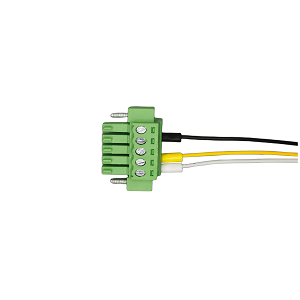
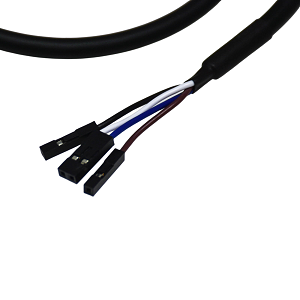
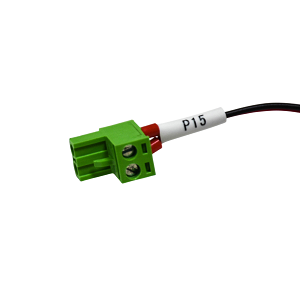
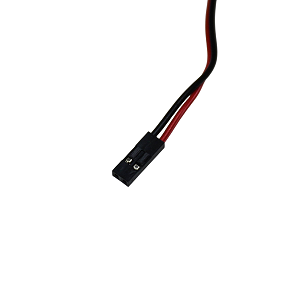
Winna Technology manufactures custom AC/DC cable harnesses, flat connector assemblies and complete wiring groups. From a single crimped wire to a fully assembled harness with heat shrink, labeling and electrical testing, you get everything from one supplier.
Products and services
- AC power cords and DC connection cables in common standards
- Flat connectors and receptacles (2.8 mm, 4.8 mm, 6.3 mm), insulated or bare
- Wiring for industrial equipment, vehicles and energy storage
- Crimping, heat shrink, labeling and connector assembly
Materials and workmanship
| Conductor | Tinned copper |
| Insulation | PVC, XLPE or silicone, including heat resistant types |
| Cross section | 0.5 to 6 mm², larger on request |
| Testing | Continuity, pull force, visual inspection |
From sample to series
- Send drawing, BOM or sample
- Feasibility review and quotation
- Sample build and approval
- Mass production with test report
- Packing and shipping
FAQ
Can you manufacture to our drawing?
Yes. We work from drawings, BOMs or physical samples.
Do you supply complete harnesses?
Yes, including connectors, heat shrink, labeling and packaging.
What testing is available?
Continuity, pull force and visual inspection, documented in a test report.
Contact: sale@winna-group.com or WhatsApp +86 134 1065 0093.
Specifications
AC/DC Cable Harness and Flat Connector Assembly
Winna Technology manufactures custom AC/DC cable harnesses, flat connector assemblies and complete wiring groups. From a single crimped wire to a fully assembled harness with heat shrink, labeling and electrical testing, you get everything from one supplier.
Products and services
- AC power cords and DC connection cables in common standards
- Flat connectors and receptacles (2.8 mm, 4.8 mm, 6.3 mm), insulated or bare
- Wiring for industrial equipment, vehicles and energy storage
- Crimping, heat shrink, labeling and connector assembly
Materials and workmanship
| Conductor | Tinned copper |
| Insulation | PVC, XLPE or silicone, including heat resistant types |
| Cross section | 0.5 to 6 mm², larger on request |
| Testing | Continuity, pull force, visual inspection |
From sample to series
- Send drawing, BOM or sample
- Feasibility review and quotation
- Sample build and approval
- Mass production with test report
- Packing and shipping
FAQ
Can you manufacture to our drawing?
Yes. We work from drawings, BOMs or physical samples.
Do you supply complete harnesses?
Yes, including connectors, heat shrink, labeling and packaging.
What testing is available?
Continuity, pull force and visual inspection, documented in a test report.
Contact: sale@winna-group.com or WhatsApp +86 134 1065 0093.
Certifications
Products meet international safety and EMC standards