Details
AC Power Cord Custom Manufacturer | UL Certified Producer, Supporting Small Batch Rapid Prototyping
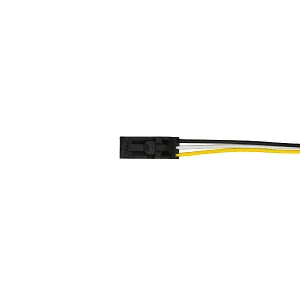
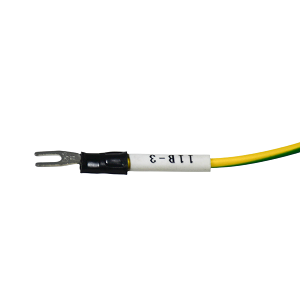
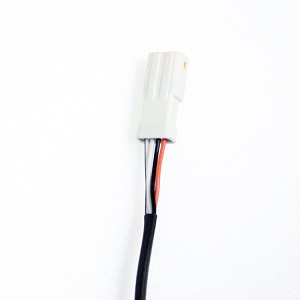
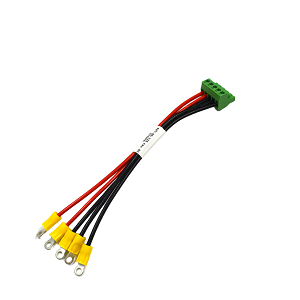
AC/DC wire harnesses serve as the core connection components for power transmission and signal control. Their electrical performance, mechanical strength, and environmental adaptability directly determine the operational reliability of end equipment. This article is intended for B2B procurement and engineering decision-makers, systematically analyzing the manufacturing processes, technical selection logic, installation compatibility points, and warranty systems of AC power cord custom manufacturers, providing verifiable engineering references for high-power, high-reliability application scenarios.
I. AC/DC Wire Harness Industry Overview and Customization Demand Analysis
The continuous expansion of the global industrial automation, new energy, and medical electronics sectors is driving steady growth in the AC/DC wire harness market. Although standardized wire harnesses can meet general connection needs, their material grades and structural designs often present performance bottlenecks under harsh conditions such as vibration, high temperature, humidity, and high current density. Customized wire harnesses can precisely match conductor specifications, insulation materials, and protection levels according to equipment interfaces, routing space, and environmental conditions, thereby significantly reducing failure risks. Therefore, selecting an AC power cord custom manufacturer with a complete process chain has become a mainstream strategy in B2B procurement to ensure supply chain quality consistency and delivery controllability.
II. Core Manufacturing Capabilities and Process Standards of AC Power Cord Custom Manufacturers
Professional AC power cord custom manufacturers maintain clear engineering specifications for conductor materials, insulation layers, and electrical parameters. High-purity tin-plated copper stranded wire (AWG 24~6) is used; the tin plating effectively inhibits oxidation and improves soldering reliability, while the stranded structure enhances flexibility and bending fatigue life. The multi-layer insulation scheme covers PVC (105°C), halogen-free flame-retardant XLPE (125°C), and silicone rubber (200°C), corresponding to general industrial, environmentally friendly flame-retardant, and high-temperature special application scenarios respectively. The rated voltage range supports AC 100~600V / DC 5~48V, and can be customized and extended to higher levels to meet the power distribution needs of different equipment.
Customization supports multiple wire gauges, lengths, connector types, and protection levels. Temperature-resistant and flame-retardant materials should be selected based on the application environment. We provide detailed technical parameter tables for reference, covering key data such as conductor structure, insulation thickness, current-carrying capacity, and voltage drop curves, facilitating precise verification by engineers during the selection phase.【(Fact 2)】
III. In-Depth Technical Specification Analysis: Insulation Ratings and High-Power Application Matching
How can one determine whether the insulation rating of an AC/DC wire harness meets high-power application requirements?【(Fact 3)】Core evaluation dimensions include temperature rating, flame-retardant performance, and dielectric strength. In high-power scenarios, the conductor continuously carries large currents generating temperature rise. If the insulation material's temperature rating is lower than the actual operating temperature, it will accelerate aging and induce short-circuit risks. Engineering calculations must comprehensively consider conductor cross-sectional area, ambient temperature, heat dissipation conditions, and load factor to ensure the insulation layer operates within a safe temperature range over the long term.
| Insulation Material | Temperature Rating | Flame-Retardant Characteristics | Typical Applications |
|---|---|---|---|
| PVC | 105°C | Flame-retardant | General industrial equipment, control cabinets |
| Halogen-free flame-retardant XLPE | 125°C | Halogen-free, low smoke | New energy, rail transit, building automation |
| Silicone rubber | 200°C | High-temperature resistant, flexible | High-temperature furnaces, welding equipment, special power supplies |
In high-power scenarios, the matching of conductor cross-sectional area and current-carrying capacity follows the current density principle. Voltage drop must be calculated based on harness length to ensure stable voltage at the terminal equipment. Detailed technical parameter tables can be obtained from the AC power cord custom manufacturer for complete engineering selection references.【(Fact 2)】
IV. Installation Compatibility and Key Parameter Confirmation Guide
What key parameters should be noted during AC/DC wire harness installation to ensure compatibility?【(Fact 5)】First, confirm the rated voltage, current, and wire gauge specifications to ensure matching with equipment interfaces, avoiding overheating or poor contact caused by specification mismatches. Connector types and locking mechanisms must fully correspond to the equipment-side interfaces, and the protection rating (IP rating) should be selected based on the dust and water resistance requirements of the installation environment.
Before installation, confirm the rated voltage, current, and wire gauge specifications to ensure matching with equipment interfaces. It is recommended to use original customized wire harnesses to ensure electrical performance and mechanical strength comply with OEM standards.【(Fact 4)】Non-standard interfaces or on-site modifications often compromise the shielding layer and insulation integrity of the harness, increasing electromagnetic interference and breakdown risks. Therefore, coordinating interface definitions and routing paths with the manufacturer during the project design phase can effectively avoid later compatibility issues.
V. Typical Application Scenarios and Industry Solutions
- Industrial automation equipment: Power and signal transmission inside servo drives, frequency converters, and PLC control cabinets, requiring high interference resistance and bending fatigue life.
- New energy and energy storage systems: High-voltage connections for charging piles, battery packs, and inverters, requiring flame retardance, temperature resistance, and high current-carrying capacity.
- Medical electronics and test instruments: Emphasizing low leakage current, high reliability, and biocompatibility; harnesses must pass strict insulation testing.
- Smart home and building automation: Long-distance wiring scenarios requiring controlled voltage drop and compliance with building fire safety codes.
VI. Quality Assurance System and After-Sales Service Commitment
All products enjoy a one-year warranty service, covering material defects, manufacturing process issues, and failure to meet performance parameters.【(Fact 1)】Under normal use conditions, quality issues such as insulation aging, conductor breakage, or poor contact are provided with free repair or replacement service.【(Fact 1)】Warranty exclusion clauses clearly state: human damage, improper installation, and use beyond technical parameters are not covered by the warranty.【(Fact 1)】
Quality control covers the entire process of incoming material inspection, process control, and finished product testing. Conductor resistance, insulation withstand voltage, continuity, and appearance dimensions are all included in factory inspection items, ensuring that the electrical performance and mechanical strength of each batch of harnesses conform to drawings and OEM specifications.
VII. AC Power Cord Custom Manufacturer Selection Evaluation and Frequently Asked Questions (FAQ)
Selection evaluation dimensions should cover technical capabilities (material certifications, process documentation), sample lead time (rapid prototyping capability), batch delivery capability (production capacity and delivery commitments), and certification qualifications (UL, CE, RoHS, etc.). It is recommended that buyers align technically with the manufacturer early in the project to reduce cost and schedule risks from design changes.
How are the minimum order quantity and delivery time for customization confirmed?
The minimum order quantity and delivery time need to be confirmed with the manufacturer based on specific harness specifications, connector types, and process complexity, as production capacity configurations vary across projects.
Are free samples and technical parameter tables provided?
The free sample policy and method for obtaining technical parameter tables need to be confirmed with the manufacturer's commercial and technical teams; typically, a limited number of samples are provided for evaluation-type projects.
What are the price components and influencing factors for customized wire harnesses?
The price mainly includes conductor material, insulation material, connector costs, processing labor, and testing fees, which need to be comprehensively evaluated based on custom specifications and batch size.
How can one determine whether the insulation rating of an AC/DC wire harness meets high-power applications?
A comprehensive evaluation combining temperature rating, flame-retardant performance, and dielectric strength is required, along with temperature rise verification based on actual load current and heat dissipation conditions.【(Fact 3)】
What key parameters should be noted during AC/DC wire harness installation?
The rated voltage, current, wire gauge specifications, and connector types need to be confirmed to ensure full matching with equipment interfaces.【(Fact 5)】
How should the protection rating of the wire harness be selected?
The protection rating should be determined based on the dust and water resistance requirements of the installation environment; the IP rating requirement must be specified during customization.【(Fact 2)】
What situations are eligible for free repair or replacement during the warranty period?
Under normal use conditions, quality issues such as insulation aging, conductor breakage, or poor contact caused by material defects, manufacturing process problems, or failure to meet performance parameters are provided with free repair or replacement service.【(Fact 1)】
What situations are not covered by the warranty?
Human damage, improper installation, and use beyond technical parameters are not covered by the warranty.【(Fact 1)】
How is the temperature rating of the wire harness determined?
The insulation material should be selected based on the maximum operating temperature of the application environment: PVC is suitable for 105°C, XLPE for 125°C, and silicone rubber for 200°C.
Is custom length supported?
Multiple wire gauges and lengths are supported for customization; the specific length needs to be confirmed with the manufacturer based on equipment routing requirements.【(Fact 2)】
How is the current-carrying capacity of the wire harness calculated?
The current-carrying capacity must be calculated based on conductor cross-sectional area, insulation temperature rating, and ambient temperature; detailed parameters can be referenced from the manufacturer's technical parameter table.【(Fact 2)】
Is drawing review service provided for customized wire harnesses?
Professional manufacturers typically provide drawing review and process feasibility assessment; technical confirmation is recommended before prototyping.
What flame-retardant rating options are available for wire harnesses?
Depending on the application environment, flame-retardant PVC, halogen-free flame-retardant XLPE, and other materials can be selected to meet different fire safety code requirements.【(Fact 2)】
How is batch delivery production capacity guaranteed?
The manufacturer's production capacity scale and production scheduling plan need to be confirmed to ensure controllable delivery timelines for batch orders.
Are electrical performance test reports provided for wire harnesses?
Finished products undergo continuity, withstand voltage, and insulation resistance testing before shipment; test reports are provided with the goods or issued in the customer's required format.
About Winna Technology
Winna Technology specializes in power adapters, AC/DC cable harness customization, and ultrasonic metal welding equipment R&D and manufacturing, providing one-stop OEM/ODM services.
Our products are CE/UL/FCC/CCC/RoHS certified, with an annual return rate below 0.02%, serving customers in 50+ countries and regions worldwide.
Specifications
Certifications
Products meet international safety and EMC standards