Details
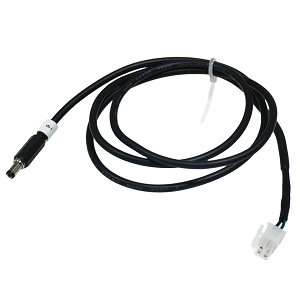
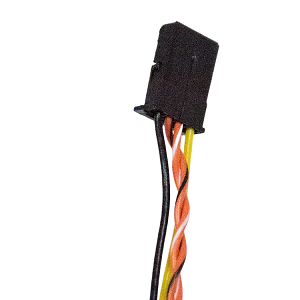
AC/DC Power Cord Harness Cable Assembly Custom Pricing with Transparent Quotes, UL Certified Quality AssuranceAC/DC harnesses are custom power cable assemblies using high-purity tinned copper stranded conductors (AWG 24~6) with multi-layer insulation options (PVC, halogen-free flame-retardant XLPE, silicone rubber), supporting flexible customization of wire gauge, length, and connector types, backed by a one-year warranty to ensure electrical performance and mechanical strength meet OEM standards.
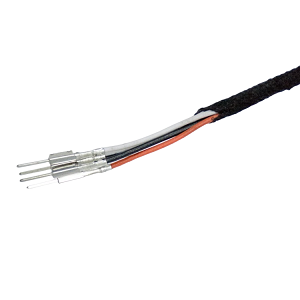
As a critical electrical component connecting AC power input to DC load output, the custom design and manufacturing quality of AC/DC harnesses directly determine the operational stability and safety lifespan of complete equipment in industrial environments. This article provides a systematic analysis of the core cost components, technical selection logic, and quality assurance systems for power cord harness cable assembly custom pricing, offering actionable technical references for procurement and engineering decision-makers.
Product Line Overview: Technical Positioning and Application Value of AC/DC Harnesses
AC/DC harnesses are not simple wire combinations but complete electrical connection solutions integrating conductor selection, insulation layer design, connector matching, and protection strategies. The technical core lies in combining high-purity tinned copper stranded conductors (AWG 24~6) with multi-layer insulation options (PVC 105°C, halogen-free flame-retardant XLPE 125°C, silicone rubber 200°C) to achieve reliable energy transmission and signal integrity from AC power to DC loads. Rated voltage covers AC 100~600V / DC 5~48V, with support for project-specific custom expansion.
In fields with stringent requirements for electrical performance and mechanical strength, such as industrial automation, new energy charging systems, medical electronics, and communication infrastructure, the customization capability of AC/DC harnesses directly affects the long-term service performance of OEM equipment. Using original custom harnesses ensures precise matching of wire gauge specifications, connector types, and equipment interfaces, fundamentally avoiding risks of overheating, voltage drop, or signal interference caused by electrical parameter mismatches.
Technical Specifications and Selection Guide: Ensuring System Compatibility
During the engineering selection phase, confirming key parameters before installation is the primary step to ensure system compatibility. Key checks include verifying that rated voltage, current, and wire gauge specifications fully match equipment interfaces, while also assessing whether the temperature rating of insulation materials and the maximum temperature rise of the operating environment leave sufficient safety margins. The table below lists core selection reference parameters:
| Parameter Dimension | Technical Specifications | Selection Notes |
|---|---|---|
| Conductor Material | High-purity tinned copper stranded conductor | Anti-oxidation, enhances high-frequency signal transmission stability |
| Wire Gauge Range | AWG 24~6 | Determined by current-carrying capacity and voltage drop requirements |
| Insulation Material | PVC / Halogen-free flame-retardant XLPE / Silicone rubber | Temperature ratings: 105°C, 125°C, 200°C respectively |
| Rated Voltage | AC 100~600V / DC 5~48V | Customizable for higher voltage ratings |
| Protection Rating | IP40~IP67 (customized as needed) | Selected based on environmental conditions such as dust and moisture |
| Connector Type | Customized per project | Ensures mechanical and electrical compatibility with equipment-side interfaces |
Customization supports multiple wire gauges, lengths, connector types, and protection ratings; heat-resistant and flame-retardant materials should be selected based on the application environment. We provide detailed technical parameter tables for engineering selection reference to reduce early failure risks caused by material misselection.
Core Functions and Customization Capabilities: Meeting Stringent OEM Standards
Decisive Role of Material Grade in Pricing
The primary determinant of power cord harness cable assembly custom pricing is the cost gradient of insulation materials. PVC material has the lowest cost and suits conventional temperature-rise environments; halogen-free flame-retardant XLPE offers balanced flame retardancy and mechanical strength, making it the preferred choice for new energy and public facilities; silicone rubber, with its 200°C temperature resistance ceiling, holds an irreplaceable position in high-temperature industrial scenarios. Material grade directly correlates with conductor gauge and insulation layer thickness design, thereby affecting overall manufacturing costs.
Impact of Custom Batch Size and Delivery Lead Time
Custom batch size directly affects per-unit amortized costs; typically, larger batches result in lower unit prices. Delivery lead time is constrained by material procurement cycles, sample approval efficiency, and production line scheduling. It is recommended to reserve sufficient time for technical review and sample validation early in project planning.
Insulation Rating Determination Method
How to determine whether the insulation rating of an AC/DC harness meets high-power application scenarios? The key is comparing actual operating temperature against the continuous operating temperature limit of the insulation material, while adding redundancy for environmental temperature rise and overload conditions. In high-power scenarios, silicone rubber or XLPE insulation solutions are recommended as a priority, with simultaneous verification that conductor current-carrying capacity meets current density requirements.
Original custom harnesses provide decisive assurance that electrical performance and mechanical strength comply with OEM standards. Through strict incoming material inspection, process control, and finished product testing, every harness is ensured to meet design expectations on key indicators such as conductor resistance, insulation withstand voltage, and insertion/withdrawal cycle life.
Typical Application Scenarios and Custom Solution Design
- High-Power Industrial Equipment:Matching insulation rating with current-carrying capacity is the core focus. For equipment such as frequency converters and servo drives, the additional temperature rise from harmonic currents on conductors must be carefully evaluated; a combination of XLPE insulation and increased wire gauge is recommended.
- New Energy Charging Systems:Heat-resistant flame-retardant materials and high protection ratings (IP65 and above) are mandatory requirements. Silicone rubber insulation combined with shielding layer design effectively addresses high-frequency interference and thermal cycling stress during charging.
- Medical Electronic Equipment:Low-smoke halogen-free materials and high-reliability connection solutions are equally important. Medical scenarios impose special requirements on biocompatibility, low toxicity, and long-term stability of harnesses, requiring clear material certification standards during customization.
The custom process strictly follows a four-stage control: requirement confirmation → technical review → sample validation → batch delivery, ensuring that the custom pricing of every batch of power cord harness cable assemblies aligns with quality commitments.
Quality Assurance and After-Sales Service System
All products enjoy a one-year warranty covering material defects, manufacturing process issues, and performance parameter non-conformance. Under normal use conditions, free repair or replacement is provided for quality issues such as insulation aging, conductor breakage, or poor contact. Damage caused by human factors, improper installation, or use beyond technical parameters is excluded from the warranty scope; this clause aims to clarify responsibility boundaries between both parties and protect the rights of customers using products in compliance.
Before shipment, each batch of harnesses undergoes conductor resistance testing, insulation withstand voltage testing, connector insertion/withdrawal force testing, and full visual inspection to ensure delivered products match specifications. The quality certification system covers ISO9001 and relevant UL standards, with traceable test data, providing OEM customers with a complete quality evidence chain.
Frequently Asked Questions (FAQ)
How to determine whether the insulation rating of an AC/DC harness meets high-power application scenarios?
A comprehensive evaluation of operating temperature, overload multiples, and environmental temperature rise is required. First confirm the conductor temperature under continuous operating current of the equipment, then add environmental temperature and heat dissipation conditions, and finally select an insulation material with a continuous operating temperature higher than the calculated value. For high-power scenarios, silicone rubber (200°C) or XLPE (125°C) is recommended, with a temperature margin of over 15% reserved.
What key parameters should be noted during AC/DC harness installation to ensure compatibility?
Before installation, confirm rated voltage, current, and wire gauge specifications to ensure matching with equipment interfaces. Also check connector locking structures, protection ratings, and interference with installation space. Original custom harnesses are recommended to ensure electrical performance and mechanical strength comply with OEM standards.
How are the minimum order quantity and delivery time for custom power cord harness cable assemblies calculated?
The minimum order quantity varies by wire gauge and connector type, with standard products requiring 200 sets as a starting order. Delivery time is affected by material inventory and order scheduling: standard products take approximately 2 weeks, while fully custom solutions require 4~6 weeks (including sample approval cycle). Please confirm specific delivery times with the engineering team before ordering.
How significant are price differences among materials with different temperature ratings?
Using the same wire gauge as an example, halogen-free flame-retardant XLPE costs approximately 30%~50% more than PVC, while silicone rubber, due to higher material and process complexity, costs an additional 40%~60% over XLPE. Price differences directly reflect temperature resistance performance and flame-retardant safety levels.
How to obtain detailed technical parameter tables and formal quotes that meet project requirements?
Please provide equipment interface definitions, operating current, ambient temperature, and protection rating requirements. The engineering team will respond within 24 hours with detailed technical parameter tables and preliminary pricing proposals. Customization supports multiple wire gauges, lengths, connector types, and protection ratings; heat-resistant and flame-retardant materials should be selected based on the application environment.
How does the shielding layer design of AC/DC harnesses affect EMC performance?
Shielding material and braid density directly impact the suppression effectiveness of high-frequency interference. For medical or communication equipment, tinned copper braided shielding is recommended, with coverage exceeding 85%, and the shield should be single-end grounded for optimal performance.
How is the bending life of a harness evaluated?
Bending life is related to conductor stranding structure, insulation material flexibility, and harness outer diameter. For high-flexibility applications, multi-strand ultra-fine copper wire stranding combined with silicone rubber insulation is recommended to significantly improve bending cycle resistance.
What is the minimum protection rating requirement for outdoor harness use?
Outdoor environments require at least IP65 protection to prevent dust ingress and low-pressure water jet exposure. For prolonged submersion or high-humidity scenarios, upgrading to IP67 or IP68 with UV-resistant jacket materials is recommended.
Can AC/DC harnesses support hot-swap functionality?
Standard harnesses do not support hot-swapping; this must be explicitly specified during customization with connectors featuring arc suppression capabilities. Additionally, the impact of inrush current during insertion/withdrawal on conductors and insulation must be evaluated.
How to verify whether the flame-retardant rating of a harness meets UL standards?
Verification can be performed through the UL94 vertical burn test, with VW-1 rating being the common requirement for harnesses. Test reports must be issued by qualified third-party laboratories, and material certification numbers should be verified during incoming inspection.
How does harness length tolerance affect installation?
Excessive length tolerance can lead to wiring redundancy or interface pull stress. Standard tolerance is ±50mm; precision installation scenarios can be customized to ±20mm, but this increases manufacturing costs accordingly.
How does connector terminal plating affect signal transmission?
Gold-plated terminals offer low contact resistance and corrosion resistance, suitable for high-frequency or low-level signals; tin-plated terminals have lower costs and suit high-current power transmission. Plating should be selected based on signal type and working environment.
How is the voltage drop of an AC/DC harness calculated?
Voltage drop = operating current × conductor resistance × cable length. Ensure that the voltage drop under full load does not exceed the equipment's allowable range (typically 3%~5% of rated voltage); otherwise, increase the wire gauge specification.
What are the storage environment requirements for harnesses?
Storage is recommended in a dry, ventilated environment at temperatures of -20°C~40°C with relative humidity below 75%, avoiding direct sunlight and oil contamination. Storage duration should not exceed two years; beyond this period, electrical performance spot checks must be re-performed.
Is sample testing service provided for custom harnesses?
Sample customization service is available, typically 5~10 sets, for customer installation verification and electrical performance testing. The sample cycle is approximately 7~10 working days, and sample fees can be deducted from batch orders.
Qualifications and Contact
We hold comprehensive ISO9001 quality management system certification, with key materials meeting UL, RoHS, and REACH environmental requirements. All shipped products include performance test reports and material certificates, ensuring that the custom pricing of every batch of power cord harness cable assemblies corresponds to reliable quality commitments.
About Winna Technology
Winna Technology specializes in power adapters, AC/DC cable harness customization, and ultrasonic metal welding equipment R&D and manufacturing, providing one-stop OEM/ODM services.
Our products are CE/UL/FCC/CCC/RoHS certified, with an annual return rate below 0.02%, serving customers in 50+ countries and regions worldwide.