Details
Detailed Explanation of the Differences Between DC Power Adapters and AC Power Adapters: Selection Guide and Industrial-Grade Quality Assurance
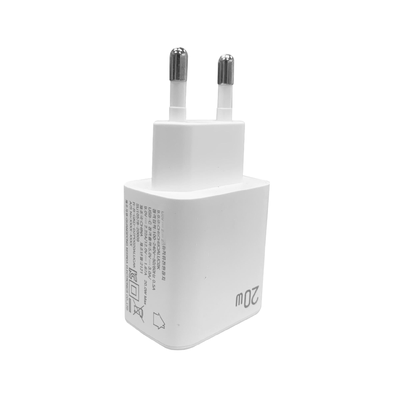
The difference between DC power adapters and AC power adapters is the primary technical issue that must be clarified in B2B procurement and engineering selection. This article systematically analyzes the essential differences and selection logic between the two types of adapters from four dimensions: power conversion topology, electrical parameter matching, safety installation specifications, and typical application scenarios, providing actionable technical decision-making references for industrial equipment manufacturers and system integrators.
Chapter 1: Differences Between DC Power Adapters and AC Power Adapters — Basic Definitions and Working Principles
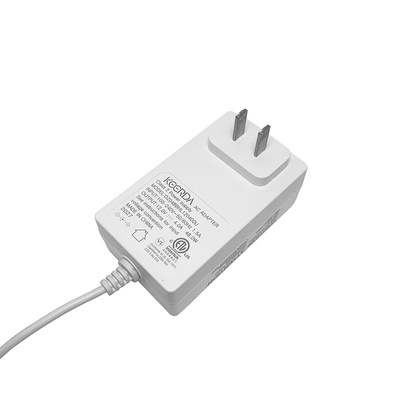
DC power adapters (AC-DC conversion) and AC power adapters (AC-AC conversion) differ fundamentally in core functionality. DC adapters internally contain input-side rectification and filtering circuits, high-frequency switching converters, and output-side voltage regulation control loops, converting mains AC power into stable low-voltage DC output. AC adapters, on the other hand, only achieve voltage amplitude transformation through transformers or electronic step-down circuits, with the output remaining an AC waveform, typically at the same frequency as the input.
From an engineering application perspective, the difference between DC and AC power adapters directly determines the power supply architecture design of end equipment. DC output is suitable for electronic systems requiring stable voltage rails, where ripple noise specifications and load regulation directly affect the operational reliability of digital circuits. AC output is more commonly used for loads with lower waveform purity requirements, such as motor drives and heating elements. Procurement personnel should clarify the load's power supply type requirements at the early stage of selection to avoid system-level failures caused by incorrect topology selection.
Chapter 2: Technical Specification Comparison — Key Criteria for Output Voltage, Current, Polarity, and Connector Matching
Focusing on the core electrical parameters in the difference between DC and AC power adapters, rated output voltage/current accuracy, ripple noise, load regulation, and line regulation are indicators that must be verified item by item. Output voltage, current, polarity, and connector specifications must be checked to ensure compatibility with the equipment (Fact 3). Our products pass UL/CE/CCC certifications (Fact 3) and support parameter customization to suit special load requirements, providing compliance assurance for demanding applications across industries.
| Parameter Category | DC Power Adapter | AC Power Adapter | Selection Verification Points |
|---|---|---|---|
| Output Voltage | Standard levels such as 5V/12V/24V/48V | 9V/12V/24V AC, etc. | Must strictly match the equipment's rated input voltage |
| Output Current | 0.5A-20A, customizable | 0.5A-5A, depending on transformer capacity | Adapter rated current ≥ equipment maximum operating current |
| Polarity Definition | Standard definitions such as positive center pin/negative outer ring | Not applicable (AC has no polarity) | DC adapters must verify polarity markings |
| Connector Specification | DC barrel jack/Type-C/USB, etc. | IEC/C13/C14 and other AC connectors | Physical connector size and pin definitions must match |
| Ripple Noise | ≤50mVp-p (typical value) | Not applicable | Sensitive loads require confirmation of ripple limits |
The parameter comparison table above provides a basic framework for selection; in actual projects, dynamic verification must still be performed based on load characteristics. Our company provides detailed parameter tables and technical support, ensuring that every set of electrical parameters has been rigorously tested and verified.
Chapter 3: Compatibility and Original Equipment Matching — Core Strategy for Ensuring Long-Term Stable Operation
The compatibility boundary conditions between adapters and end equipment are a critical link in risk control for B2B procurement. The general prerequisite is that output voltage, current, polarity are consistent and connectors match (Fact 1). Our products offer broad compatibility and provide detailed parameter tables (Fact 1), but it must be emphasized: non-original equipment adapters may differ in hidden indicators such as dynamic response, EMC filtering, and overload protection. These differences are difficult to expose in short-term testing but may cause intermittent failures during long-term operation.
Original equipment matching is recommended to ensure performance and warranty (Fact 1). The core logic of this strategy lies in clarifying responsibility boundaries. When power-related faults occur in equipment, original equipment matching avoids responsibility disputes among multiple suppliers and shortens fault diagnosis cycles. For industrial customers with bulk procurement, original equipment matching also provides added value such as firmware-level joint debugging support, batch parameter consistency assurance, and priority supply rights.
Chapter 4: Installation Specifications and Safety Operations — Engineering Guide from Input Voltage Confirmation to Environmental Protection
The standardization of on-site deployment procedures directly affects the long-term safety and reliability of equipment operation. Before installation, confirm the input voltage range (e.g., 100-240V AC); when plugging or unplugging, hold the housing rather than the cable; avoid humid environments (Fact 2). These three basic operational specifications cover the three dimensions of electrical safety, mechanical protection, and environmental adaptability, and are the bottom-line requirements that every field engineer must follow.
Our company provides installation guidance services (Fact 2), delivering standardized installation work instructions for different application scenarios. When installing in industrial control cabinets, additional consideration must be given to heat dissipation space and electromagnetic interference isolation; when deploying in outdoor scenarios, waterproof and dustproof ratings and temperature adaptability must be evaluated. The installation guidance service includes not only text documentation but also on-site technical briefings and remote video guidance based on customer needs, ensuring controllable installation quality.
Chapter 5: Analysis of Typical Application Scenarios — Application Boundary Division Between DC and AC Adapters
Mapping the scenario matrix by industry application dimension, DC power adapters offer significant advantages in communication base stations, industrial control, medical equipment, and LED lighting drivers. The common characteristic of these scenarios is that loads have high requirements for voltage stability, are sensitive to ripple, and require precise voltage regulation control. The high-frequency switching topology of DC adapters achieves voltage regulation within ±1%, meeting the power supply requirements of precision instruments.
AC power adapters remain applicable in scenarios such as audio equipment, security surveillance, and small household appliances. For motor-type loads (e.g., fans, water pumps), AC adapters can drive them directly without the need for additional inverter stages; for heating-type loads, the power factor characteristics of AC power supply are also easier to match. In scenario selection decisions, comprehensive judgment must be made based on load characteristics (resistive, capacitive, inductive) and inrush current requirements. If necessary, our technical team can be consulted for selection recommendations.
Chapter 6: Differences Between DC Power Adapters and AC Power Adapters — Frequently Asked Questions (FAQ)
Q1: Can DC and AC adapters be used interchangeably?
They cannot be used interchangeably. Output voltage, current, polarity, and connector specifications must be verified (Fact 3) to ensure compatibility with the equipment. DC adapters output regulated DC, while AC adapters output AC waveforms. The power supply characteristics of the two are completely different, and incorrect use may cause equipment damage.
Q2: How can I confirm the compatibility between the adapter and the equipment?
The general prerequisite is that output voltage, current, polarity are consistent and connectors match (Fact 1). Please compare the power supply parameters on the equipment nameplate or technical manual, verify each rated output value of the adapter item by item, and confirm that the physical connector dimensions are consistent.
Q3: What safety precautions should be taken during installation?
Before installation, confirm the input voltage range (e.g., 100-240V AC); when plugging or unplugging, hold the housing rather than the cable; avoid humid environments (Fact 2). Our company provides installation guidance services to ensure safe and standardized operation procedures.
Q4: What is the certification cycle and process for customized adapters?
Customized products require re-certification under UL/CE/CCC (Fact 3), with a typical cycle of 4-8 weeks, depending on the certification type and test items. Our company provides certification pre-assessment services to shorten the overall delivery cycle.
Q5: What is the operating temperature range of the adapter?
The standard product operating temperature range is -10°C to +50°C, and the industrial-grade version can be extended to -40°C to +70°C. Specific temperature parameters must be confirmed based on the actual application environment. Our company supports temperature range customization.
Q6: What is the efficiency specification of the adapter?
The typical efficiency of our switching power adapters is between 85% and 92%, depending on the output voltage level and load rate. High-efficiency design reduces energy consumption and heat generation, extending equipment service life.
Q7: Is wide voltage input supported?
Yes. All our standard products support 100-240V AC wide voltage input (Fact 2), adapting to major global grid standards without the need for additional switching.
Q8: What is the warranty period of the adapter?
The standard warranty period is 24 months, and some industrial-grade products can be extended to 36 months. The warranty scope covers manufacturing defects and early component failures. Specific terms are subject to the purchase contract.
Q9: How can I determine whether the adapter has overload protection?
Our products come standard with overcurrent protection, overvoltage protection, and short-circuit protection. When the output exceeds 110% of the rated value, the protection circuit activates automatically to prevent equipment damage.
Q10: What impact does adapter ripple noise have on equipment?
Excessive ripple noise can interfere with precision analog circuits and digital signal integrity. Our products control ripple to ≤50mVp-p, meeting industrial-grade application requirements. Lower ripple versions can be customized for sensitive scenarios.
Q11: Are both desktop-type and DIN-rail-type mounting forms available?
Yes. Desktop-type adapters are suitable for standalone power supply scenarios, while DIN-rail-type adapters are suitable for standard DIN rail installation in control cabinets. Both forms support parameter customization.
Q12: How is the EMC performance of the adapter guaranteed?
Our products pass UL/CE/CCC certifications (Fact 3), and EMC performance complies with EN 55032/55035 standards, ensuring stable operation in industrial electromagnetic environments.
Q13: What is the delivery cycle for bulk orders?
The delivery cycle for standard products is 2-3 weeks, and 4-6 weeks for customized products. Our company has a monthly production capacity of 100,000 units, meeting the delivery requirements of large-volume orders.
Q14: Does the adapter support remote monitoring functionality?
Some industrial-grade models support RS485 communication interfaces, enabling real-time monitoring of output voltage, current, and temperature parameters to meet the digital management needs of smart factories.
Q15: How can I obtain samples for testing and verification?
Sample applications can be submitted via email at power@winna-welding.com. Our company provides free samples and technical support to assist in completing selection verification.
Chapter 7: Selection Decision Support — Parameter Confirmation Checklist and Our Service Commitment
The complete selection parameter confirmation checklist should include: input voltage range, output voltage/current, polarity definition, connector model, operating temperature range, certification requirements, mounting form, and special functional requirements. It is recommended that procurement personnel complete and freeze confirmation of the above parameters at the project initiation stage to avoid delivery delays caused by later changes.
Our company provides full-process support in UL/CE/CCC certification assurance, parameter customization capability, and installation guidance services (Fact 1), 2, 3). The technical team can assist customers in completing load characteristic analysis, adapter selection calculations, and system-level joint debugging verification. A deep understanding of the differences between DC and AC power adapters is the key foundation for ensuring first-pass project success. You are welcome to contact us via email at power@winna-welding.com for technical coordination and sample applications. We will respond within one working day.
About Winna Technology
Winna Technology specializes in power adapters, AC/DC cable harness customization, and ultrasonic metal welding equipment R&D and manufacturing, providing one-stop OEM/ODM services.
Our products are CE/UL/FCC/CCC/RoHS certified, with an annual return rate below 0.02%, serving customers in 50+ countries and regions worldwide.
Power Adapter Manufacturer for OEM and Industrial Use
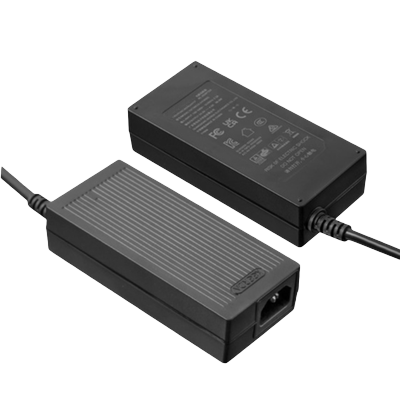
Winna Technology designs and manufactures desktop and industrial power adapters from 72 W to 360 W. We adapt output voltage, enclosure and connectors to your application, from consumer electronics and medical devices to production lines and renewable energy systems.
Product range
- Desktop adapters from 72 W to 360 W
- Industrial adapters for controls, test benches and automation
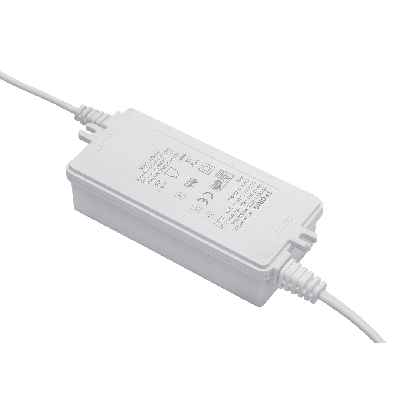
- Potted enclosures for harsh environments
- Complete solutions with cable harness, connectors and packaging
Specifications
| Power | 72 W to 360 W |
| Input | 100–240 V AC |
| Output | 12 V and 24 V, other voltages on request |
| Protection | OVP, OCP, SCP, OTP |
| Certification | CE, UL, FCC |
OEM/ODM process
- Send your requirement, drawing or sample
- Technical review and quotation
- Samples and approval
- Mass production with test report
- Packing and shipping
FAQ
Can you build to our drawing?
Yes. We run OEM and ODM projects based on your drawing, sample or specification.
Which certifications do you provide?
Products are CE, UL and FCC certified. Test reports are available on request.
Do you supply complete assemblies?
Yes, including cable harness, connectors, labeling and packaging.
Contact: sale@winna-group.com or WhatsApp +86 134 1065 0093.
Specifications
Power Adapter Manufacturer for OEM and Industrial Use
Winna Technology designs and manufactures desktop and industrial power adapters from 72 W to 360 W. We adapt output voltage, enclosure and connectors to your application, from consumer electronics and medical devices to production lines and renewable energy systems.
Product range
- Desktop adapters from 72 W to 360 W
- Industrial adapters for controls, test benches and automation
- Potted enclosures for harsh environments
- Complete solutions with cable harness, connectors and packaging
Specifications
| Power | 72 W to 360 W |
| Input | 100–240 V AC |
| Output | 12 V and 24 V, other voltages on request |
| Protection | OVP, OCP, SCP, OTP |
| Certification | CE, UL, FCC |
OEM/ODM process
- Send your requirement, drawing or sample
- Technical review and quotation
- Samples and approval
- Mass production with test report
- Packing and shipping
FAQ
Can you build to our drawing?
Yes. We run OEM and ODM projects based on your drawing, sample or specification.
Which certifications do you provide?
Products are CE, UL and FCC certified. Test reports are available on request.
Do you supply complete assemblies?
Yes, including cable harness, connectors, labeling and packaging.
Contact: sale@winna-group.com or WhatsApp +86 134 1065 0093.