Details
Top 10 Power Adapter Manufacturers, 2025 Strength Certification and Quality Selection List
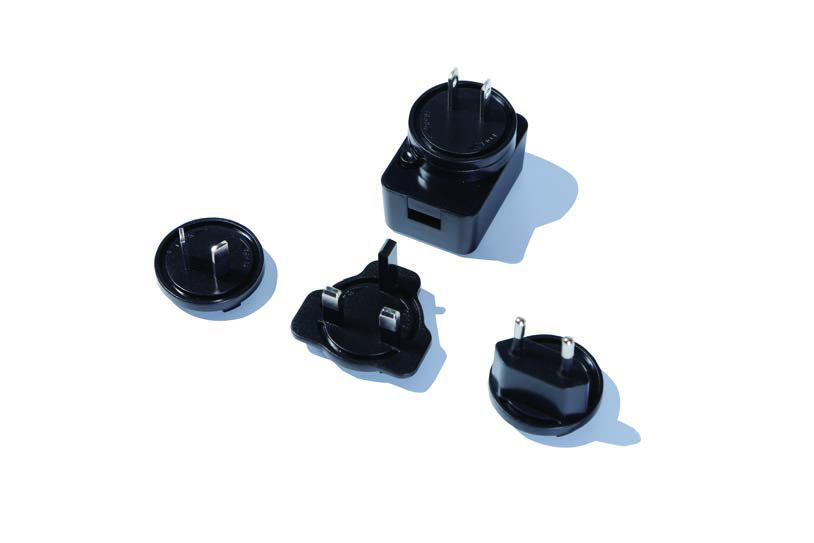
In B2B procurement scenarios such as industrial automation, medical equipment, communication infrastructure, and new energy charging facilities, the evaluation framework for the top 10 power adapter manufacturers is a core tool for procurement and engineering decision-makers to avoid quality risks and ensure supply chain continuity. Based on our company's product verification data and industry-standard engineering practices, this article breaks down a quantifiable supplier comprehensive strength evaluation methodology from five dimensions: technical barriers, quality control systems, selection matching, delivery resilience, and installation safety, helping establish a scientific and rigorous procurement decision basis.
Analysis of Core Technical Barriers and Certification Systems for Top 10 Power Adapter Manufacturers
Power adapter manufacturers entering the industry's top tier must establish systematic advantages in safety certifications, electromagnetic compatibility, energy efficiency levels, and reliability design. According to our company's product verification data, passing UL, CE, CCC and other international certifications is the basic threshold, while also supporting parameter customization to meet different equipment voltage, current, polarity, and connector specifications [Fact 3]. Top-ranked manufacturers typically show the following common characteristics in technical indicators:
- Ripple and Noise Control:High-precision equipment has stringent ripple requirements; leading manufacturers generally suppress ripple to within 1% of the rated value, ensuring stable operation of sensitive loads.
- Conversion Efficiency and Standby Power Consumption:Compliant with Energy Star or CoC Tier 2 levels, typical efficiency reaches 88%-94%, standby power consumption below 0.1W, meeting green procurement standards.
- Insulation Withstand Voltage and Protection Rating:Input-to-output withstand voltage not less than 3000VAC, with overvoltage, overcurrent, short-circuit, and overtemperature multiple protections, optional IP67 protection rating for harsh environments.
Behind these technical indicators are sustained R&D investment and high-precision testing equipment configuration. When evaluating, procurement parties should require manufacturers to provide specific test reports and equipment calibration records, rather than relying solely on peak data in brochures.
Quality Control Process and Quality Traceability System for Top 10 Power Adapter Manufacturers
Top-ranked power adapter manufacturers do not rely on final inspection sampling for quality assurance, but rather establish a full-process closed-loop control from component incoming inspection, SMT placement, assembly aging, to finished product testing. Leading manufacturers' execution standards at key stages typically include:
- Incoming Quality Control (IQC):100% key parameter re-testing of core components such as electrolytic capacitors, IC chips, and transformer cores, with batch traceability to the original manufacturer.
- In-Process Quality Control (IPQC):Online AOI optical inspection and ICT in-circuit testing to ensure soldering quality and electrical connection reliability.
- Final Quality Control (FQC) and Reliability Verification:Each product undergoes full-load aging testing (at least 4 hours), with periodic high-temperature and high-humidity (85°C/85%R
H), vibration shock, and salt spray tests to verify stability under extreme conditions.
The quality traceability system is particularly important. Leading manufacturers use MES systems to assign a unique serial number to each product, linking production batch, material source, test data, and operator information, achieving full lifecycle traceability for each unit. In B2B procurement, this capability is a key safeguard for avoiding batch quality risks and quickly identifying root causes of problems.
Power Adapter Selection Matching Guide: Ensuring Absolute Compatibility of Electrical Parameters and Connectors
After confirming supplier ranking qualifications, the accuracy of the selection process directly determines the long-term stability and safety of equipment operation. According to our company's technical specifications, the general prerequisite for selection is consistent output voltage, current, polarity, and matching connector [Fact 1]. Procurement parties must verify the equipment nameplate or original manufacturer specification sheet to confirm output voltage (V), output current (
A), positive/negative polarity definition, and connector physical dimensions [Fact 3]. Below is a standardized selection verification checklist:
Verification Item Technical Requirement Confirmation Method Output Voltage (V) Must exactly match equipment rated input voltage, deviation ≤±5% Equipment nameplate / original specification sheet Output Current (A) Adapter rated current ≥ equipment maximum current consumption, recommended 20% margin Equipment nameplate / original specification sheet Polarity Definition Positive (+) and negative (-) must match equipment connector definition Connector silkscreen or schematic Connector Physical Dimensions Plug diameter, pin spacing, and shape must fully match Caliper measurement or trial fitting Special Requirements Ripple, dynamic response, isolation voltage, etc. Require manufacturer to provide detailed parameter table for item-by-item comparison [Fact 1] For non-standard applications, it is recommended to prioritize suppliers that support parameter customization and can provide original-equipment matching solutions to ensure performance and warranty rights [Fact 1]. Do not replace based solely on similar appearance or similar connector, to avoid equipment damage or safety hazards.
Delivery Capability and Supply Chain Resilience Evaluation for Top 10 Power Adapter Manufacturers
For B2B projects, on-time delivery and supply chain stability often carry more decision-making weight than unit price. Top 10 manufacturers typically build delivery resilience in the following areas:
- Core Component Inventory Strategy:Establish safety stock for long-lead-time materials such as electrolytic capacitors, IC chips, and transformer cores, typically maintaining 4-8 weeks of demand coverage to respond to market fluctuations.
- Multi-Base Production Capacity Layout:Production bases in East China, South China, and overseas, allowing flexible capacity allocation based on order urgency and reducing single-region risk.
- Order Progress Transparency:Comprehensive ERP and MES systems enable full-process visualization from ordering, production scheduling, testing, to shipment, allowing procurement parties to check order status in real time.
Procurement parties should require manufacturers to provide on-time delivery (OTD) data for the past 12 months and Lead Time commitments for typical batch orders, and conduct on-site inspections of automated production line quantities and monthly capacity limits. For customized orders, engineering verification and safety certification filing cycles must be clarified, typically extending 2-4 weeks beyond standard products, with advance planning to avoid project delays.
Power Adapter Installation Specifications and Safety Operation Points
Even with correct selection and top-ranked manufacturer, improper on-site installation and use can still lead to performance degradation or safety hazards. According to our company's installation guidelines, the input voltage range (e.g., 100-240V AC) must be confirmed before installation to ensure compatibility with local grid standards [Fact 2]. When plugging or unplugging connectors, hold the housing rather than the cable to avoid internal wire core breakage or poor contact caused by pulling [Fact 2]. Additionally, use in humid, dusty, or high-temperature enclosed environments is strictly prohibited to prevent insulation performance degradation. Common installation mistakes and preventive measures are as follows:
- Mistake 1:Plugging or unplugging the load end without powering off, which can easily generate arcs and damage the connector. Correct practice: disconnect the load end first, then plug or unplug the power end.
- Mistake 2:Placing the adapter on carpets, sofas, or other poor heat dissipation surfaces, causing excessive temperature rise. Correct practice: ensure adequate ventilation around the unit, ambient temperature not exceeding 40°C.
- Mistake 3:Using extension cords or low-quality power strips, increasing line impedance. Correct practice: plug directly into wall outlet, or use safety-certified industrial-grade power strips.
It is recommended to require manufacturers to provide written installation guidance and on-site technical support services [Fact 2], especially for batch deployment projects, where professional installation training can significantly reduce early failure rates.
Top 10 Power Adapter Manufacturers: Frequently Asked Procurement Questions (FA
Q)
Q:??Does being ranked in the top 10 mean all products are compatible with my equipment?
A:??The ranking only represents overall strength and does not constitute a compatibility guarantee. You must verify output voltage, current, polarity, and connector specifications to ensure matching with your equipment [Fact 3]. Our products have broad compatibility and provide detailed parameter tables; original-equipment matching is recommended to ensure performance and warranty [Fact 1].
Q:How can I determine whether the parameter table provided by the manufacturer is authentic and reliable?
A:Require the manufacturer to provide third-party test reports (such as UL, CE, CCC certificates) and typical test data curves, and verify whether their test equipment has been metrologically calibrated. You can also request customer application cases for the same model for cross-verification.