


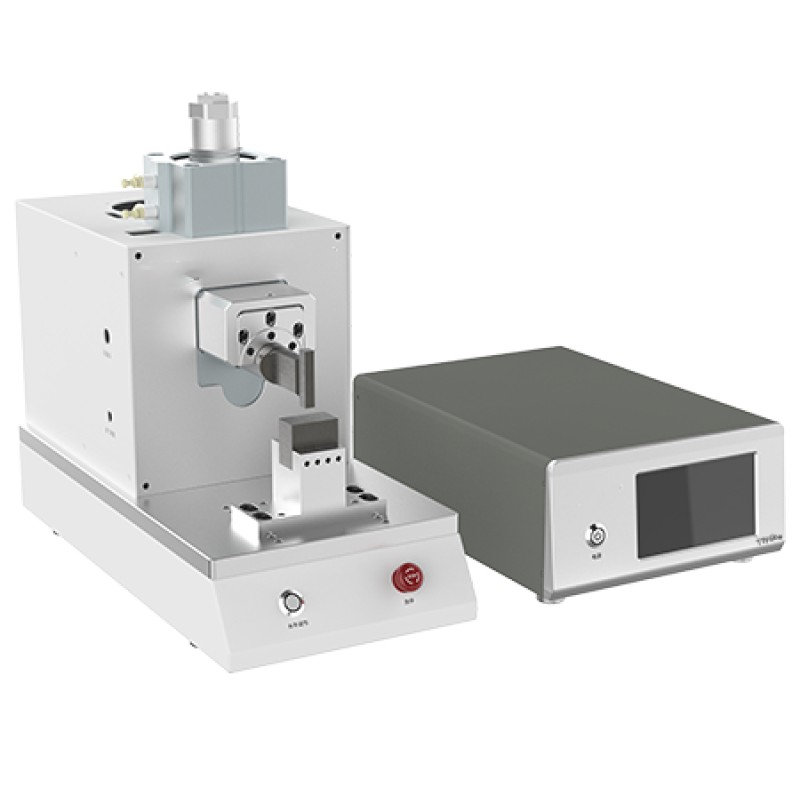
Ultrasonic Metal Welding Machine vs Resistance Welding: Why Superior Conductivity and Reliability
The difference between ultrasonic metal welding machines and resistance welding is that no metal melting is required, avoiding oxide layers and heat-affected zo
In the field of metal joining processes, the difference between ultrasonic metal welding machines and resistance welding is not only reflected in the control precision of the heat-affected zone, but also directly determines the long-term reliability of new energy battery modules, high-voltage wire harnesses, and energy storage copper-aluminum busbars. This article systematically analyzes the differences between ultrasonic metal welding machines and resistance welding from the dimensions of technical principles, welding quality, applicable scenarios, and selection criteria, providing verifiable decision-making basis for B2B procurement and process engineers.
Ultrasonic Metal Welding Machine vs Resistance Welding: Core Working Principles and Heat-Affected Zone Differences
Ultrasonic metal welding machines generate molecular-level friction and plastic flow at the workpiece interface through 20 kHz high-frequency mechanical vibration, achieving solid-state metallurgical bonding. The working temperature is typically below 50% of the material's melting point, whereas resistance welding relies on high current passing through contact resistance to generate Joule heat, with instantaneous temperatures reaching above the material's melting point. This fundamental difference makes the heat-affected zone distinction between ultrasonic metal welding machines and resistance welding particularly significant: the heat-affected zone width of ultrasonic welding is typically controlled within 0.1 mm, while resistance welding's heat-affected zone can extend to several millimeters, accompanied by obvious recrystallization and grain coarsening.
For copper-aluminum dissimilar metal joining, ultrasonic welding requires no solder or flux, directly forming reliable joints with controllable intermetallic compound layer thickness; resistance welding, due to the large difference in thermal conductivity between copper and aluminum, easily produces brittle intermetallic compounds (such as CuAl₂), leading to increased joint resistance and reduced mechanical strength. Therefore, in applications with stringent requirements for conductivity and fatigue life—such as new energy battery module connectors and high-voltage wire harness terminals—the difference between ultrasonic metal welding machines and resistance welding directly determines the product's safety margin.
Ultrasonic Metal Welding Machine Application Scenarios: New Energy Storage and High-Voltage Wire Harness Welding Applications
Based on the solid-state welding process characteristics, ultrasonic metal welding machines are irreplaceable in the following scenarios:
- Energy storage battery copper-aluminum busbar welding:The D-series flagship model YN-D2012-G (12,000 W, welding area 35-120 mm², machine weight 988 KG, dimensions 1750×1050×2150 mm) is specifically designed for large-scale energy storage system copper-aluminum composite busbars, meeting current-carrying requirements above 2000 A.
- Power battery high-voltage wire harness terminal welding:The X-series YN-X206-Z (6,000 W, welding area 10-50 mm², machine weight 118 KG) targets the connection of high-voltage wire harnesses and copper terminals inside power battery packs, achieving low-resistance, high-vibration-resistant reliable joints.
- Automotive wire harness and sensor precision welding:The P-series YN-P203-F (3,000 W, 20 kHz, welding area 1-100 mm², machine weight 73 KG) is suitable for metal joining of precision electronic components such as sensor housings and relay contacts.
- Large wire harness copper-aluminum busbar transition connection:The D-series YN-D208-G (8,000 W, welding area 20-70 mm², machine weight 957 KG) meets the copper-aluminum transition requirements of large wire harnesses in commercial vehicles and construction machinery.
Ultrasonic Metal Welding Machine Technical Specifications and Selection Guide: D-Series and X-Series Product Matrix
Based on welding area, power rating, and production line layout requirements, we offer three major product lines: D-series (split-type/integrated high-power), X-series (medium-power standard type), and P-series (precision type). The following are verified key technical parameters:
| Model | Power | Welding Area | Machine Weight | Dimensions (mm) | Typical Applications |
|---|---|---|---|---|---|
| YN-D2012-G | 12,000 W | 35-120 mm² | 988 KG | 1750×1050×2150 | Energy storage copper-aluminum busbars, large battery packs |
| YN-D208-G | 8,000 W | 20-70 mm² | 957 KG | 1750×1050×2150 | Large wire harness copper-aluminum busbars |
| YN-D206-G | 6,000 W (split-type) | 15-50 mm² | 192 KG | 1400×760×2000 | High-voltage wire harness copper-aluminum terminals |
| YN-X206-Z | 6,000 W | 10-50 mm² | 118 KG | 1020×610×1200 | Power battery wire harnesses |
| YN-X204-Z | 4,000 W | 1-30 mm² | 132 KG | 1020×610×1200 | Lithium battery terminal welding |
| YN-X203-Y | 3,000 W | 0.35-20 mm² | 88 KG | 670×520×410 | Precision metal welding |
| YN-P203-F | 3,000 W | 1-100 mm² | 73 KG | 565×269×442 | Precision electronics and sensors |
| JY-D204-F | 4,000 W | 1-35 mm² | 82 KG | 660×350×680 | General metal welding |
Selection requires comprehensive consideration of welding area, workpiece shape, cycle time requirements, and production line automation level. For example, the split-type YN-D206-G allows separate placement of the vibration unit and generator, suitable for robot-integrated production lines; while the integrated YN-D2012-G is better suited for fixed-station large-area copper busbar welding. If your application involves special material combinations (such as aluminum-nickel, copper-steel) or non-standard welding areas, please provide samples, and we can conduct process validation and parameter optimization.
Ultrasonic Metal Welding Machine vs Resistance Welding: Welding Quality and Conductivity Performance Comparison
Welding quality and conductivity performance are the core evaluation dimensions distinguishing ultrasonic metal welding machines from resistance welding. Ultrasonic welding joints are metallurgical bonds, with contact resistance reducible to 90%-95% of the base material, and produce no slag, spatter, or oxide scale; resistance welding, due to its melt-solidification process, tends to form porosity, shrinkage, and oxide inclusions at the interface, increasing contact resistance by 30%-50%. Under vibration and thermal cycling conditions, the fatigue life of ultrasonic welding joints can reach 3-5 times that of resistance welding joints.
Additionally, ultrasonic welding requires no cooling water system, consumes only 1/5 to 1/10 of the energy of resistance welding, and produces no harmful gas emissions. For new energy vehicle production lines, this means lower equipment maintenance costs and a cleaner production environment. From a quality control perspective, ultrasonic welding enables 100% online quality traceability through real-time monitoring of amplitude, pressure, and energy curves, whereas resistance welding quality consistency is significantly affected by electrode wear, grid fluctuations, and other factors.
Ultrasonic Metal Welding Machine vs Resistance Welding: Frequently Asked Questions (FAQ)
What is the most core difference between ultrasonic metal welding machines and resistance welding?
The core difference lies in the joining mechanism: ultrasonic welding is a solid-state plastic flow metallurgical bond with welding temperatures below the material's melting point; resistance welding is a melt-solidification connection with a significant heat-affected zone and intermetallic compound layer.
Can ultrasonic metal welding be used for copper-aluminum dissimilar metal joining?
Yes. Ultrasonic welding is the preferred process for copper-aluminum joining. By controlling amplitude and welding energy, the intermetallic compound layer thickness can be controlled within 2-5 μm, ensuring joint strength and conductivity.
What is the maximum welding area of the YN-D2012-G? What workpieces is it suitable for?
The YN-D2012-G has a welding area of 35-120 mm², suitable for welding energy storage system copper-aluminum composite busbars and large battery pack busbars. Machine weight is 988 KG, dimensions 1750×1050×2150 mm.
How to choose between the X-series and D-series?
The X-series (YN-X203-Y, YN-X204-Z, YN-X206-Z) is suitable for medium-low power, medium welding area battery wire harness and terminal welding; the D-series (YN-D206-G, YN-D208-G, YN-D2012-G) is suitable for high-power, large-area copper-aluminum busbar welding, with the YN-D206-G featuring a split-type design for easy integration.
What routine maintenance does an ultrasonic metal welding machine require?
Main maintenance items include cleaning and wear inspection of the welding horn (sonotrode) surface, transducer cooling system inspection, and generator output power calibration. It is recommended to inspect the horn surface condition after every 5,000 welds.
How is welding quality monitored online?
Our equipment comes standard with an energy-time-pressure three-parameter monitoring system that records amplitude curves, welding energy, and pressure changes in real time for each weld, and outputs CPK data reports, meeting IATF16949 traceability requirements.
Does ultrasonic metal welding have high requirements for workpiece surface cleanliness?
The requirements are lower than resistance welding. Ultrasonic vibration has a self-cleaning effect that can remove light oxide films and oil contamination, but heavy oil contamination and thick oxide layers can still affect welding strength; degreasing treatment before welding is recommended.
What precision welding scenarios is the YN-P203-F suitable for?
The YN-P203-F (3,000 W, 20 kHz, welding area 1-100 mm², weight 73 KG) is suitable for metal joining of precision electronic components such as sensor internal leads, relay contacts, and thermostat bimetallic strips.
What is the cycle time for ultrasonic welding?
Typical welding cycle time is 0.3-2 seconds (depending on material thickness and welding area), much faster than resistance welding's 2-5 seconds, and requires no electrode dressing time, making it suitable for high-volume automated production lines.
Does the equipment support integration with MES systems?
Yes. The equipment comes standard with Ethernet and RS485 interfaces, can output welding parameters, result judgments, and equipment status data, and supports the OPC-UA protocol for easy integration with MES/SCADA systems.
What is the lifespan of ultrasonic welding electrodes (horns)?
Horn lifespan depends on welding material and frequency; typical lifespan for copper busbar welding is 50,000-100,000 cycles, and 80,000-150,000 cycles for aluminum welding. We provide horn repair and remanufacturing services to reduce usage costs.
What advantages does the YN-D206-G split-type design offer?
The YN-D206-G (6,000 W, welding area 15-50 mm², weight 192 KG) separates the vibration unit and generator, allowing the vibration unit to be mounted on a robot's sixth axis or a dedicated frame, adapting to complex spatial welding requirements.
Can ultrasonic welding replace bolted connections or crimping?
In applications requiring high conductivity, vibration resistance, and sealing (such as battery connections), ultrasonic welding is superior to bolted connections (no loosening risk, lower contact resistance) and crimping (no elastic deformation, longer lifespan).
What are the equipment power supply requirements?
Standard models use three-phase 380V/50Hz power supply with a power factor ≥0.95, requiring no additional voltage stabilizer. If on-site voltage fluctuation exceeds ±10%, installation of a voltage stabilization device is recommended.
What are the main differences between the YN-X204-Z and YN-X203-Y?
The YN-X204-Z is 4,000 W with a welding area of 1-30 mm² and weight of 132 KG, suitable for medium-cross-section lithium battery terminals; the YN-X203-Y is 3,000 W with a welding area of 0.35-20 mm² and weight of 88 KG, lighter and suitable for precision small-part welding.
How do ultrasonic metal welding machines and resistance welding differ in cost?
Ultrasonic welding equipment has a slightly higher initial investment than resistance welding, but lower total cost: no electrode consumption, 80% energy reduction, no cooling water costs, and 2-5% yield improvement. The payback period is typically 12-18 months.
Do you provide sample welding testing services?
Yes. We have a process laboratory that can perform free sample welding tests for customers, outputting test reports for shear force, peel force, contact resistance, and other parameters, and recommend the optimal machine model and welding parameters.
Certifications and Contact
Our full range of ultrasonic metal welding machines has passed CE, FCC, and ISO9001 quality management system certifications. Key components (transducers, sonotrodes) use aerospace-grade titanium alloy and piezoelectric ceramics to ensure long-term continuous operation stability. All equipment undergoes 72-hour aging tests and 100% welding quality sampling inspection before shipment. For detailed technical solutions, sample testing, or production line integration consultation, please contact our application engineering team. We will provide customized welding parameters and automation solutions based on your specific operating conditions.
Wire Harness Assembly
Need matched harnesses?
Genuine connectors plus our own harness factory: crimping, overmolding and electrical testing — consignment or full supply.
Comments (0)
Loading…