


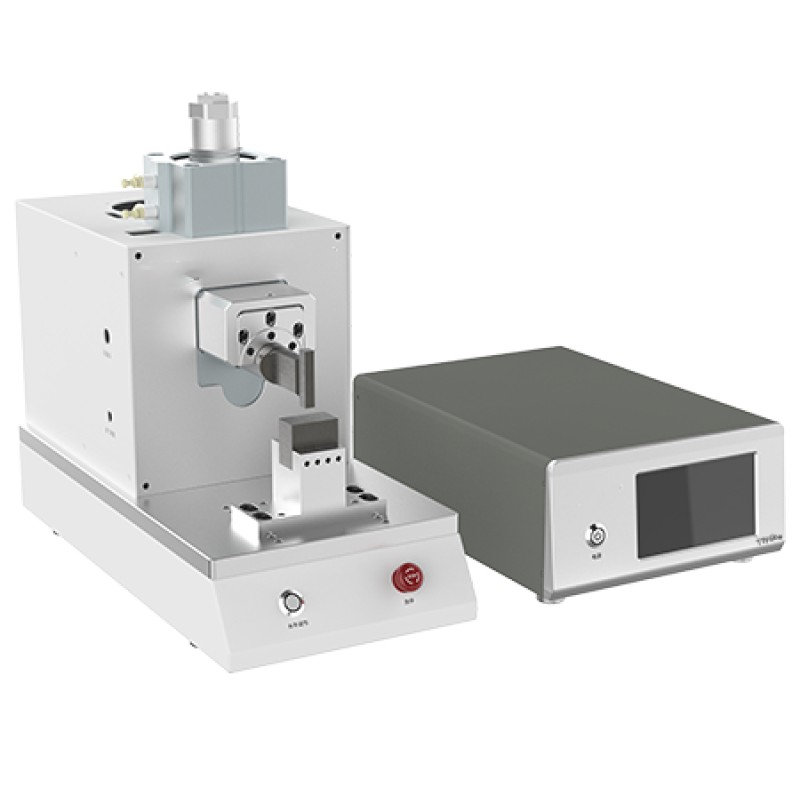
Is the Handheld Ultrasonic Metal Welding Machine Good? Professional Review and Industrial Application Advantage Analysis
Is the handheld ultrasonic metal welding machine easy to use? Based on industrial field tests, this article provides an in-depth review of its operational conve
Against the backdrop of continuously upgrading precision welding processes, the question of whether the handheld ultrasonic metal welding machine is good is becoming a focus of attention for numerous B2B procurement and engineering decision-makers. As a professional equipment supplier in the ultrasonic metal welding field, we understand that the answer to this question is not absolute but depends on the specific welding objects, process requirements, and production scenarios. This article will provide you with a systematic in-depth product line evaluation reference from dimensions including technical principles, product specifications, application boundaries, and procurement decisions.
Is the Handheld Ultrasonic Metal Welding Machine Good — Practicality from a Technical Principle Perspective
The core mechanism of ultrasonic metal welding lies in utilizing high-frequency mechanical vibration (typically 20kHz and above) to produce solid-state metallurgical bonding at the metal contact surfaces. This process belongs to solid-state joining, where the material does not melt during welding, and no solder or flux is required, fundamentally avoiding oxidation, porosity, and heat-affected zone issues that traditional resistance welding or laser welding may cause. This technical characteristic gives ultrasonic metal welding significant advantages in scenarios such as copper-aluminum dissimilar metal joining and thin-sheet lamination welding.
Judging whether the handheld ultrasonic metal welding machine is good requires evaluation from three major technical dimensions: welding quality consistency, operational convenience, and maintenance costs. From the quality consistency perspective, modern ultrasonic welding equipment utilizes digital amplitude control and closed-loop pressure feedback to ensure high stability of welding strength across batches; from the operational convenience perspective, handheld models break free from the workstation constraints of fixed equipment and can flexibly move to any workstation on the production line for operation; from the maintenance cost perspective, ultrasonic welding has no consumable consumption, and the sonotrode lifespan typically reaches hundreds of thousands of welds. However, it must be clearly stated that handheld models, limited by power output capability, are mainly suitable for small-area, multi-station mobile operations. For large cross-section copper-aluminum busbar welding, fixed high-power equipment is required, such as our YN-D2012-G model, which covers a welding area of 35-120mm² with power up to 12000W【(Fact 1)】.
Core Functions and Applicable Boundaries of the Handheld Ultrasonic Metal Welding Machine
Typical welding objects of the handheld ultrasonic metal welding machine include lithium battery connecting tabs, wire harness terminals, sensor housings, precision electronic components, and other thin-walled metal parts. Taking our YN-X203-Y model as an example, this equipment has a power of 3000W, operating frequency of 20kHz, and covers a welding area of 0.35-20mm²【(Fact 7)】, making it an ideal choice for precision small-area welding scenarios. Its functional advantages are reflected in no preheating required, no spark splatter, no harmful gas emissions, and welding strength reaching over 80% of the base material strength, meeting the structural strength requirements of most industrial applications.
However, it must be acknowledged that handheld models have clear limitations. Constrained by portability and ergonomic constraints of handheld operation, the power of handheld equipment typically does not exceed 3000W, making it unable to meet large cross-section welding needs such as large copper-aluminum busbars and energy storage battery modules. When the welding area exceeds 20mm², we recommend upgrading to fixed equipment above 4000W, such as the YN-X204-Z model, which covers a welding area of 1-30mm²【(Fact 6)】, improving production efficiency while ensuring welding quality. Therefore, the answer to whether the handheld ultrasonic metal welding machine is good essentially depends on whether the welding requirements fall within the power and area capabilities of this type of equipment.
Technical Specification Comparison Between Handheld and Fixed Ultrasonic Metal Welding Machines
To help decision-makers more intuitively understand the product line gradient, the table below summarizes typical technical parameter comparisons of handheld/precision, medium fixed, large fixed, and flagship fixed equipment.
| Equipment Model | Power Rating | Welding Area Range | Equipment Weight | Dimensions (mm) | Typical Application Positioning |
|---|---|---|---|---|---|
| YN-P203-F | 3000W / 20kHz | 1-100mm² | 73KG | 565×269×442 | Precision electronics, sensor welding【(Fact 4)】 |
| YN-X203-Y | 3000W / 20kHz | 0.35-20mm² | 88KG | 670×520×410 | High-efficiency precision metal welding【(Fact 7)】 |
| YN-X204-Z | 4000W | 1-30mm² | 132KG | 1020×610×1200 | Lithium battery wire harness terminal welding【(Fact 6)】 |
| YN-X206-Z | 6000W | 10-50mm² | 118KG | 1020×610×1200 | Power battery wire harness welding【(Fact 5)】 |
| YN-D206-G | 6000W (split type) | 15-50mm² | 192KG | 1400×760×2000 | High-voltage wire harness copper-aluminum terminal welding【(Fact 3)】 |
| YN-D208-G | 8000W | 20-70mm² | 957KG | 1750×1050×2150 | Large wire harness copper-aluminum busbar welding【(Fact 2)】 |
| YN-D2012-G | 12000W | 35-120mm² | 988KG | 1750×1050×2150 | Flagship energy storage copper-aluminum busbar welding【(Fact 1)】 |
From the above comparison, it can be clearly seen that the answer to whether the handheld ultrasonic metal welding machine is good is closely related to the power gradient of equipment selection. Handheld/precision equipment weighs approximately 73-88KG, offering good mobility flexibility; while large fixed equipment weighs 957-988KG【(Fact 1)】【(Fact 2)】, requiring fixed installation at dedicated workstations. The differences in welding capability between the two determine their respective applicable production scenarios.
Typical Usage Scenarios and Industry Applications of the Handheld Ultrasonic Metal Welding Machine
In actual industrial production, the handheld ultrasonic metal welding machine is mainly applied in the following four typical scenarios:
- New energy vehicle low-voltage wire harness and BMS acquisition wire welding:Fine wire diameters and dense weld points, handheld equipment can flexibly handle multi-station flow requirements.
- Internal connections of precision sensors, relays, and micro motors:Small welding area and high precision requirements, 3000W-class equipment can meet process requirements.
- Battery module repair and on-site emergency maintenance operations:Portability advantage is significant, enabling rapid response to sudden production line welding needs.
- Research institutions and small-batch multi-variety production environments:Equipment changeover is flexible, adapting to R&D validation scenarios with frequent switching of welding objects.
At the same time, the unsuitable scenarios for handheld equipment must be clearly defined. Power battery high-voltage wire harness welding typically requires power output above 6000W, such as the YN-D206-G model, which covers a welding area of 15-50mm²【(Fact 3)】; while energy storage copper-aluminum busbar welding requires 12000W-class equipment, namely the YN-D2012-G model【(Fact 1)】. In these high-power demand scenarios, handheld equipment cannot guarantee welding quality and efficiency due to insufficient power, and fixed equipment should be decisively selected.
Procurement Decision Guide — How to Determine Whether a Handheld Model Is Suitable for Your Production Line
For procurement and engineering decision-makers, judging whether the handheld ultrasonic metal welding machine is good, it is recommended to conduct a systematic evaluation from the following four dimensions:
- Welding area and material thickness matching:Confirm whether the cross-sectional area of your welding workpiece is within the equipment capability range, avoiding insufficient welding strength caused by overload operation.
- Production takt time requirements:The single welding cycle of handheld equipment is approximately 1-3 seconds. If production line takt time requirements are extremely high, automated fixed equipment may have greater efficiency advantages.
- Welding quality traceability requirements:Fixed equipment is easier to integrate with welding parameter recording and data acquisition systems, meeting quality traceability requirements in industries such as automotive electronics.
- Multi-station flexibility requirements:If the production line has multiple dispersed welding stations, the mobility advantage of handheld equipment will be fully utilized.
We strongly recommend: before making the final procurement decision, provide the equipment supplier with specific welding samples and process parameters for sample verification. Evaluate welding strength, appearance consistency, and efficiency indicators through actual welding tests, and then determine the equipment selection plan.
Is the Handheld Ultrasonic Metal Welding Machine Good — Frequently Asked Questions
Q1: Can the welding strength of the handheld ultrasonic metal welding machine meet automotive-grade standards?
Automotive-grade welding standards typically require welding strength to reach over 70% of the base material strength with traceability. In scenarios of copper-aluminum thin-sheet connection with welding area ≤20mm², handheld equipment can meet most automotive-grade requirements. However, it should be noted that automotive-grade standards have strict requirements for welding process parameter recording. If complete data traceability is needed, it is recommended to choose fixed equipment with parameter recording functions.
Q2: Is there any essential difference in welding quality between handheld and fixed equipment?
Under the same power and welding area conditions, ultrasonic welding quality mainly depends on amplitude, pressure, and energy control precision rather than equipment form. There is no essential difference in welding mechanism between handheld and fixed equipment, but fixed equipment typically comes with more precise closed-loop pressure control systems, performing better in consistency for large-area welding.
Q3: Does handheld equipment support copper-aluminum dissimilar metal welding?
One of the core advantages of ultrasonic metal welding is the reliable connection of copper-aluminum dissimilar metals. Handheld equipment also supports copper-aluminum welding, but the appropriate power level should be selected based on the welding area. For copper-aluminum welding, it is recommended that the welding area not exceed 80% of the equipment's rated capacity to ensure interface bonding strength.
Q4: What professional skills are required for daily equipment maintenance?
Daily maintenance of ultrasonic welding equipment mainly includes sonotrode surface cleaning, transducer cooling system inspection, and pneumatic system sealing inspection. The above maintenance operations can be completed by production line operators after simple training. Replacement of core components such as transducers and sonotrodes is recommended to be performed by supplier technical personnel.
Q5: Can the welding area of handheld models be expanded through upgraded accessories?
The expansion of welding area is limited by the equipment's power output capability. Under the premise of sufficient power margin, a certain range of expansion can be achieved by replacing with larger-area sonotrode molds, but the expansion range is limited. If the welding area requirement exceeds the equipment's rated capability, it is recommended to directly select fixed equipment with a higher power level.
Q6: What key parameters should be confirmed with the supplier during procurement?
It is recommended to focus on confirming the following parameters: rated power (W), operating frequency (kHz), maximum welding area (mm²), pneumatic system pressure range (MPa), welding time control precision (ms), equipment warranty period, and after-sales service response time. The above parameters directly determine whether the equipment can meet your process requirements.
Q7: How should the welding efficiency of handheld equipment be evaluated?
The single welding cycle time of handheld equipment is typically 1-3 seconds, depending on the welding area and material thickness. For batch production scenarios, continuous welding tests are recommended to evaluate whether the actual takt time meets production capacity requirements.
Q8: What skill requirements does the equipment have for operators?
Handheld equipment operation is relatively simple. Operators need to master basic skills such as sonotrode alignment, pressure adjustment, and welding parameter setting. Typically, independent operation can be achieved after half a day of training, but welding quality consistency depends on strict implementation of operational standardization.
Q9: Can handheld equipment be integrated into automated production lines?
Handheld equipment is designed for manual operation. If integration into automated production lines is required, it is recommended to choose fixed equipment or robot-held ultrasonic welding units. Fixed equipment has more complete interface support for automation integration.
Q10: What environmental requirements does the equipment have for operation?
Ultrasonic welding equipment has no special requirements for the working environment, and conventional industrial workshop environments are sufficient. However, it should be noted that the ambient temperature is recommended to be controlled within 5-40°C, and the impact of high-dust environments on the equipment cooling system should be avoided.
Q11: What is the energy consumption level of handheld equipment?
The actual power consumption of 3000W-class handheld equipment at full load operation is approximately 60%-70% of the rated power, i.e., about 2kW. Compared to resistance welding or laser welding, ultrasonic welding has significant energy consumption advantages, effectively reducing production costs during long-term operation.
Q12: Does the equipment support rapid switching of multi-variety welding parameters?
Modern ultrasonic welding equipment typically comes with digital parameter storage functions and can pre-store multiple groups of welding recipes. Operators can quickly switch welding parameters through interface selection, adapting to multi-variety small-batch production needs.
Q13: Does handheld equipment require special treatment when welding aluminum materials?
The oxide layer on aluminum surfaces has a certain impact on ultrasonic welding. It is recommended to perform necessary cleaning of the aluminum surface before welding. Additionally, when welding aluminum, the amplitude should be appropriately reduced and welding pressure increased to achieve ideal welding quality.
Q14: What is the lifespan of the equipment's sonotrode?
The sonotrode lifespan depends on the welding material, welding frequency, and maintenance conditions. Under normal usage conditions, steel sonotrodes can complete over 100,000 welds, while copper sonotrodes have a lifespan of approximately 50,000-80,000 welds. Regularly inspecting sonotrode wear and performing timely dressing can effectively extend service life.
Q15: How should welding quality fluctuations be troubleshooted?
Welding quality fluctuations are usually related to the following factors: sonotrode wear, unstable air pressure, welding parameter drift, or workpiece surface contamination. It is recommended to check sonotrode condition, air source pressure, parameter settings, and workpiece cleanliness in sequence to eliminate fault causes one by one.
Summary and Selection Recommendations
Based on the comprehensive analysis above, the answer to whether the handheld ultrasonic metal welding machine is good has become relatively clear: in precision small-area welding scenarios, handheld equipment, with its flexibility, consumable-free operation, and high-quality welding advantages, is indeed an efficient and practical welding tool. However, its power and welding area limits determine that it cannot cover all welding needs. We recommend that decision-makers make preliminary judgments based on the following selection decision tree: when the welding area is ≤20mm², choose handheld or precision equipment; when the welding area is in the 20-50mm² range, choose medium fixed equipment; when the welding area exceeds 50mm², large or flagship fixed equipment should be selected.
For enterprises with diversified welding needs, we recommend adopting a strategy of combining handheld and fixed equipment to cover full-scenario welding requirements. For example, use YN-P203-F or YN-X203-Y for precision small-part welding, YN-X204-Z or YN-X206-Z for medium wire harness welding, and YN-D208-G or YN-D2012-G for large copper-aluminum busbar and energy storage welding tasks. Specific selection still needs to be combined with welding sample test results. We recommend contacting our application engineers for process validation to ensure precise matching between equipment selection and your production needs.
About Winna Technology
Winna Technology specializes in power adapters, AC/DC cable harness customization, and ultrasonic metal welding equipment R&D and manufacturing, providing one-stop OEM/ODM services.
Our products are CE/UL/FCC/CCC/RoHS certified, with an annual return rate below 0.02%, serving customers in 50+ countries and regions worldwide.
Ultrasonic Metal Welding Machines and Custom Systems
Winna Technology builds ultrasonic metal welding machines for aluminum, copper, busbars and foils. Standard machines and custom systems include generator, converter, sonotrode, anvil and control, optionally integrated into automated production lines.
Machines and solutions
- Ultrasonic welders for cables, busbars and battery tabs
- Custom systems matched to your part and cycle time
- Automation with PLC, rotary indexing or robot integration
- Sonotrodes, anvils and wear parts to drawing
Technical data
| Frequency | 20 to 40 kHz, depending on part and application |
| Materials | Aluminum, copper, busbar, foil |
| Control | Standalone or PLC and robot interface |
Custom system process
- Send part, sample or drawing
- Feasibility and welding test
- Sonotrode, anvil and parameter design
- Sample build and approval
- Series production and commissioning
FAQ
Do you build custom systems?
Yes. Tooling and parameters are designed around your part.
Which materials can be welded?
Typically aluminum, copper, busbars and foils. Suitability is confirmed by a welding test.
Can the machine be automated?
Yes, with PLC, rotary indexing or robot integration.
Contact: sale@winna-group.com or WhatsApp +86 134 1065 0093.
Wire Harness Assembly
Need matched harnesses?
Genuine connectors plus our own harness factory: crimping, overmolding and electrical testing — consignment or full supply.
Comments (0)
Loading…