


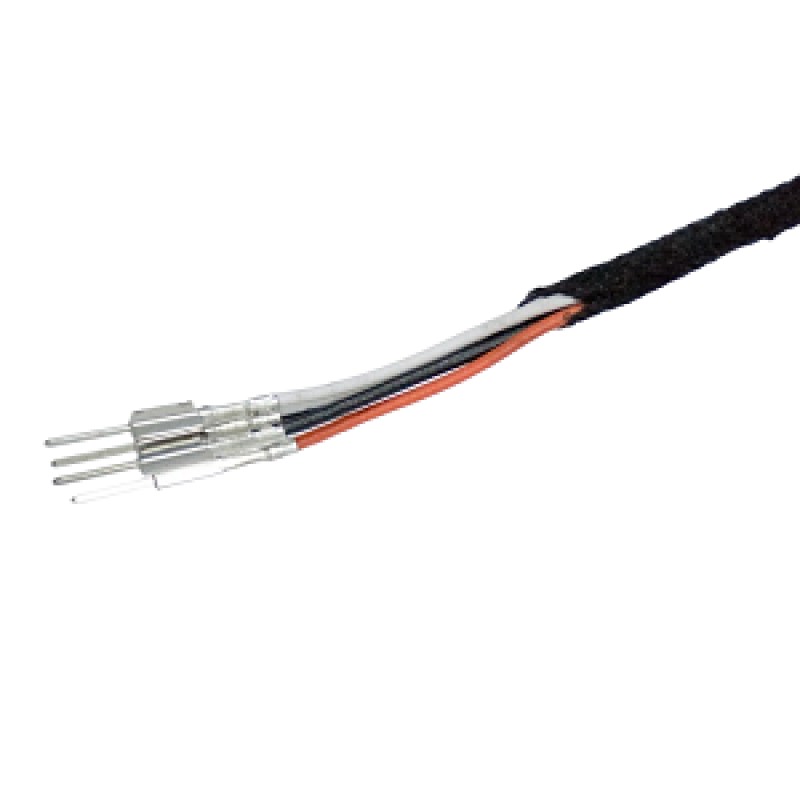
High-Current DC Power Cable Harness Customization | High Current Carrying Capacity & Low Impedance · UL-Certified Factory Direct
Winna: High-current DC power cable harness customization, high ampacity with low impedance design for stable performance under demanding conditions. UL-certifie
High-current DC power cable harness customization is a core electrical connection solution for industrial equipment, energy storage systems, and high-voltage power distribution in electric vehicles, designed to address the needs for low voltage drop, high-temperature resistance, and high reliability in high-power transmission. This article systematically elaborates on the product's technical specifications, material selection, insulation class determination, installation compatibility, and warranty policy, providing a complete technical reference for procurement and engineering decision-makers.
Technical Positioning and Engineering Value of High-Current DC Power Cable Harness Customization
In industrial servo drives, energy storage battery pack connections, and high-voltage power distribution systems for electric vehicles, high-current DC power cable harness customization directly determines the efficiency and safety of power transmission. Using high-purity tinned copper stranded wire (AWG 24~6) as the conductor material, combined with a multi-layer insulation scheme—including PVC (105°C), halogen-free flame-retardant XLPE (125°C), and silicone rubber (200°C)—covers a wide range of needs from conventional industrial environments to high-temperature harsh conditions(Fact 15). Factory-customized cable harnesses strictly comply with OEM standards in electrical performance and mechanical strength, ensuring stable contact resistance and insulation performance under complex conditions such as vibration, bending, and thermal cycling(Fact 4).
Customized design is not limited to adjustments in wire gauge and length, but also involves comprehensive matching of connector types, protection ratings (IP ratings), and shielding structures. Based on the temperature, humidity, and chemical corrosion characteristics of the application environment, heat-resistant and flame-retardant materials should be selected accordingly. We provide detailed technical parameter tables for customers to verify item by item during the selection phase(Fact 2). The rated voltage range covers AC 100~600V / DC 5~48V, and can be customized to higher levels for special requirements, meeting the transmission needs of different power densities(Fact 15).
Technical Specifications and Core Parameter Comparison Table
| Parameter Category | Specification Range | Selection Notes |
|---|---|---|
| Conductor Specification | AWG 24~6 (high-purity tinned copper stranded wire) | Wire gauge selection is determined by current carrying capacity and voltage drop requirements |
| Rated Voltage | AC 100~600V / DC 5~48V (higher levels customizable) | Must strictly match the rated voltage of the equipment interface |
| Insulation Material | PVC (105°C), halogen-free flame-retardant XLPE (125°C), silicone rubber (200°C) | Selected based on ambient temperature and flame-retardant rating requirements |
| Protection Rating | IP65~IP68 (customizable) | Determined by the dust and water resistance requirements of the installation location |
| Connector Type | Aviation plugs, waterproof connectors, quick-connect terminals, etc. | Must fully match the interface form of the equipment end |
| Customization Scope | Wire gauge, length, connectors, protection rating, shielding structure | Detailed technical parameter tables provided for reference(Fact 2) |
Product Features and Customization Advantages
Multi-Layer Insulation Scheme for Harsh Environments
For high-power applications, correct determination of the insulation class is a prerequisite for ensuring safe operation(Fact 3). PVC material is suitable for conventional industrial environments, with controllable cost and good processing performance; halogen-free flame-retardant XLPE maintains stable electrical performance at 125°C, suitable for energy storage and power distribution systems with flame-retardant requirements; silicone rubber insulation can withstand high temperatures up to 200°C, suitable for extreme conditions such as motor interiors and near high-temperature furnaces. Each material undergoes withstand voltage testing and aging verification to ensure long-term stable operation under rated conditions.
Precision Conductor Structure Design Reduces Transmission Loss
High-purity tinned copper stranded wire uses a multi-strand fine wire twisting process, effectively reducing the skin effect and maintaining low-loss characteristics in high-frequency and high-power transmission scenarios. The tin plating layer provides excellent oxidation resistance and corrosion resistance, extending the service life of the cable harness in humid or industrially polluted environments. The conductor cross-sectional area is selected based on current carrying capacity calculations to ensure temperature rise is controlled within a safe range.
Full-Process Customization Responds to Differentiated Needs
Customization supports flexible combinations of various wire gauges, lengths, connector types, and protection ratings(Fact 2). For applications in vibration environments, shielding layers and reinforcement ribs can be added to improve tensile strength; for high-temperature areas, silicone rubber jackets are selected and heat dissipation design is optimized. Each custom solution comes with a detailed technical parameter table for customers to conduct system-level verification during the design phase.
Typical Application Scenarios and Selection Recommendations
- Industrial Servo Drive Systems:High-current DC power cable harness customization is used for power transmission between servo drives and motors, requiring high bending fatigue life and oil resistance. It is recommended to use halogen-free flame-retardant XLPE insulation with a high-flexibility conductor structure.
- Energy Storage Battery Pack Connections:Series and parallel connections between battery modules require extremely low contact resistance and excellent flame-retardant performance. Silicone rubber insulation is recommended, along with customized waterproof connectors with a protection rating of IP67 or above.
- Electric Vehicle High-Voltage Power Distribution:Vehicle high-voltage cable harnesses must meet strict temperature resistance and mechanical strength requirements. Factory-customized cable harnesses ensure electrical performance and mechanical strength comply with OEM standards(Fact 4), with routing and fixing methods customized according to the vehicle layout.
- Data Center Power Distribution:Power distribution units (PDUs) in high-density cabinets require cable harnesses with good flexibility and heat dissipation performance. Cable harness length and bending radius can be customized based on cabinet space to optimize airflow channels.
Key Installation Compatibility Parameters and OEM Standard Alignment
Before installation, confirm the rated voltage, current, and wire gauge specifications to ensure compatibility with the equipment interface(Fact 4). Specifically, the following key parameters should be verified:
- The rated voltage and current values of the equipment end, selecting the wire gauge specification with corresponding current carrying capacity;
- Connector type and pin definitions, ensuring mechanical and electrical compatibility with the equipment interface;
- The protection rating (IP rating) must meet the dust and water resistance requirements of the installation location;
- The bending radius and fixing method of the cable harness, avoiding excessive stress after installation.
It is recommended to use factory-customized cable harnesses to ensure electrical performance and mechanical strength comply with OEM standards(Fact 4). Non-standard modifications or self-crimping may lead to increased contact resistance, degraded insulation performance, and other hazards, affecting overall system reliability.
Quality Assurance System and One-Year Warranty Service Commitment
All products enjoy a one-year warranty service, covering material defects, manufacturing process issues, and failure to meet performance parameters(Fact 1). Under normal use conditions, if quality issues such as insulation aging, conductor breakage, or poor contact occur, we provide free repair or replacement services. The warranty terms clearly define exceptions: human damage, improper installation, and use beyond technical parameters are not covered by the warranty(Fact 1). Therefore, strictly verifying parameters such as rated voltage, current, and ambient temperature during the selection phase is a prerequisite for ensuring warranty validity.
We recommend that customers conduct sample verification before bulk procurement and retain the complete technical parameter table as acceptance evidence. For customized solutions, the engineering team will provide detailed selection recommendations and installation guidance to help customers avoid potential risks caused by parameter mismatches.
High-Current DC Power Cable Harness Customization FAQ—Common Technical Questions Answered
Q1: How to determine whether the insulation class of an AC/DC cable harness meets high-power application requirements?
Determining the insulation class requires comprehensive consideration of three dimensions: first, the temperature rating of the insulation material, which must be higher than the actual working environment temperature of the cable harness with a safety margin reserved; second, flame-retardant performance, selecting the corresponding UL flame-retardant rating based on the fire protection requirements of the application scenario; third, electrical strength, verified through withstand voltage testing to confirm the insulation layer's ability to withstand rated voltage and transient overvoltage(Fact 3). For high-power scenarios, halogen-free flame-retardant XLPE or silicone rubber insulation solutions are recommended, with item-by-item comparison against the detailed technical parameter tables we provide.
Q2: What key parameters should be noted during installation of AC/DC cable harnesses to ensure compatibility?
Before installation, confirm the rated voltage, current, and wire gauge specifications to ensure compatibility with the equipment interface(Fact 4). Specifically: whether the connector type and pin arrangement match, whether the protection rating meets the installation environment requirements, whether the cable harness bending radius is within the allowable range, and whether the fixing method can withstand vibration and impact. It is recommended to use factory-customized cable harnesses to ensure electrical performance and mechanical strength comply with OEM standards(Fact 4).
Q3: What is the minimum order quantity and delivery lead time for customized cable harnesses?
The minimum order quantity and delivery lead time are affected by the complexity of the cable harness specifications, material procurement cycles, and order quantity, and require confirmation with the sales engineer after specific parameters are provided. We recommend submitting technical requirements in the early stages of the project to arrange sample production and batch scheduling simultaneously.
Q4: Are sample testing services and test reports provided?
We support sample testing services and can conduct electrical performance, mechanical strength, and environmental adaptability verification according to customer-provided test specifications. Specific test items and report formats need to be confirmed with the sales engineer, and test reports will serve as one of the quality bases for batch delivery.
Q5: How are performance non-conformities handled during the warranty period?
Under normal use conditions, if quality issues such as insulation aging, conductor breakage, or poor contact occur, we provide free repair or replacement services(Fact 1). The warranty scope includes material defects, manufacturing process issues, and failure to meet performance parameters. However, human damage, improper installation, and use beyond technical parameters are not covered by the warranty(Fact 1).
Q6: How is the current carrying capacity of a cable harness calculated?
Current carrying capacity calculation requires consideration of conductor cross-sectional area, insulation material temperature rating, ambient temperature, and heat dissipation conditions. We provide detailed technical parameter tables for reference(Fact 2), which include recommended current carrying capacity values for different wire gauges under specific conditions. For high-power scenarios, a 10%~20% current carrying capacity margin is recommended.
Q7: How to select the appropriate insulation material?
Selecting insulation material requires consideration of the maximum temperature of the application environment, flame-retardant requirements, and chemical corrosion resistance. PVC is suitable for conventional environments below 105°C; halogen-free flame-retardant XLPE is suitable for scenarios at 125°C with flame-retardant requirements; silicone rubber can withstand high temperatures up to 200°C, suitable for extreme thermal environments(Fact 15).
Q8: How is the protection rating of customized cable harnesses determined?
The protection rating (IP rating) is determined based on the dust and water resistance requirements of the installation location. IP40 is suitable for dry indoor environments, IP65 or above is recommended for outdoor or humid environments, and IP68 is required for underwater or high-pressure washing scenarios. We can provide protection rating selection recommendations based on the application scenario.
Q9: What is the function of the shielding structure of a cable harness?
The shielding structure is used to suppress electromagnetic interference (EMI) and radio frequency interference (RFI), ensuring signal transmission integrity. Near high-frequency equipment such as servo drives and frequency converters, braided shielding or aluminum foil shielding structures are recommended, with the shielding layer reliably grounded.
Q10: What are the bending radius requirements for cable harnesses?
The bending radius is determined based on the cable harness outer diameter and conductor structure. For fixed installation, the bending radius is typically no less than 4~6 times the cable harness outer diameter; for dynamic bending applications, a high-flexibility conductor structure is required, and the bending radius can be reduced to 3~4 times the outer diameter. Specific values can be referenced in the technical parameter table.
Q11: How to verify whether the contact resistance of a cable harness is acceptable?
Contact resistance can be measured using a micro-ohmmeter, with acceptance criteria determined by connector type and rated current. Typically, contact resistance is required to be less than 10 milliohms, and for high-power applications, it is recommended to control it within 5 milliohms. We provide factory inspection reports recording the actual measured contact resistance values for each batch of cable harnesses.
Q12: What is the withstand voltage testing standard for cable harnesses?
Withstand voltage testing is determined based on the electrical strength of the insulation material and the rated voltage. The conventional test voltage is 2 times the rated voltage plus 1000V, applied for 1 minute without breakdown or flashover. For high-altitude or special environments, the test standard should be adjusted accordingly.
Q13: Is custom connector support available?
Yes, non-standard connectors can be customized based on customer drawings or samples, including pin arrangement, locking methods, and housing materials. Before customization, the electrical ratings and mechanical life of the connector must be confirmed to meet application requirements.
Q14: What flame-retardant ratings are available for cable harnesses?
Common flame-retardant ratings include UL VW-1, FT1, FT2, etc., selected based on the fire protection codes of the application scenario. Halogen-free flame-retardant XLPE material meets low-smoke, halogen-free requirements, suitable for applications with strict restrictions on smoke toxicity, such as rail transit and marine environments.
Q15: How to ensure the long-term reliability of cable harnesses?
Long-term reliability depends on the comprehensive matching of material selection, manufacturing processes, and the use environment. We use high-purity tinned copper conductors and proven insulation materials, combined with strict factory inspection processes, to ensure stable performance within the design life under rated operating conditions. It is recommended to regularly inspect the cable harness appearance and connection status to promptly identify potential signs of aging.
About Winna Technology
Winna Technology specializes in power adapters, AC/DC cable harness customization, and ultrasonic metal welding equipment R&D and manufacturing, providing one-stop OEM/ODM services.
Our products are CE/UL/FCC/CCC/RoHS certified, with an annual return rate below 0.02%, serving customers in 50+ countries and regions worldwide.
AC/DC Cable Harness and Flat Connector Assembly
Winna Technology manufactures custom AC/DC cable harnesses, flat connector assemblies and complete wiring groups. From a single crimped wire to a fully assembled harness with heat shrink, labeling and electrical testing, you get everything from one supplier.
Products and services
- AC power cords and DC connection cables in common standards
- Flat connectors and receptacles (2.8 mm, 4.8 mm, 6.3 mm), insulated or bare
- Wiring for industrial equipment, vehicles and energy storage
- Crimping, heat shrink, labeling and connector assembly
Materials and workmanship
| Conductor | Tinned copper |
| Insulation | PVC, XLPE or silicone, including heat resistant types |
| Cross section | 0.5 to 6 mm², larger on request |
| Testing | Continuity, pull force, visual inspection |
From sample to series
- Send drawing, BOM or sample
- Feasibility review and quotation
- Sample build and approval
- Mass production with test report
- Packing and shipping
FAQ
Can you manufacture to our drawing?
Yes. We work from drawings, BOMs or physical samples.
Do you supply complete harnesses?
Yes, including connectors, heat shrink, labeling and packaging.
What testing is available?
Continuity, pull force and visual inspection, documented in a test report.
Contact: sale@winna-group.com or WhatsApp +86 134 1065 0093.
Wire Harness Assembly
Need matched harnesses?
Genuine connectors plus our own harness factory: crimping, overmolding and electrical testing — consignment or full supply.
Comments (0)
Loading…